
From the Civil War to football, the man putting golf back together thinks history rhymes.
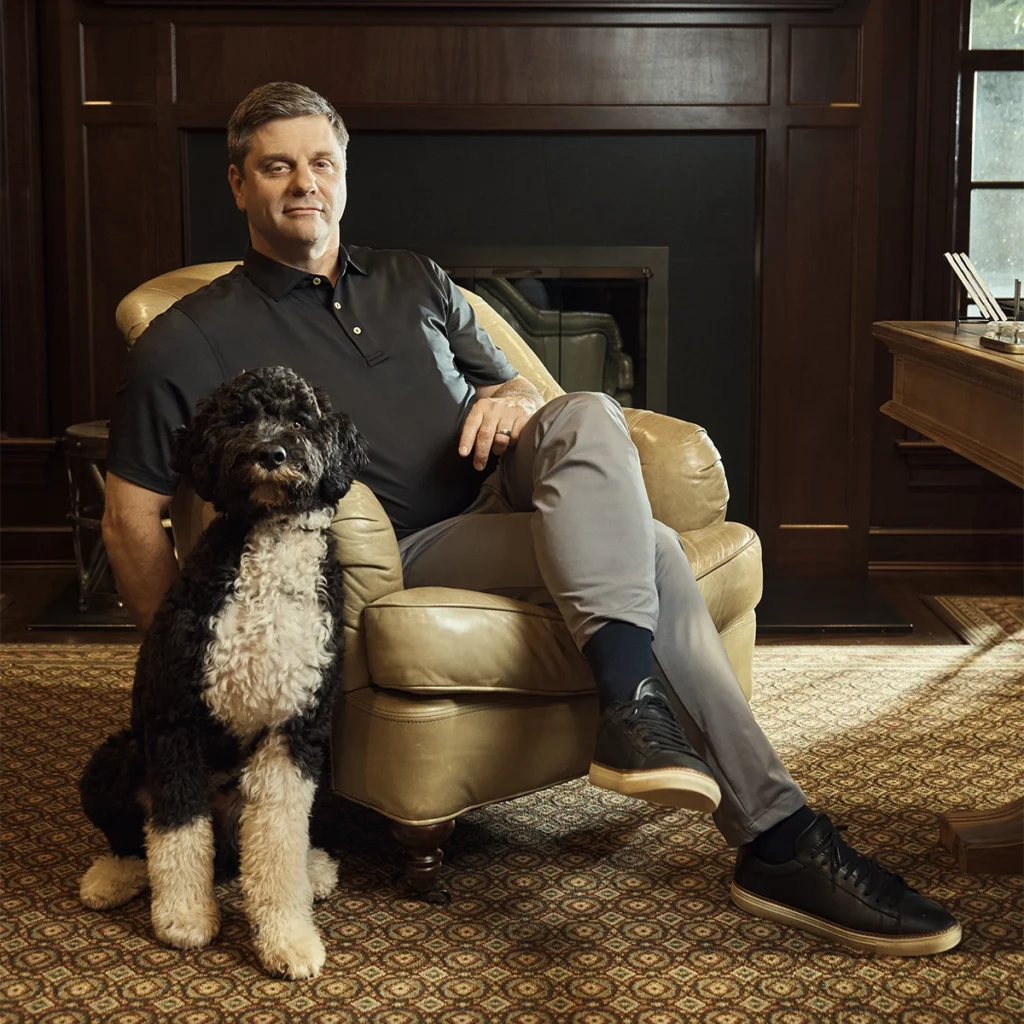
The dark wood office swallows light, the only glint coming from the Emmys sitting high on a shelf above three blank televisions. Beneath the TVs, sealed in a locked glass case, is a row of footballs each signed by a Super Bowl halftime act, an entire industry’s most-watched 12 minutes gathering the dust that settles on things people have stopped explaining to houseguests. Across the room are two bookcases crowded with football chronicles – biographies of commissioners, owners and league men most fans have never heard of. There’s also a rack of general history. The politicians, adventures and battles of the centuries. Tucked into that shelf is also a battered record of Civil War volumes, one of Brian Rolapp’s favourite subjects, about a country that broke cleanly in half and then had to figure out in the years after the shooting stopped what it was supposed to become next.
“History doesn’t repeat itself,” Rolapp says, quoting the line often attributed to Mark Twain, “but it often rhymes. Whatever we’re doing at the PGA Tour, it’s kind of been done before, in some respect.”
Brian Rolapp left the NFL to become chief executive of the PGA Tour in mid-2025, walking away from two decades at a league he didn’t just rise inside of but helped build. The last several years of his career there he effectively ran the NFL business – the deals, the platforms and the broadcasts that turned an already dominant sport into the last appointment viewing left in American culture. He was the commissioner-in-waiting, the heir apparent to a job that pays more, commands more
attention and carries far less daily uncertainty than the one he chose instead.
He left anyway, to lead a sport in the middle of an existential crisis it had largely caused itself. He is more than a year into the job now, and his home office in Darien, Connecticut, has not caught up to the change. There is no golf memorabilia save for a family trophy, “The Rolapp Cup.” The football stuff has been left out of habit rather than sentiment, the residue of someone who has spent his career being told how good he is at what he does and has decided not to believe it.

THE MISSION
Golf did not begin for Rolapp as a game he played. As a teenager, he had a job at Congressional Country Club, in Bethesda, Maryland, working in the halfway house. He remembers the window for the caddies, for a different class of person at the same property. “We didn’t belong to a country club,” he says. “Golf, to me, was this distant, inaccessible, country club sport. That’s how I first experienced it, before coming to find out it’s much more than that.”
A high school star lacrosse player with bigger universities courting him like North Carolina, Colgate and Brown, he chose a smaller program in Brigham Young University because he already knew he wanted to serve a two-year church mission. “A lot of people thought it was unconventional,” he says. The mission took him to Belgium, France and Luxembourg for two years. He called his family twice a year, Mother’s Day and Christmas, before mobile phones existed to complicate the discipline of it. He was assigned a companion he didn’t choose and spent nearly every hour of every day with him. “There were some awesome parts of it. There were some tough parts of it. But all of it was formative,” he says.
Ages 19 through 27 set the entire trajectory of his life, he says. He came home from his mission an almost-21-year-old college sophomore. Shortly afterwards, his father died at 52. Rolapp met his wife, Cindy, not long after, married her, had his first child, and somewhere in that compressed timeframe became, in his own estimation, a person who knew what he wanted out of life at an age when most people don’t. “I think that’s kind of a rare thing,” he says, quietly enough that the sentence nearly disappears into the room.
The story of how he met Cindy is the one spot in hours of conversation where Rolapp’s voice picks up, faster, lighter, a story told at enough dinner parties to have worn itself smooth. He asked her out three times. The first go-around she said no; she had to watch her nieces. The second she had to do something for her grandmother. Rolapp assumed he was being gently but obviously turned down. A mutual friend assured him otherwise; that’s just who she is, she means it all literally. The third time, he asked if she wanted to get something to eat. Cindy said no; the Cowboys were playing the Cardinals on Monday Night Football, and she wanted to watch. She came over in sweatpants and a sweatshirt, having apparently spent zero time getting ready. His roommate told him after the game that if he didn’t ask her out again, he was an idiot.
Cindy has never cared, in the years since, what Brian does for a living, not out of indifference but by a deliberate boundary. “The only thing I care about,” he says, quoting her, “is that it doesn’t consume you, that it makes you a fuller human.” They do not talk about work at home. “Around the neighbourhood, I was the NFL guy,” he says. “Now I’m probably the PGA Tour guy. Everyone else tries to define you by your job. I’m lucky to have a family that doesn’t.” For a while, that boundary lived in a small, deliberate joke – for years, Rolapp’s social media bio read simply “husband of one”, a wink at both the marriage and the faith it’s built on, a devout Mormon’s version of a punchline. It is, colleagues say, entirely on-brand. Sincere enough to be meant, funny enough that nobody would mistake it for preaching.
He still teaches Sunday school with Cindy, though only in the loosest sense of the word. With a room of 5 and 6-year-olds, “You’re just trying to keep them occupied and from killing each other every three minutes,” he says, laughing. There’s no professional clergy where the Rolapps worship; everybody takes a turn at every level. He’s led congregations, taught teenagers and, now, on any given Sunday, he’s on the floor with the kindergartners. “It keeps you grounded,” he says. “You’re also in a service capacity, which I think is really important.” He says it’s the best part of his week.
Rolapp made himself one rule before taking the tour job: he would not play golf for work. Not because it would look bad, but because it isn’t why he was hired, and because there is simply too much to do. Golf, for Rolapp, exists almost entirely inside the boundary of family and weekend, protected territory even as the game became the centre of his professional life. His own children are the only reason he plays golf again at all. He played in college but put the game away for years while commuting into New York and raising a family busy with its own weekend activities. As they got older and picked up golf themselves, he picked it back up, and found he still makes his share of doubles. “There’s no making up for it on defence in golf,” he says, but is quick to list what keeps him coming back. “You have to focus. There’s something great about that. It’s also the feeling that one good shot makes up for four bad ones.” He loves that it’s outside, that you can play your whole life, the etiquette, what the honour system teaches. He loves how accessible it is, too. “You can be six-five or five-six and still be a really good golfer,” he says.
As for the aforementioned Rolapp Cup, it’s a loose ambrose format forever running wherever the family happens to be. At the moment, Brian and son Will square off against the other two children, Drew and Ben. Their daughter, Catherine, has recently started playing, too, though she has not yet entered the competition. What Rolapp says he has found, playing again, is more reverence. Walking a few holes at the Memorial during a pro-am, catching up with players, he was struck – in a way he never quite was at NFL games, despite years of proximity – by how much more difficult the professional game is than television lets on. “I understand how hard golf is,” he says, “because I was out there three times this weekend playing it myself.”
A BIG RUN
Rolapp’s title at the NFL was chief media and business officer. Officially, he ran league business operations; unofficially, he ran nearly everything at the NFL that wasn’t the games themselves. Media rights deals worth tens of billions of dollars went through his office along with the league’s digital strategy, built from basically nothing. When he started in 2003, the league was doing somewhere near $US5 billion in revenue. This year, it will do roughly $US23 billion. “I’m not saying I’m responsible for that,” he says, “but I was part of a hyper-growth stretch for a long time.”
Steve Bornstein, the former ESPN and NFL Network chief who recruited Rolapp out of NBC in 2003, says that’s underselling it. Bornstein says that Rolapp saw where the business was shifting – towards entertainment and media consumption onto phones and into digital spaces – years before that was conventional wisdom inside a league long organised around Sunday afternoons and cable carriage fees. What made him really effective, Bornstein says, had less to do with vision than with a habit most executives eventually lose. “It’s a person that listens and doesn’t just talk,” he says. “That’s his superpower. He listens, he synthesises it, and then he asks intelligent, informed questions.”
Joe Siclare, the NFL’s long-time chief financial officer of 33 years, has never revised his first impression of Rolapp – smart, fluent in the media business in a way that never had to be re-earned. What Siclare remembers most isn’t the scope of Rolapp’s job so much as how he carried it. Rolapp rarely walked into a room already convinced he had the answer; he’d arrive with a position and let the facts move it, which Siclare came to see less as indecision than as a kind of discipline. “I think people felt like they worked with him, not for him.”
If there’s one knock on Rolapp that’s become anything like a running joke, he was, by wide consensus inside the NFL’s Manhattan headquarters, chronically late. “You’ve heard of the play ‘Waiting for Godot’,” Siclare says. “Some people said we should rename it ‘Waiting for Brian’.”
Bornstein has his own version of that story that cuts the other way. When Bornstein was first courting Rolapp, he invited him to his cigar club at the Top of the Sixes on Park Avenue, not realising Rolapp was a devout Mormon who neither smoked nor drank. Rolapp showed up anyway – on time – and simply endured it. “He never complained and didn’t share with me any of his beliefs, even though this was completely in contrast to them,” Bornstein says. “He was just a mensch about it.” Bornstein tells it as a story about his own poor planning, but the takeaway belongs to Rolapp as proof that the composure people now describe in boardrooms has held up just as well in places he has no business being in.
Rolapp’s last stretch at the league is the clearest evidence of what all that listening and synthesising produced. In March 2021, he oversaw the long-term media agreements that locked in Amazon, CBS, ESPN/ABC, Fox and NBC as the NFL’s broadcast partners for the next decade. He helped devise and implement the move of Sunday Ticket to YouTube, ending a more than 25-year run on satellite and transferring the league’s most devoted, highest-paying fans to a platform that didn’t exist when the package was created. He also led 32 Equity, the vehicle through which the league and its owners now make outside investments – one more example of building infrastructure for a business a decade before the rest of the industry admitted it needed one.
Jeffrey Lurie, the Philadelphia Eagles owner who negotiated with Rolapp through two decades of league business, traces their shared success back to one of Rolapp’s single, stubborn convictions. “It’s always about the excitement of the game,” Lurie says. “The media- rights deals, the investments – those only come from having a product people actually want to watch. It’s easy to lose sight of that when you’re chasing the dollars. Brian never did. He knew if the product wasn’t right, the
economics wouldn’t follow.”
“You’re only as good as your team,” Rolapp says, the closest thing to a mission statement in an otherwise unsentimental accounting of his own record.
That is precisely what makes his career change worth examining. Men who spend two decades succeeding inside one system rarely walk away from it at the moment of maximum leverage and usually not for an organisation in worse shape. “He was so valuable at what he did,” Lurie says, “that a lot of us, while genuinely happy for him, knew it was a devastating loss for the league.”
“I loved my job. I loved the NFL,” he says. “I probably could have done it forever.” He pauses on the word forever the way people do when they catch themselves nearly committing to something they no longer want. “To be honest, I was bored,” Rolapp says.
It’s a strange thing to admit about two decades that included a streaming buildout from scratch, a media-rights overhaul, and the slow migration of football from broadcast television to whatever comes after it – a stretch defined by constant change. That, Rolapp says, was also the problem. The change had become routine, the crises predictable, the same kinds of meetings producing the same kinds of decisions. There was less left to be curious about. He wasn’t looking for an exit, he says, but knew one was probably coming.
What Rolapp found in golf, once he studied it closely, was an opportunity in disguise, a sport whose grassroots participation and weekend viewership were, in some cases, outpacing NBA first-round playoff games even as the public narrative was one of total chaos. Some things could be better, he remembers thinking, and maybe the crisis had finally gotten everybody’s attention. That was a strong foundation to work on.
Rolapp keeps a photograph in his office from a 1960s prep-school football game. It’s shot from midfield, the school’s science building fully engulfed in flames in the background, while the players kept playing, and the crowd kept watching, seemingly unbothered. It’s both a photograph and a small, framed argument. “You’ve got to get the product right,” he says. “I don’t care how good you think your business model is – if the product isn’t right, none of it matters.”
TAKING CHARGE
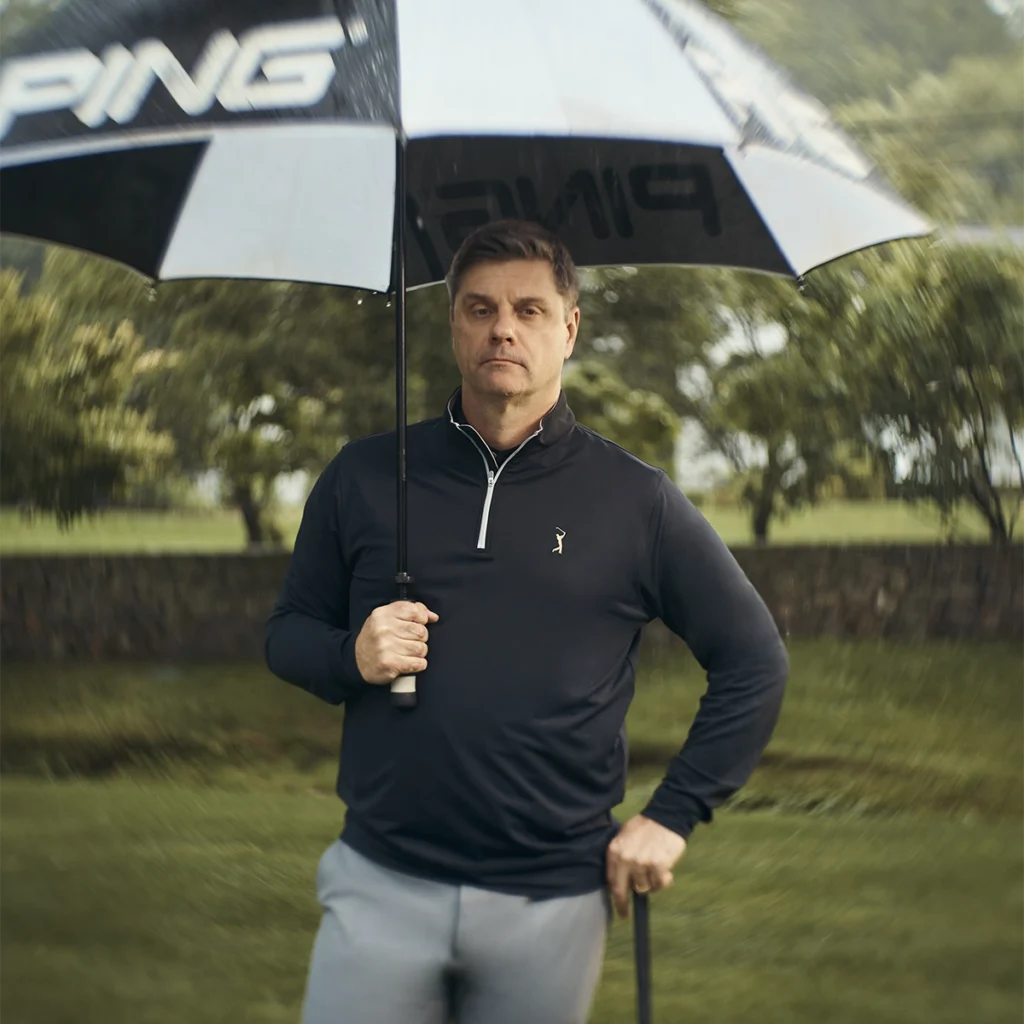
There was no obvious playbook for Rolapp’s new task. By the time he was named PGA Tour commissioner, the tour’s leadership had spent nearly two years locked in negotiations with Saudi Arabia’s Public Investment Fund, and fans had grown exhausted by a schism that seemed indifferent to what they wanted.
What Rolapp did first was talk, mostly informal and hour-long conversations with players. The format, built around three questions, was almost naively simple for a man about to reorganise a multi-billion-dollar sport: what do we do well? What don’t we do well? What would you change? What he found surprised him – a locker room that turned out to be smarter and more self-aware than its reputation suggested. He met players who loved the game without reservation but were more than ready to admit the tour itself had grown stale with too many events with too little imagination. As the months passed and the tour’s Future Competition Committee – the nine-person group led by Tiger Woods charged with re-imagining the schedule – began to crystallise a direction, the conversations changed. “It became more of a validation of where we were going,” Rolapp says. “Still good, but different.”
This was different than the relationship he knew at the NFL, where the players’ union is collectively bargained, formal and distant by design. Golf was, at best, a fragile and personal trust between commissioner and competitors. That trust had frayed by the time Rolapp arrived, exacerbated by the tour’s surprise framework agreement with PIF in June 2023 that blindsided players who’d spent months publicly defending an institution that had been secretly negotiating with the enemy. Rolapp understood that whatever faith remained was thin, and that he wasn’t going to charm his way in. He went to work.
“I think he’s a guy that just kind of gets things done,” Scottie Scheffler said earlier this year at Bay Hill. “I met him last year at one of the playoff events. We sat down, and it was just, like, just getting right into it. He started asking questions, and we started talking. It was like no nonsense – like, we’ve got an hour, let’s make the most of this hour. I loved it.”
“I clearly didn’t know a lot of things: how the tour worked, how the sport was set up, what was on the players’ minds,” Rolapp says. “But it’s also part of my leadership style. I’ve always believed humility and self-awareness are underrated leadership attributes because they let somebody know what they don’t know. When you lose sight of that, that’s when leaders get in trouble, or they surround themselves with people who tell them what they want to hear, the classic yes men.”
For someone considered an outsider to the sport’s political matrix, Rolapp has spurred change in a relatively short window. The urgency he keeps returning to has a catchphrase inside tour headquarters, “Only the paranoid survive,” a line Rolapp borrowed from Andy Grove, the former Intel chief executive. It’s a philosophy he carried from his NFL years, where he liked to remind his team that someone in Midtown Manhattan in 1975 had once declared baseball America’s pastime now and forever. (Nowadays Monday Night Football often outdraws World Series games.) Standing still, in his view, is decline.
What worries Rolapp most specifically is a structural problem with no easy fix. Golf, unlike the NFL, spent the better part of two decades organised around a single transcendent star. The most successful sports in the world, he says, find a way to rejuvenate themselves with every new cycle of stars. After Tiger Woods, Rolapp thinks the PGA Tour lost a little of that instinct, and the past five years have laid that bare.
The new PGA Tour schedule is set to launch in 2028 with fewer and more consequential events, a clearer season-long narrative, and a calendar built to be legible to someone who hasn’t followed the sport their entire life. The new schedule is not, Rolapp is careful to say, a wholesale expansion: not more tour cards, not a longer season. It’s a reorganisation of what already exists into a structure a casual sports fan could explain to a friend: a real regular season, a real postseason, and stakes attached to specific weeks rather than diffused evenly across an entire calendar year. It is the tangible expression of everything the conversations with players were meant to surface.
“I feel like it’s the beginning of the end of the beginning,” he says. What’s been accomplished so far, he says, is real but incomplete – “not even a fraction of what we need to do”. The goal beneath the goal is not simply to win golf’s internal war but to make the PGA Tour something closer to what the NFL became during his 22 years there: not merely the dominant tour in its sport but a genuinely mainstream piece of the American sports calendar.
Rolapp’s method to get there has been almost tediously transparent, which players say is precisely the point. “The communication that Brian and the team have done with the players has bordered on repetitive,” says Maverick McNealy, “which is far better than the alternative of springing something on everyone completely by surprise. Brian has done an awesome job of stress-testing a lot of these ideas out in the media, out in public, with the players, trying to poke holes in them as early as possible. We’ve left a few ideas behind that clearly weren’t going to work and proceeded with the ones people seemed excited about.”
“I feel a huge responsibility to our PGA Tour members,” Rolapp says. “This is how they make a living. I feel it’s my responsibility to create a system that lets them make a living based on how they play but also lets them display their skills to the world.” He extends the same weight to fans, to the sport’s stakeholders and business partners, to the abstract notion of an institution built to outlast the person currently running it. “You don’t just get to worry about the players,” he says. “You don’t just get to worry about the fans. You don’t just get to worry about the shareholders, your partners. You’ve got to worry about all of them, and that’s a lot.”
The Public Investment Fund pulled its funding from LIV Golf earlier this year, a decision that might have done more to end the standoff than anything drafted inside PGA Tour headquarters. Rolapp did not spend the year as a passive beneficiary of that collapse. He was instrumental in the internal politicking that brought Brooks Koepka back once the five-time major winner signalled he’d grown tired of LIV – a defection that mattered less for what it added to the tour’s leaderboard than for what it signalled to everyone else still weighing up an exit from the Saudi league. While PIF was quietly stepping back, Rolapp was moving to make sure there’d be nowhere else for LIV to turn. Alliances with the DP World Tour, the Asian Tour and the Australian Open closed off what little runway LIV’s leadership had left as it searched for new investors to replace the big one that walked away.
Rolapp is careful to head off the accusations that have followed him since the job began, that the changes are cover for private equity interests, or a slow abandonment of the tour’s charitable mission. “That gets muddied with, we only care about economic return, or it’s private equity, or we’re going to abandon the charitable mission,” he says. “None of that is true.”
Where friction does exist gathers around two things. The first is money. Any move that touches the tour’s ownership structure, or opens the door to outside capital, gets read by a certain sceptical constituency as evidence that Rolapp is quietly steering the tour towards a private-equity payday, whatever he says publicly about the charitable mission. The second is harder to name but just as real inside the sport: a low, persistent hum of resistance from golf insiders – at the tour as well as at other governing bodies with their own histories and own turf – at taking direction from a man who, 15 months ago, had never worked a day in golf administration. Although rarely stated aloud, this faction believes that golf’s problems require someone who’s lived inside golf’s traditions, not someone importing lessons from a league with a completely different business, labour structure and audience. Rolapp is aware of both currents and unbothered by them in roughly equal measure, treating the private-equity suspicion as something to be corrected with a plain answer and the insider scepticism as something to be worn down, slowly, the same way he wore down players who didn’t yet have a reason to trust him.
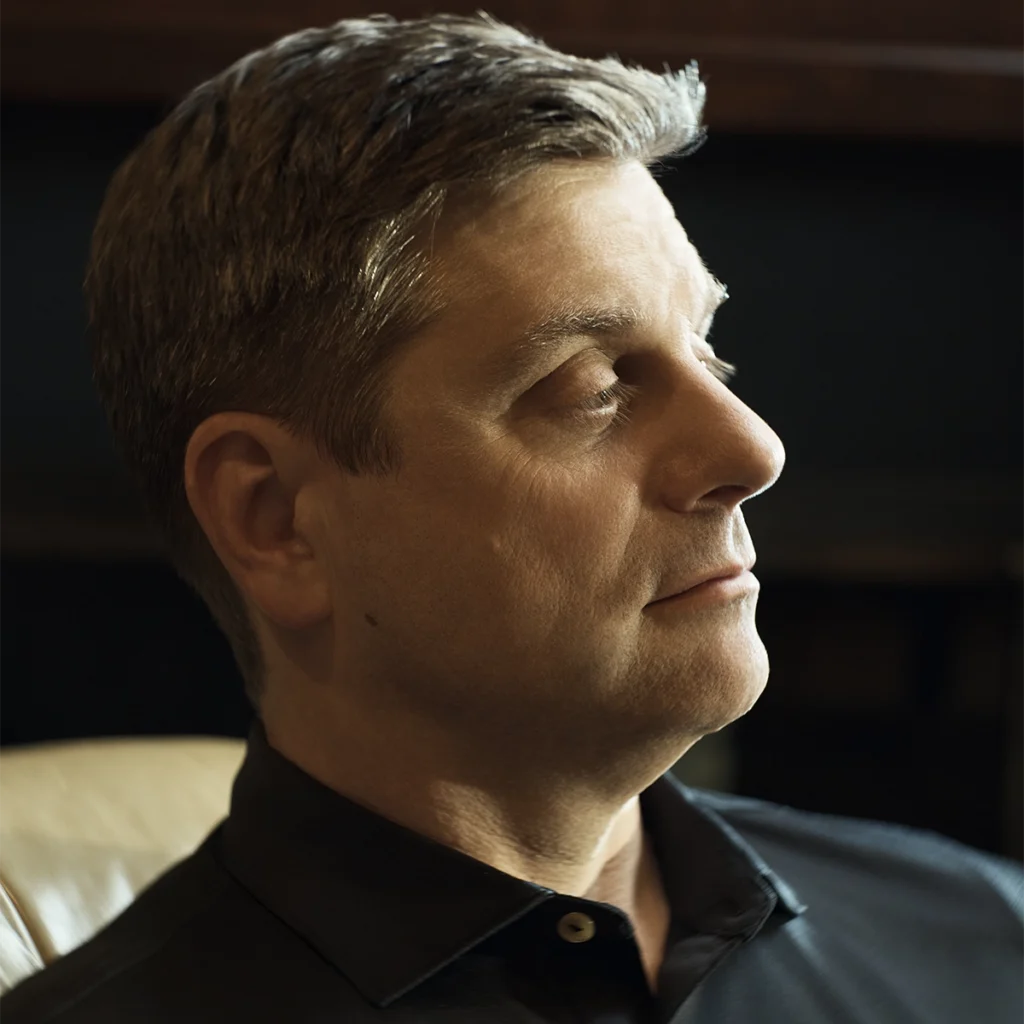
Rolapp doesn’t carry the battle scars of the players and executives who lived through the schism year by year, but he’s aware of the fatigue it left behind. He also has no patience for golf’s favourite excuse for doing nothing. “Golf is different, or we’ve never done it that way – those don’t resonate with me,” he says. “You have to think like a fan. It’s not that complicated.”
Another gap Rolapp talks about almost as much is between the millions of Americans who play golf and the far smaller number who’d call themselves fans of the tour, a disconnect he first noticed at that caddie window at Congressional. “It’s confusing,” and, “All the events are the same,” are what he hears now when golfers tell him why they’ve drifted as fans. Closing that trench, more than any schedule change, is the real bet.
Fans looking closely might see something that hasn’t been offered in a long time: not a framework under siege, or under negotiation, or dismantled by competing interests while leadership assured everyone the plane was landing, and no more promises that dissolve into new promises.
“You have a responsibility to do it right. That doesn’t mean you’re going to please everybody,” Rolapp says. “It’s sort of bigger than you. If you’re in these jobs for any other reason, you’re not the right person for the job.”
He gets up from the chair and starts pointing out more history books in his office. Whether he’s the right man for this job isn’t a question the present can answer. It belongs to 2028, and maybe not even then. What’s certain is that he’s the one authoring this chapter. History, if it rhymes the way Rolapp insists it does, has never much cared who held the pen.
Only what was written.
Photographs by Eric Ogden