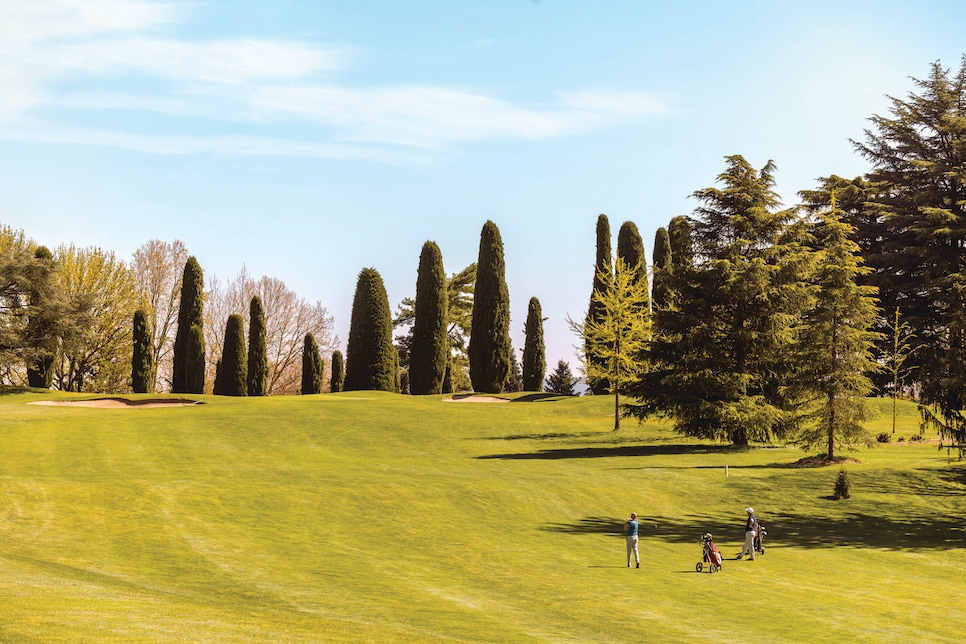
Less than an hour’s drive north of Milan, golf becomes far more than a game. Here, amid rolling fairways and sweeping views over Lake Varese and Monte Rosa, the experience is steeped in a sense of place that feels almost timeless. Golf Club Varese is not simply a club; it is a story nearly nine centuries old.
At the heart of that story is its clubhouse, housed within the ancient Benedictine monastery of Sant’Antonino di Luvinate. Its origins trace back to 1129, making it one of the oldest buildings ever associated with golf—older even than the historic homes of many British clubs. Notably, the clubhouse of Golf du Prieuré in Sailly, France, is a former Priory that dates to 1180.
Over the centuries, Varese’s monastery underwent a series of transformations. In the 15th century, it temporarily housed the nuns of Torba. In 1567, it was suppressed by Archbishop Carlo Borromeo as part of a broader reorganization of religious institutions. After the nuns moved permanently to Varese in 1571, the complex entered a long period of decline and was gradually converted into a rural farmhouse. It passed through several owners—including Stampa nobility with a link to the 19th-century philosopher Alessandro Manzoni—before beginning its golf chapter in 1929. Alongside a nine-hole course designed by Peter Gannon and Cecil Blanford, the monastery was restored and converted into the clubhouse with the interiors curated by Bica Pirelli. In the 1950s the course was expanded to 18 holes by Swiss architect Donald Harradine. The new layout was unveiled in October 1958 with the staging of the Italian Open, won by Peter Alliss.
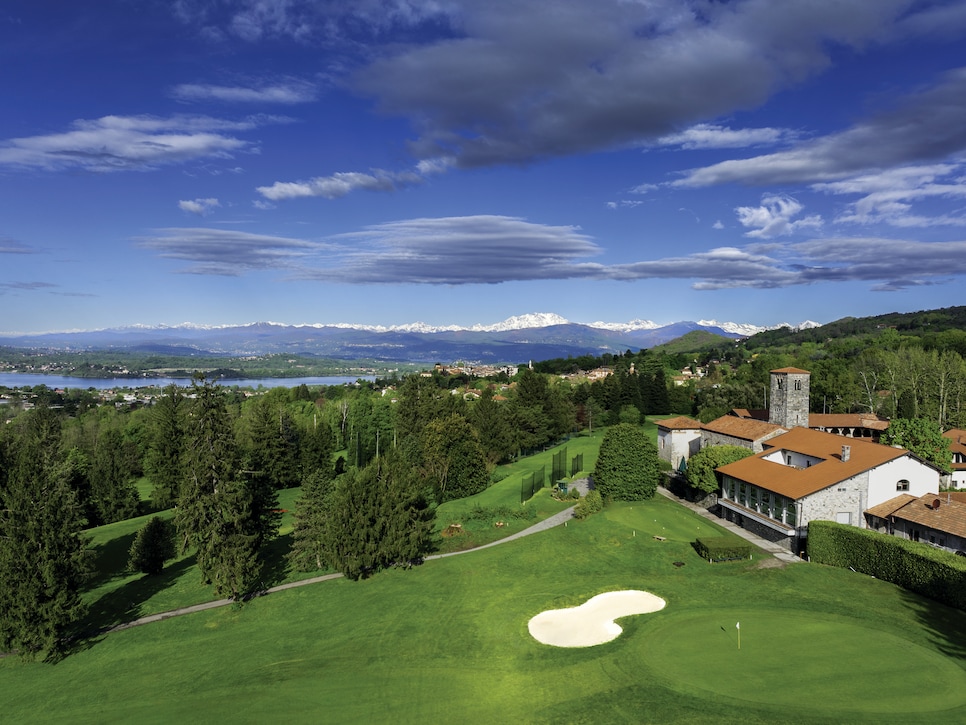
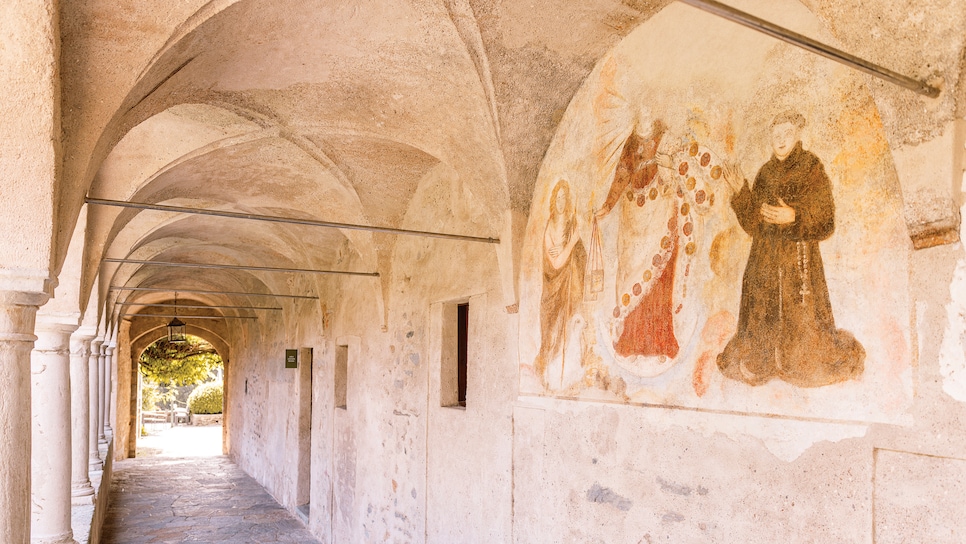

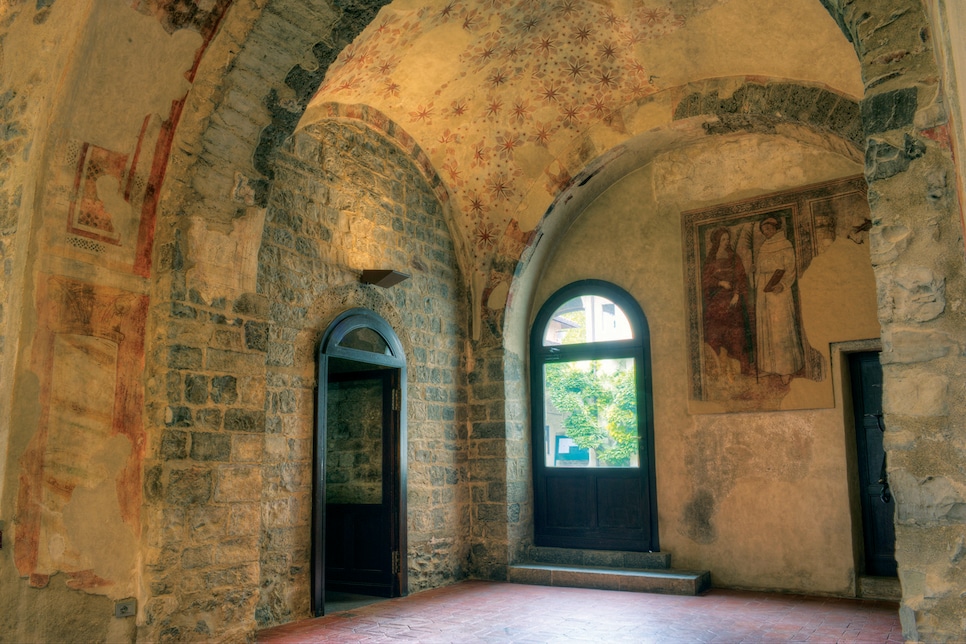
Locker rooms full of character, halls decorated with frescoes, the experience of being immersed in a Benedectine monastery—this is not what golfers expect.
Golf Club Varese president Umberto Gandini can speak to the history. “The monastery was the center of Luvinate’s economic and religious life for several centuries. The earliest document we have found dates to 1129, which suggests the building itself is slightly older. At a European level, we have not found any other clubs with historical reference points earlier than ours, so we can say that, if Varese’s clubhouse is not the oldest in the world, it is certainly among the oldest in Europe.”
MORE: The best golf courses in Italy
This research certified, the club is drawing a new vision to reach well beyond Italy. Its Historic Clubhouse project aims to create a network of clubs linked by authentic homes rooted in the past and capable of expressing a powerful identity. Gandini says, “The goal is to develop an international golfing community connecting clubs whose homes are buildings with roots stretching back centuries, from castles and palaces to sacred sites such as ours—places that changed function over time and eventually became clubhouses. There are no formal rules yet for joining, but we imagine selection based on rigorous historical criteria and buildings dating from before the 19th century. . . . We are a historic and well-established club, but at the same time ours is a membership that fully understands how the game is evolving, and therefore happily accepts that the beauty and privilege of playing a course like ours, in such an extraordinary setting, is also something to be shared. Most of our visiting players come from France, Switzerland and northern Europe, and when they arrive, they are often struck by how unique the club is.”
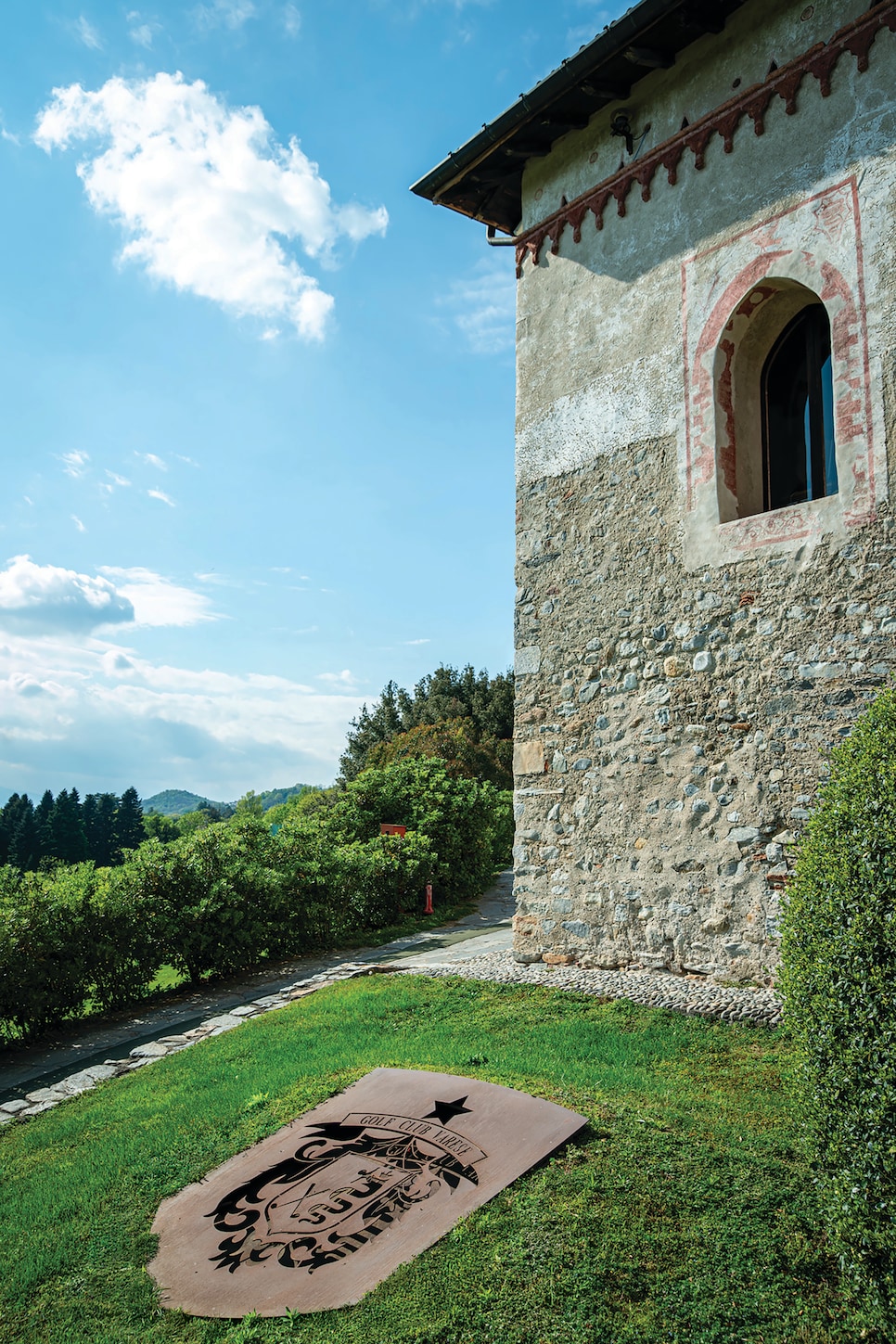
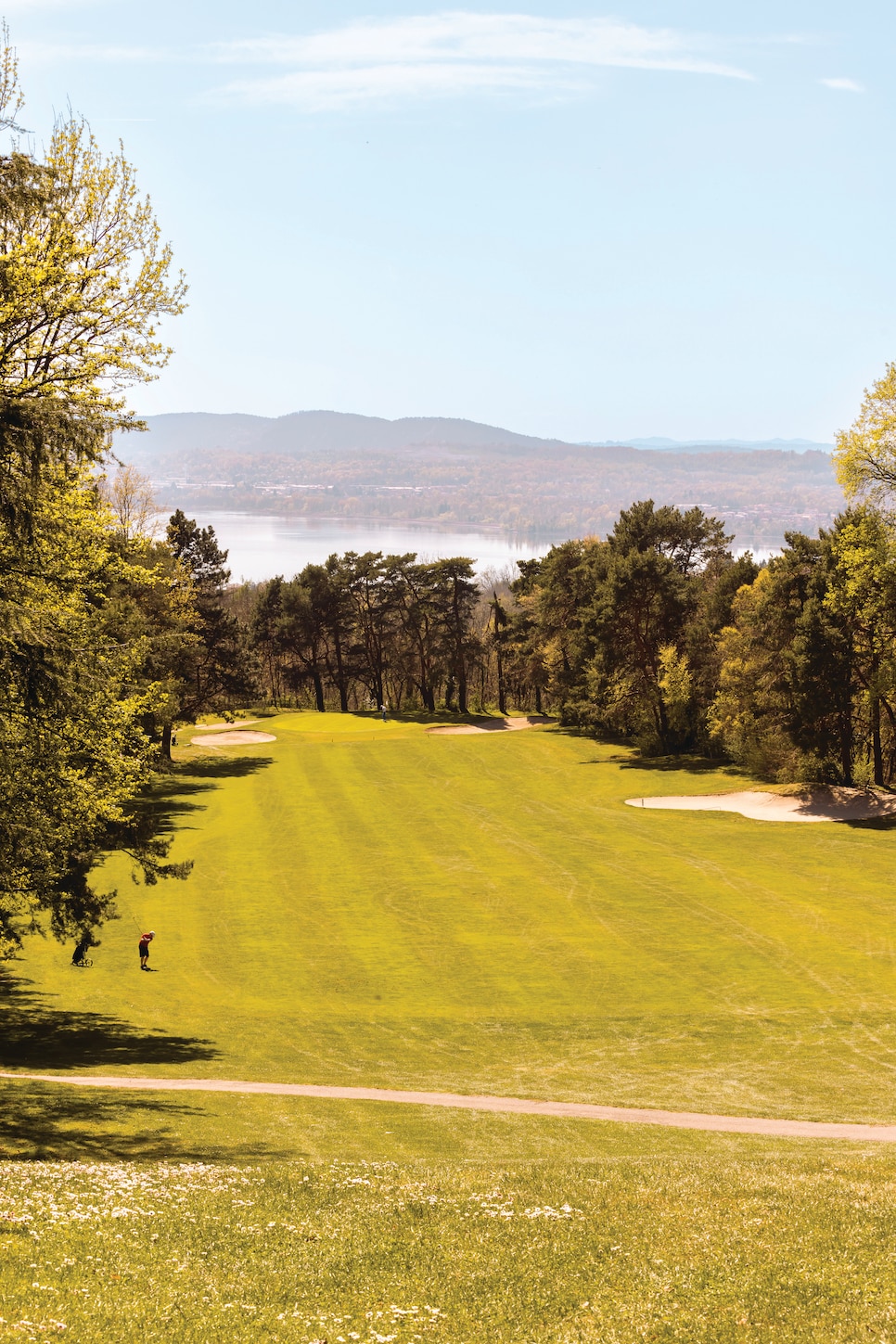
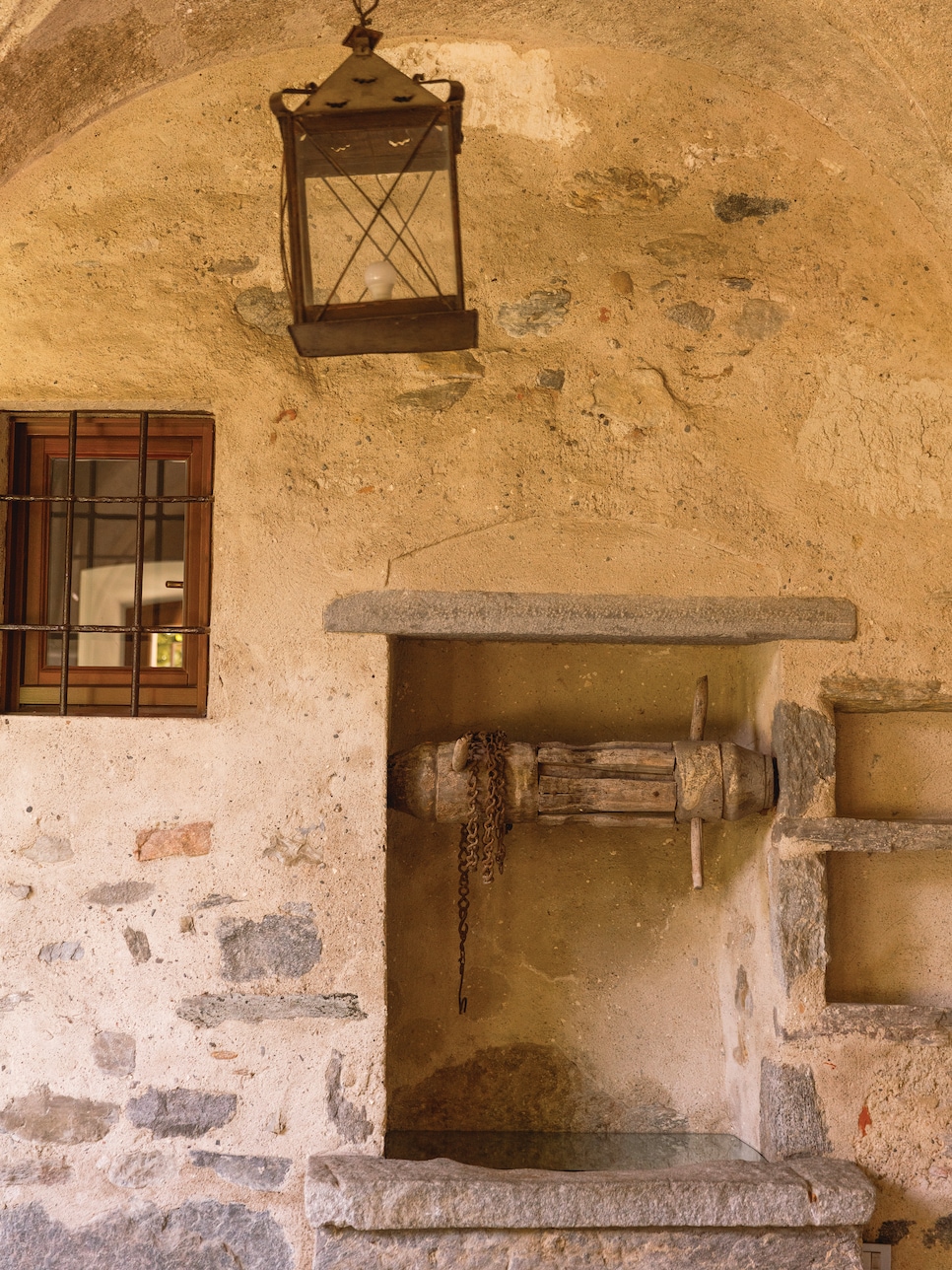
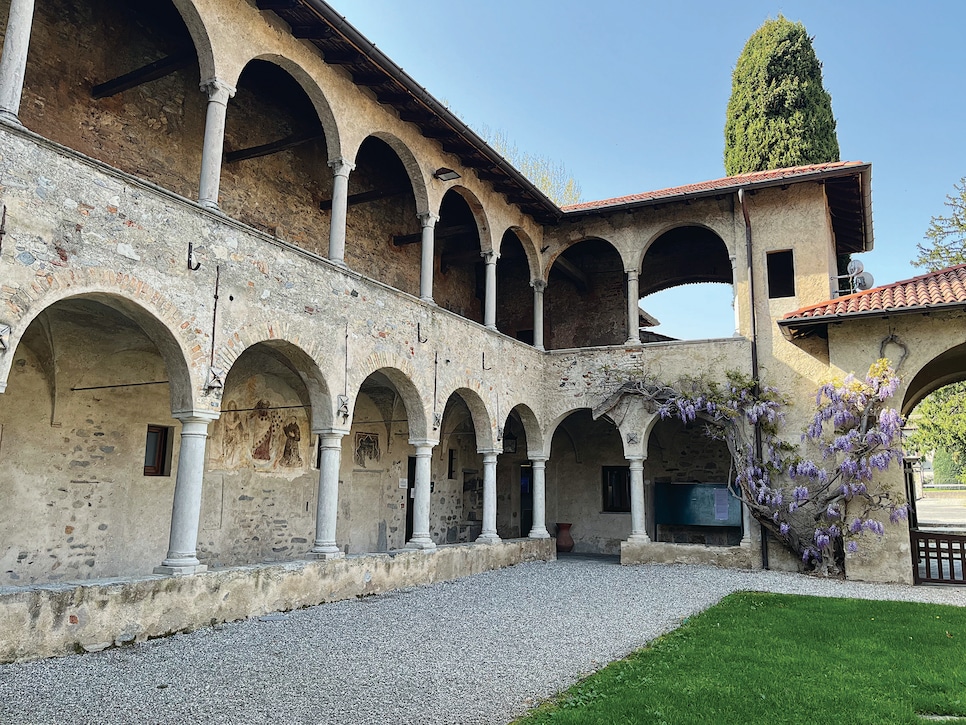
Romanesque walls, an exposed-stone belltower, an intimate cloister framed by columns … here, history has been preserved with care and woven into the identity of the club itself.
At a time when many clubs look increasingly alike, in both standards and services, the idea behind the Historic Clubhouse project is simple: to celebrate cultural settings in which golf becomes part of a fuller experience that engages players emotionally as well as aesthetically. In that sense, Varese is endeavoring to position itself as the standard-bearer for an alternative model in which architectural and historical value becomes a strategic strength.
While the quality of the golf remains essential, perhaps more players are looking for authenticity, memory and beauty. At Varese, those qualities have not been manufactured; they were preserved. While other clubs pursue the future through innovation and modernity, Varese shows that innovation can also grow out of the past, not only as memory to be protected but as a vision to be developed. “We have joined the circuit of historic houses and residences that open to outside visitors twice a year, with guided tours led by staff trained by FAI [Fondo per Lambiente Italiano, the national heritage society], and the same experience is offered to members as well,” Gandini says. “So alongside a high-level golfing experience, there is also the opportunity to discover the history of the place—to understand its evolution and how deeply rooted this building is in our wider story.”
—Adapted with permission from Golf & Turismo
For information regarding the Historic Clubhouse Network, email [email protected]
This article was originally published on golfdigest.com