
Ryan Fox is the old-man underdog who did what no one thought he could do, win an Open Championship. It’s precisely why he will be a marked man at this month’s Presidents Cup.
Twenty-two seconds separated Ryan Fox from the moment his playing partner cleared the stage, standing over his putt, taking two practice strokes, then the trigger pulled on the 12 feet between him and forever. He is a fast player, Fox, aspirationally so in a sport besieged by slowness. Why change now? The only pause came to confirm what his eyes already knew moments later, his arms going up after the ball went down. The roar of 4,000 rolling off the grandstands swallowed his yell, the type of sound someone chases their entire life knowing it may never be conjured.
That’s what it was, conjured. Earned. After staying steady while his round threatened to come apart. After mounting a charge, only to watch it nearly buried by a lie that showed him no mercy. After knowing, somewhere underneath it all, that he wasn’t the kind of player supposed to be contending at a tournament like this, at a time like this. And that the moment, if it came at all, might come only once. His moment is now eternal. A back-nine blitzkrieg and a 72nd-hole birdie crowned Ryan Fox the Champion Golfer of the Year.
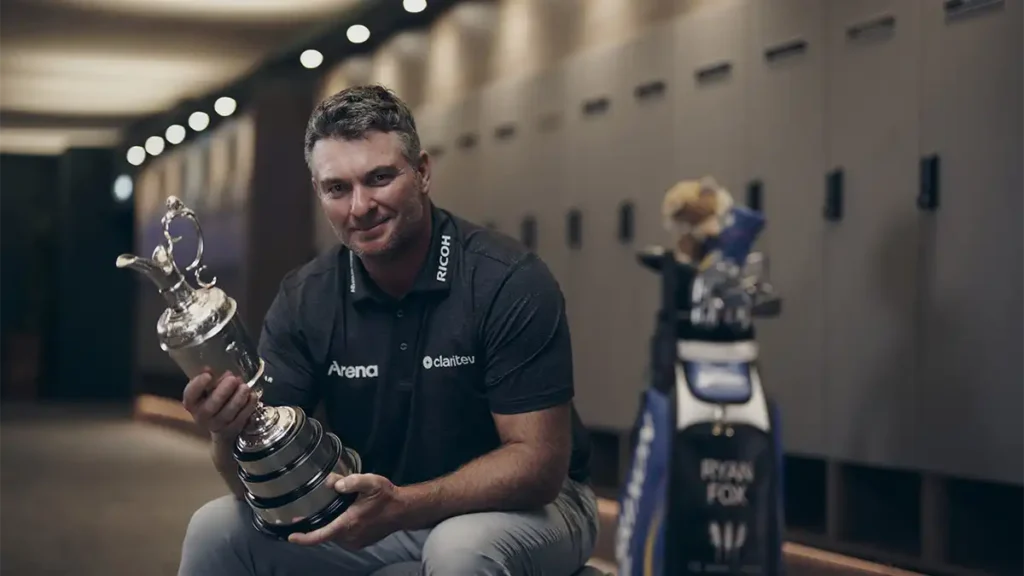
“Surreal, to be honest. It’s something you dream of,” Fox said that Sunday evening in Southport, his total of 10-under 270 besting Cameron Young by one shot for the Open Championship. “I used to get up in the middle of the night to watch this tournament back home. It was always something that was there just to be able to play in it, first up, and now to be an Open champion, to be the Champion Golfer of the Year, it’s unbelievable, surreal, crazy. I don’t have enough words in my vocabulary to explain it, to be honest.”
Fox is something of a late bloomer – he didn’t play competitively until age 17 – so perhaps it fits that the pattern held at Birkdale. He played in the final group with Sam Burns, and for most of the front nine the two idled in neutral. Not damning on its own, but Young was making a move and others were massing behind, and after two bogeys in a three-hole stretch at the turn, it looked like Fox was running on fumes, having burned too bright too early with Saturday’s record-tying 62.
And frankly, it made sense. This was not a position Fox had ever occupied. Twenty-eight career major starts entering the week; top-10 finishes in exactly none of them. He was also six months shy of 40, sharing a leaderboard with players a decade-and-a-half his junior, fledgling and established alike.
But the damnedest thing kept happening. About the 10th, once it became clear the local favourite, Tommy Fleetwood, wasn’t going to pull off the hometown miracle, the entire Royal Birkdale property switched allegiances to Fox. There were Kiwis scattered about, sure, but the Scouse inflections leaning into “C’MON FOXY” gave it away. This was Fox’s crowd now, and they’d decided to bring him home. The gap in volume between Burns’ 30-foot par save on the 13th and Fox’s 12-footer for birdie was the difference between courtesy and combustion.
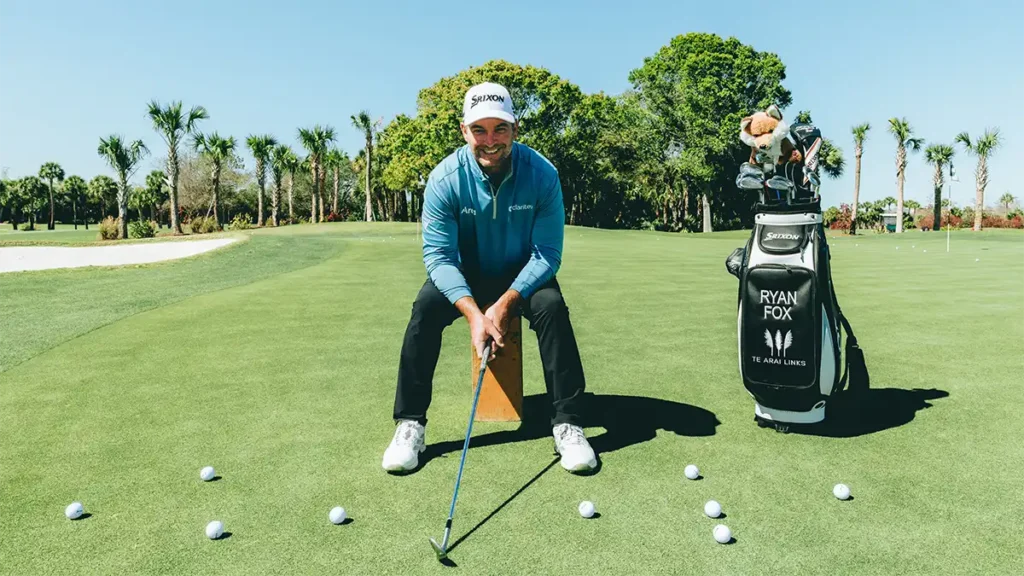
“It felt like the English crowd got behind me for whatever reason,” Fox said. “I was trying not to get too caught up in it coming down the stretch, just kind of focus on what I could control.”
Fox added another birdie at the 14th before saving his tournament outright at the 15th. His tee shot had nestled against the back lip of a bunker, half-plugged in the face, a lie so hostile that advancing it towards the green was never on the table. The only shot available was backwards, sideways almost, sacrificing distance just to find grass he could actually swing from. It was the kind of lie that turns a two-shot swing into a four-shot swing in the time it takes to walk up and see it. He managed a nifty up-and-down anyway, emitting the type of fist pump usually reserved for red numbers, for Sundays that end in celebration rather than survival.
“I probably can’t say exactly what I thought,” Fox said, talking about when he saw the bad break. “Sometimes bogeys are a good – I felt a whole lot better walking off that green making bogey that way than probably even if I’d have made par, to be honest. I hit a couple of really good shots down the stretch obviously to get it done.”
Another birdie at the 16th pulled him level for the lead, setting up a final hole that would decide everything. A perfect drive left him 160 metres in. A distance that invites caution, a shot to the fat of the green that plays it safe and takes his chances in a playoff with Young. Fox wanted no part of it. He aimed at the flag instead, betting on himself, at peace with whatever the gamble returned. “I did say to my caddie, Dean [Smith], on the tee that we were going to take it on, that I was going to try to win the tournament,” Fox said, “and I’d live with the consequences if I stuffed it up.”
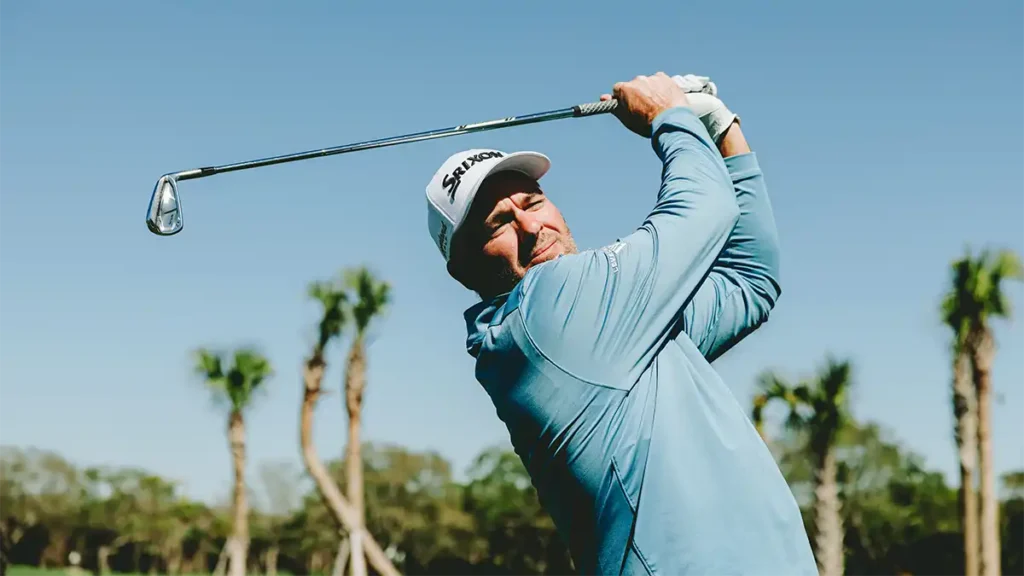
His gut was true. So was the strike, evidenced by the roar that went up the moment his ball came to rest 12 feet short. It’s tempting to wave off what follows as revisionist history, embellishment memory adds after the fact, yet his walk from fairway to green produced a reaction reserved for a former champion, a star, a local son. The kind of reception a journeyman doesn’t get and a journeyman is precisely what Fox has spent his career being. Other sports build entire mythologies around the underdog; golf, more often than not, fears him. The romance of the long shot plays better in retrospect than it does in the moment, when a leaderboard packed with recognisable names would rather see one of their own.
Or perhaps it was the opposite. Perhaps the crowd understood exactly what was on the line, and exactly who was putting it there. Major-championship moments like this one arrive rarely and without a promise of return. For every player, but especially for Fox’s age and record, the one week in a sea of them that aren’t like this. You don’t often get the chance to watch the best moment of a man’s life unfold in real time. So, you make noise. You let him know you see it, that you know what it is, before it’s even finished becoming true.
“Yeah, the reception coming into 18, even before I’d hit the putt, was one of the coolest things I’ve ever experienced. Obviously, after making it was unreal. I can’t thank the fans enough for their support. It was awesome.”
The only sound that trumped it came when those 12 feet were closed. Fox would say later he was shaking something fierce. His hands that had no business being steady, given everything they were now responsible for. Somehow, they found the line anyway, the ball dying into the centre of the cup, and with it, a claret jug into his grip.
Now, when a player wins a major, we wonder what it says about who he is and where he might go next. With Fox, the more interesting question is where he’s been. He comes from an athletic bloodline: his grandfather, Merv Wallace, was a first-class cricketer; his father, Grant Fox, was a record-setting All Black, a World Cup winner whose name carries weight in a rugby-mad country. Pedigree like that suggests a fast track. Ryan’s path was the opposite. He didn’t turn pro until 25 and spent years grinding on the PGA Tour of Australasia, chasing status one week at a time. He didn’t earn his way onto the DP World Tour until his early 30s, when he collected a handful of titles and enough of a résumé to finally get a shot at the PGA Tour. That didn’t come until he was 37.
That alone – a rookie card at an age when most peers are contemplating the back nine of their careers – is a hell of an accomplishment, never mind what came after. Now, at 39, he makes his Presidents Cup debut. Team USA won’t make the same mistake the Open bookies did.
Fox has never operated under any illusions about where he sits in the game’s hierarchy. He is not, and has never pretended to be, one of the sport’s chosen few. What he has instead is gratitude for a career that took the long way, and for whatever small, hard-earned part of it he’s been given to claim as his own. “I think the goal was just to get on a major tour, to be honest,” Fox said. “I think I said to my team last night at dinner, if you’d have given me my career up ’til yesterday when I turned pro, I’d have jumped at that.”
Probably because it almost ended before it began. Fox nearly quit after his second year as a professional. He knew the maths was already stacked against him, a late start in a sport that rewards early ones, and the results on the page were only confirming what the calendar already suggested. There isn’t much money on the Aussie Tour, and what little there was cost more to chase than it paid out. He was bleeding savings to pursue something that showed no sign of taking care of the debt. By the second-last event of the season, he’d made up his mind. This was going to be it.
Then his father showed up. Grant Fox flew out, picked up a bag and caddied for his son. Somewhere inside those four days, he asked Ryan a question with no good answer to hide behind: what brought you to this game in the first place? Ryan told him it was fun. That it gave him a sense of purpose he couldn’t find elsewhere. But lately, he admitted, the game wasn’t giving him either. His father didn’t offer a fix. He let the answer sit, then gave his son one instruction for the week: stop trying to save your career and just try to enjoy playing golf. It sounds almost too simple to work. It did. Fox finished fifth, enough to save his card, and enough to buy himself another year of chasing. He kept going from there. Not because the results ever stopped being uncertain, but because he made himself a promise: he’d keep racing, so long as he never lost sight of what made him want to race in the first place.
“I’m definitely not following the trend at the moment,” Fox remarked about his circuitous career path. “But if I can keep getting better a little bit every year, I’ll be pretty happy.
“I said it earlier; if you’d have given me my career up ’til yesterday when I first turned pro, I would have jumped at it. Now I probably would have killed people for it.”
Fox laughed when he said it. A laugh that only arrives with the truth, the one that admits something a straight face never could. Ryan Fox might play fast, but it took him the long way to get here. All of it, somehow, arrived exactly on time. He left Birkdale with his name engraved on the claret jug, now and forever, which is the only length of time golf has ever really promised anyone.
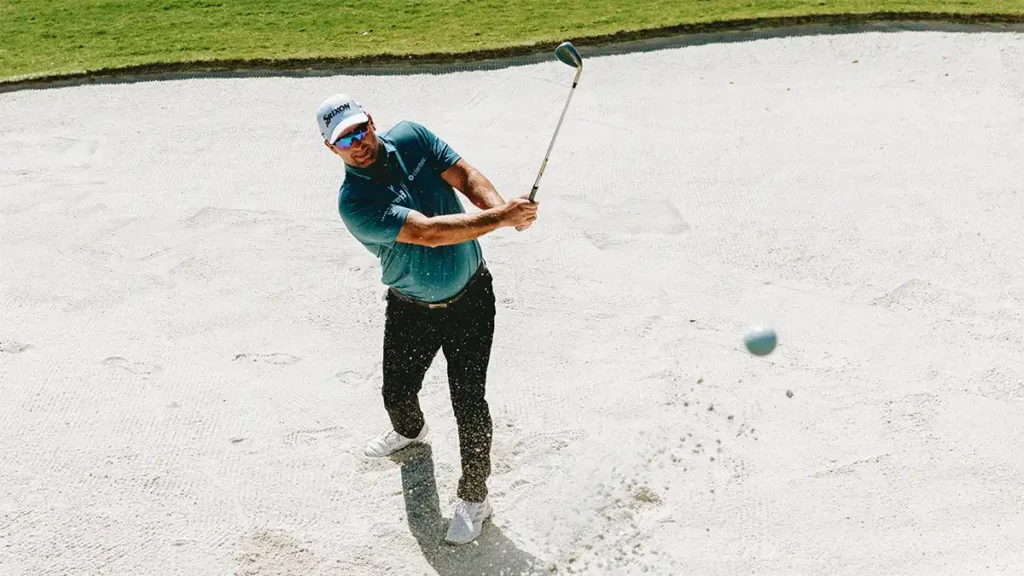
Ryan Fox plays golf at one speed – FAST. Here’s why
It’s been a while since we’ve had a “this putt to win a major” moment in golf. But when it came, it didn’t take long. Ryan Fox struck his winning birdie putt on the 18th green at Royal Birkdale just 22 seconds after his playing partner, Sam Burns, holed out for par.
TWENTY-TWO SECONDS
Having hit his 8-iron approach to 12 feet, the Kiwi settled into his putt, took two brief glances at the hole and rolled in the winning putt.
“It’s always been ‘see a shot, hit a shot’,” Fox said in his post-round interview on the 18th green. “As soon as I start thinking about it too much then some bad stuff creeps in.”
Fox has long been known as one of the quickest players in professional golf. So where does his speed come from?
“I was always that way as a kid,” he says. “I see things fast. I was the same when I was playing cricket growing up. I played almost every sport growing up, and tennis I wanted to hit the ball hard, and cricket I wanted to hit the ball hard. Everything just happened fast. I was never methodical at anything, to be honest, and it just carried over into golf.”
It’s not just the media that noticed Fox’s speed, the world’s No.1 player was amazed at Fox’s brisk play.
“I played with Scottie Scheffler earlier in the year, and I can’t work out if this was a burn or a compliment,” Fox recalled. “We played at Phoenix, and we’re in a three-ball on Saturday. We walk off the ninth tee, and he goes, ‘Foxy, it doesn’t even feel like you’re in the group. It just feels like we’re playing in a two-ball, you hit it so fast. It’s just in the air.’”
Maybe, therein lies a lesson for us all. In a sport often plagued by slow play and five-hour rounds, the Champion Golfer of the Year wastes no time. Such a skill could prove pivotal in Presidents Cup matchplay, where time to think can bring even the very best to their knees. – Jamie Kennedy
Ryan Fox uses breathwork to make pressure putts. You should too
The data will point to several tangible factors that made Ryan Fox and Cam Young the top two finishers at this year’s Open Championship. One is harder to quantify, however: how well the contenders breathed.
This might seem like a joke, since technically, any player who didn’t breathe successfully over 72 holes would no longer be alive. Yet increasingly, players point to breathwork as an important tool in regulating their nervous systems under pressure. Plus, they say it gives them something to focus on beyond the stakes of a potential life-changing victory.
“I was just trying as much as I could just to deal with the thoughts that come along,” said Young, who finished a stroke behind Fox. “Just keep walking, keep breathing. Not that I was super-nervous, but I just needed something to latch onto.”
Although Fox acknowledged one of the reasons he tends to play fast is to limit the intrusion of negative thoughts, he said there are occasions when he senses he’s playing too fast. This is when he returns to focusing on his breath, which he did during a tense back nine on Sunday at Birkdale.
“The other thing we worked on was, especially over the putter, just take some deep breaths,” Fox said. “I do tend to get a little quick at times, and just taking a second longer, especially over a putt, just get myself ready, get myself relaxed. I did that a lot down the stretch. I’m pretty sure you could probably see it on camera as well. There was a lot of deep breaths walking down some fairways just trying to compose myself. It obviously worked pretty well.”
More than just an anchoring tactic or distraction, experts have discussed the benefits of intentional breathing as a way of managing competitive anxiety. And it isn’t just about “taking a deep breath”, as is commonly advised, because exhaling might be even more important. Popular techniques include box breathing, a pattern of inhaling, holding, exhaling and holding for specific counts, or what is known as cyclic sighing, in which you double-inhale through the nose and then allow an extended exhale. According to research from David Spiegel, the director of Stanford University’s Centre on Stress and Health, cyclic sighing is effective in activating the parasympathetic nervous system, which lowers the threat response we feel under pressure.
“I just think it’s everything,” said Sean Foley, who also wrote about the benefits of effective breathing in a story for Australian Golf Digest. “It’s coherence. Once you can get the lungs and the heart moving in the same direction. It just gives us the ability to tap into what we’re able to do when we feel like that. It’s nothing we need to do. The processes are already inside us.” – Sam Weinman