LAHINCH, Ireland — The Walker Cup is different from the Ryder Cup. Two days of competition versus three, meaning one extra day of prep for the best amateurs in the world. I walked with both teams at Lahinch on Friday and noticed an interesting difference in how they each used their time.
Despite the heavy, HEAVY, HEAVVV-EEEY winds that hit the west coast of Ireland in the morning, both teams assembled at 8 a.m. and set out from the first tee around 9:30 a.m. With gusts around 50 mph, it wasn’t going to be a normal practice round for the 20 players (well 17 with three U.S. players missing due to illness).
Playing in one group, as a seven-ball, the U.S. squad headed up the first hole. Between them, only one hit the fairway and none found the green with their second shots. Lahinch’s opener is just 363 yards, but played into a left-to-right wind that battered shots immediately as they got airborne.
Captain Smith joined the team on the tee at the par-5 second hole and suggested a skins game. He offered $50 of his own money to the player who could card the lowest outright score on any hole.

“There weren’t a lot of birdies!” Ryder Cowan told me after the round.
And it was easy to see why.
After looping around the second they headed back up the dunes for the third hole. There, just three tee shots found the fairway and again, no balls found the putting surface. The wind was peaking, the rain had joined in and I witnessed more than one conversation about whether they should continue playing.
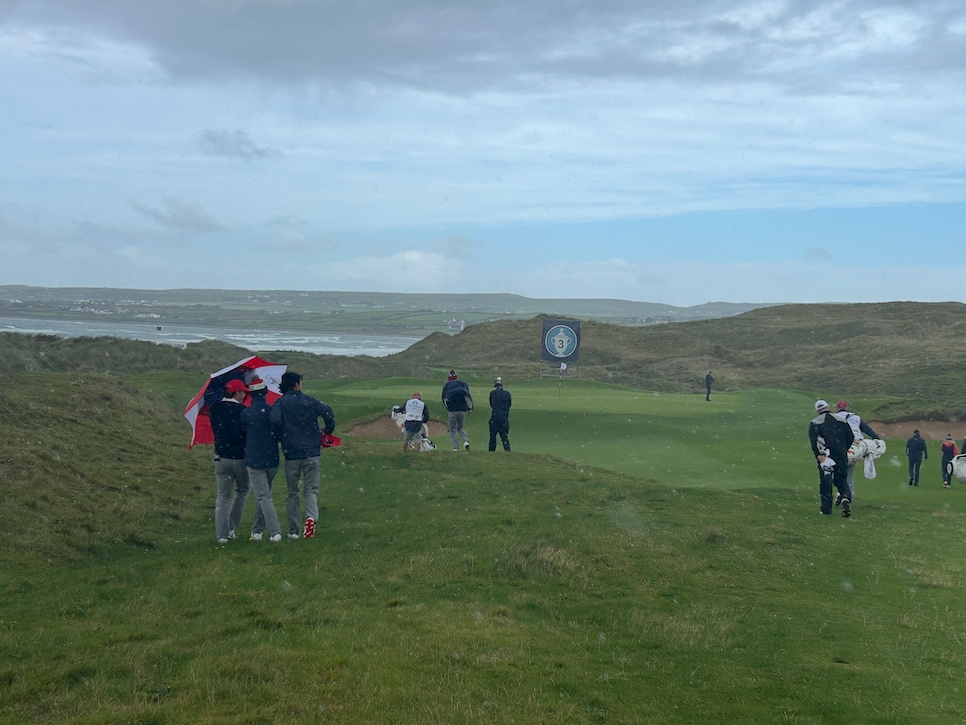
Play on they did for two more holes before skipping over to 15 and playing in. Jay Leng, Jr. told me it was Tyler Watts that took home the most cash from Friday’s round but didn’t confirm the amount.
The Great Britain and Ireland team had a different approach.
Teeing off shortly after the Americans, captain Dean Robertson told his players they had to play the first hole but could then split off and make up their own routings after that.
The majority of the group skipped over to the 10th and took on the back nine. When they reached the 15th hole, Robertson challenged them to a four-hole short-game competition. In addition to playing their own ball on each hole, the captain picked a spot around the green on each of the last five holes and players had to hole out from that spot, and keep their score.

“That really just brought a little bit of a focused approach to those holes,” Robertson said.
“In high winds, the short game becomes really challenging, and we gave them exceptionally challenging short-game shots to play over the last four holes and not only demonstrate their skills but have a little bit of fun too.”
The 15th challenge was a cross-wind pitch shot, the 16th a mid-range bunker shot, the 17th a chip-and-run from the rough and on 18, players chipped from near the wall to the left of the green.
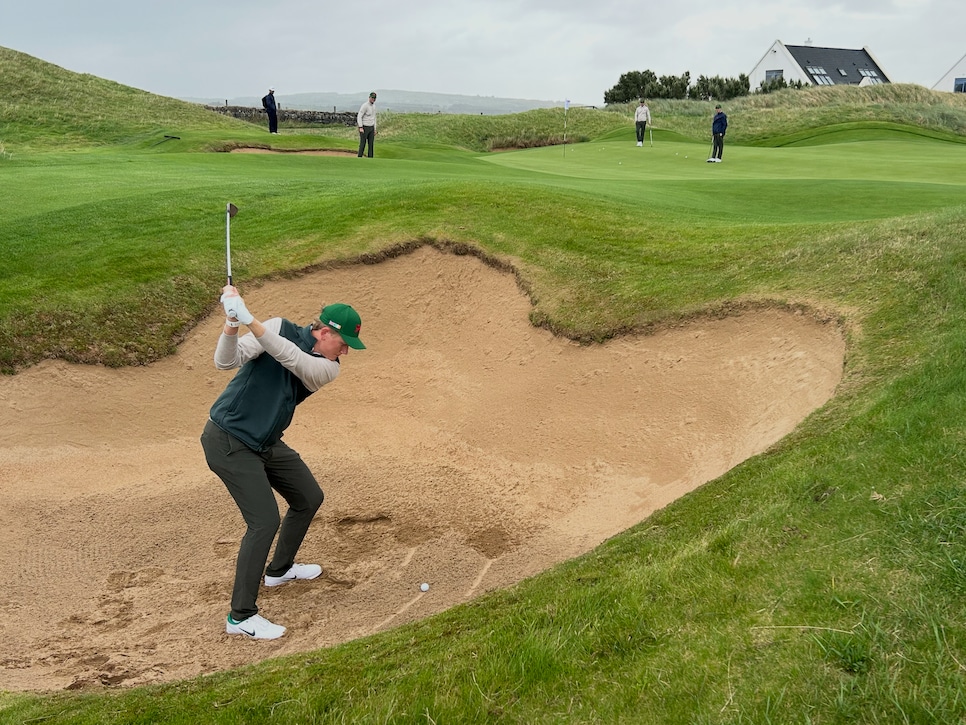
I caught up with Luke Poulter after the round, who was happy to inform me that he and Connor Graham had tied for the lowest aggregate score, both making two 2s and two 3s. Again, the conditions were brutal.
Robertson, who is also the head coach at the University of Stirling in Scotland, clearly had a plan for both the round and the conditions. Smith on the U.S. side, who himself played in three Walker Cups, chose rather to pit his players against each other in a skins game.
Two different approaches to the final preparations at Lahinch. The next two days will tell us if either aided their side’s chances.
This article was originally published on golfdigest.com