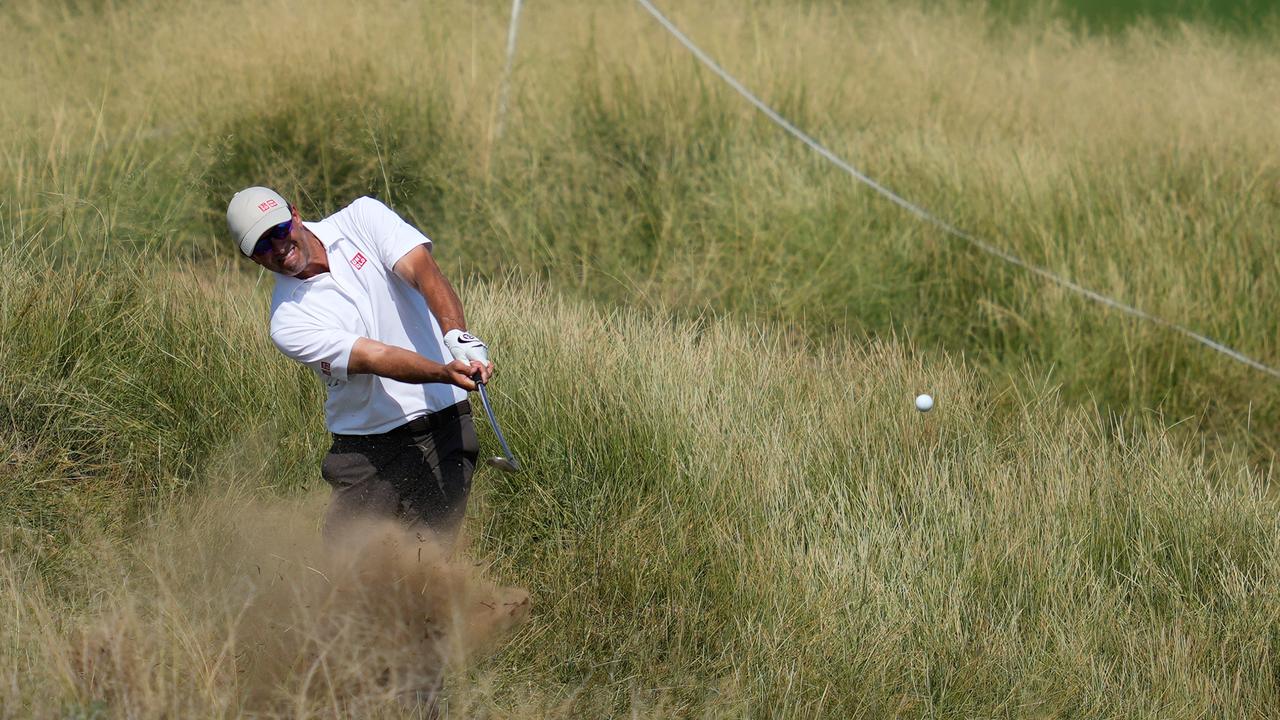
From early tee-times and long walks in the heat to tour travel, your menstrual cycle is part of your golf, whether anyone talks about it or not. Olympian-turned-sports-doctor Rachel Harris explains what it really means for your game and what golf still needs to get right.
Midway through the final round of the 2022 Palos Verdes Championship, Lydia Ko was lying face-down on the grass. Her physio was working her lower back and hips while she was still in contention. To anyone watching at home, it looked like the start of an injury story.
Afterwards, Golf Channel’s Jerry Foltz asked whether the back was something to worry about. Ko didn’t dodge it. “It’s that time of the month,” she said, then turned to the camera. “I know the ladies watching are probably like, Yeah, I got you.” When her period arrives, she explained, her back gets tight and she feels “all twisted”. Foltz managed a brief “thanks” and the interview moved on.
A lot of women watching knew exactly what she meant. Most of them have stood on a first tee with cramps and a 7am start. Plenty have thought twice before pulling on white shorts for a pennant match or scanned the course map for a toilet that isn’t there between the third hole and the turn. They’ve walked 18 holes in January heat feeling flat for no obvious reason and they’ve had a round fall apart without quite knowing why.
Ko simply said out loud what women’s golf has quietly worked around for generations. Four years on, the conversation is finally catching up.
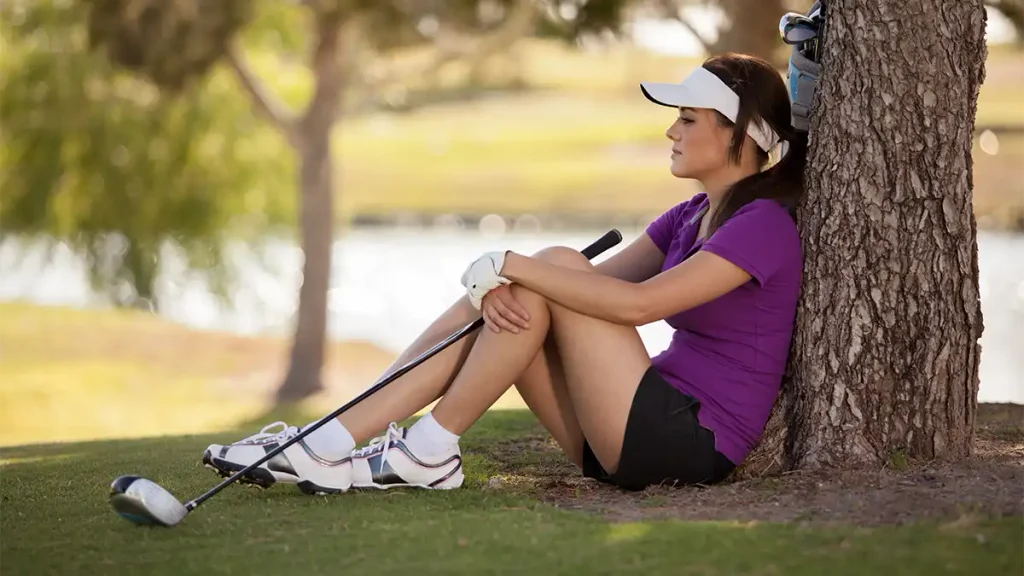
Not just a tour problem
When researchers asked elite amateurs at the 2022 World Amateur Team Championships in Paris about their health in the previous month, 16 percent of the 162 golfers reported period pain or cramps. A follow-up study of professionals at the 2024 Aramco Team Series on the Ladies European Tour found menstrual problems were again among the most common illness complaints, echoing the amateur findings. Fatigue or a lack of energy was the most common illness symptom of all, at 30 percent. In a matching study of male professionals at a DP World Tour event, the figure was 6 percent.
None of this ends at elite level. Golf Monthly’s Katie Dawkins has urged county teams to rethink white bottoms and suggested clubs stock period products in the pro shop and halfway house, not just the locker room. For many club golfers, the practical side of a period (what to wear, where the nearest toilet is, whether to pull out of the monthly medal) can shape their golf as much as anything physical.
That’s the gap Dr Rachel Harris has spent the past seven years trying to close.
From the pool deck to the fairway
Harris has been on both sides of elite sport. A Perth-born distance swimmer, she won Commonwealth Games gold in the 800-metre freestyle in 1998 and swam at the Sydney 2000 Olympics before retiring at age 21. Today she is a sport and exercise physician in Perth, chief medical officer for Swimming Australia and, since 2019, lead of the Australian Institute of Sport’s Female Performance and Health Initiative.
The initiative was set up because women in sport had nowhere reliable to go for answers. Harris admits she didn’t know golf well before we spoke. But her message translates neatly from the pool to the fairway and it’s aimed as much at the people around women golfers as at the players themselves.
“If you don’t know what’s normal, it’s hard to know when to seek out help,” she says. “And undeniably we need to be improving the health literacy of men as well. For men to understand how it works means you’ll be a better coach, a better father, a better golfing partner.”
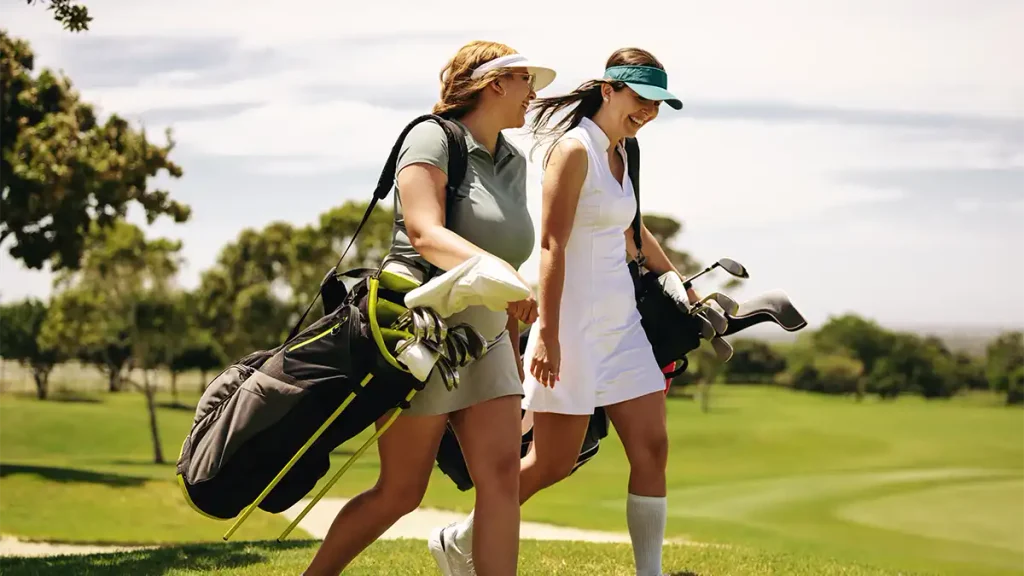
Where your power comes from
Most women think of their cycle as a monthly inconvenience. Harris sees it as one of the engines behind a golf swing. The hormones that run the cycle (oestrogen, progesterone and small amounts of testosterone) help build muscle, protect bones and support how the body adapts to training, from the teenage years through to menopause.
That matters in a sport where women tend to peak in their 20s and 30s, not as teenagers. “They’re not making it when they’re 12 years old. They’re making it when they’ve had experience and they’ve got the power,” Harris says.
Those hormones, she explains, are “impacting on their muscle strength and their capacity for skill development”: the clubhead speed, the stability through impact and the hours of practice it takes to groove a swing. She thinks the way we talk about puberty sets girls back from the start.
“When we think about puberty in young boys, it’s almost a celebration, because they’re becoming a man,” Harris says. “When we look at the challenges young girls go through, there’s actually a lot of negativity around it.”
For some women the cycle brings a heavier load. About one in seven Australian women are diagnosed with endometriosis and about one in eight live with polycystic ovary syndrome (PCOS). Both can mean severe pain, heavy bleeding and fatigue, which are hard enough on a weekday and harder still across four-and-a-half hours on a
golf course.
The other warning sign is a period that stops altogether. Harris is blunt that losing your cycle through under-eating or overtraining is “not a good thing”. It can mean more illness, weaker bones, poorer mood and worse performance.
Forget the textbook
Most of us learnt the tidy version at school: a 28-day cycle with ovulation bang on day 14. Harris calls it the “unicorn menstrual cycle… the stuff that we read about in textbooks, which realistically very few women actually have”. A regular cycle can run anywhere from 21 to 35 days. Ovulation can land as early as day seven or as late as day 28 and some months it doesn’t happen at all.
That matters because of the boom in “cycle syncing”, the idea that you can plan training around the phases of your cycle: lift heavy here, ease off there. Golf has taken notice. In 2023 the Ladies European Tour partnered with Olympic champion Jessica Ennis-Hill’s cycle-tracking app, Jennis, to help players plan training and recovery around their cycles.
Harris is more cautious. Tracking can be a useful way to notice your own patterns, she says, but counting days from your period isn’t the same as knowing where your hormones are.
“If we are just doing menstrual cycle tracking based on bleeding, we don’t actually know which phase we’re in. We’re assuming phases,” she says. “If we’re assuming what phase you’re in and changing training based on that, we’re actually doing a real disservice.”
There is also no evidence, she says, that every woman should train the same way at the same point in her cycle. What works is the approach good coaches already take with everything else: paying attention to the individual player.
“It’s a bit like someone having a shoulder problem,” she says. “We should be individualising our training based on the individual in front of us and that doesn’t matter if it’s menstrual cycle changes or a shoulder.”
Harris works with one athlete with PCOS who struggles with strength and endurance work in the second half of her cycle but is sharp on technique during that time. Her coach plans around it, much as a golf coach might move gym sessions and keep the short-game work.
Most golf coaches agree in principle. In a survey of swing coaches, performance staff and medical teams, 84 percent said monitoring a female player’s cycle was important, but only 29 percent were actually tracking how her performance changed across it.
There’s a catch and every tournament golfer will recognise it. The draw doesn’t check your calendar. “If you fall on day 14 and you normally feel terrible and that’s the biggest golfing event of your career, you still have to perform on that day,” Harris says. “So often we also need to practise in and around different parts of our cycles.”
She also warns against blaming the cycle for everything. Sleep, stress, food and what’s going on at work or at home all show up on the scorecard too. “Not everything is about the menstrual cycle,” Harris says. But when a player has heavy bleeding or significant pain, she wants coaches to lean in rather than tell her to push through.
Eighteen holes on empty
Golf rarely gets counted as an endurance sport, but the body does count it. In a recent study at Liverpool John Moores University, low-handicap golfers who walked a championship course took about 17,000 steps and burned close to 900 calories, roughly double what they used riding in a cart. The players were young men, so the numbers won’t match every woman’s round. The point still stands: 18 holes on foot is a long day’s work.
Now picture how a lot of women actually play it. There’s a 6:30am tee-time with no real breakfast, a muesli bar on the 10th, then straight from the 18th green to the school pick-up. In February, add 34 degrees and a hilly back nine.
Harris says energy is the piece women most often get wrong and on tour the economics make it worse. Outside the top handful of players, women are paying for flights, accommodation, coaching and food out of earnings that can disappear with one missed cut. Corners get cut and food is often one of them. When a body isn’t getting enough fuel for what it’s being asked to do, it starts shutting down systems it considers optional and the menstrual cycle is one of the first to go.
A missing period is a signal, not a badge of fitness. It’s worth remembering that fatigue topped the list of illness symptoms among those LET professionals. For club golfers, the fix is simpler than any app: eat before you play, carry proper food and water and treat a long, hot walking round like the physical effort it is.
Time zones and tournament weeks
If fuelling is one disruptor, travel is the other. The Ladies European Tour schedule involves about 30 events in 20 countries a season and for Australians on the LPGA Tour, almost every trip starts with a long-haul flight.
“If we went from Perth to Boston for a tournament, you’re actually changing time zones by 12 hours. You’re flipping day to night,” Harris says. “It’s basically confusing your hormonal system, which is an intricate feedback system. Your brain is telling your ovaries what to do at various times of the month and your ovaries are then telling your brain what’s happening as well.”
Scramble those signals and a cycle can disappear for a month. “You won’t necessarily get your menstrual period,” she says. “We see these in athletes all the time.”
It isn’t only professionals who get caught out. Anyone flying interstate for a pennant final or heading overseas on a golf trip can arrive to an early period, a late one or none at all. Knowing that it’s a normal response to travel takes some of the worry out of it and so does packing for every possibility.
Building it so they come
For all the talk of hormones, Harris believes golf’s biggest wins are structural. “Yes, our physiology is driven by the menstrual cycle,” she says, “but so many of the fundamental issues with injury and opportunities for women and girls to continue in sport actually come from the structure and the opportunities.”
Strength training is a good example. Harris would like to see girls lifting in their teens for stronger bones and fewer injuries, yet the habit still isn’t universal even at the top of the women’s game. When 102 LET and LPGA players were surveyed about strength and conditioning, fear of injury and not knowing how to train safely were among the barriers they named. So were menstrual difficulties.
The knowledge gap runs deeper than golf. Only about 6 percent of studies in leading sport and exercise science journals are conducted solely on women and Harris points out that much of the movement modelling used in sport is built on male data and scaled down. She says the questions women most want answered, such as how different contraceptives affect performance and fertility, need properly funded, long-term international research.
Then there’s the culture around the game. Harris has heard the comments aimed at women golfers online, including the one telling them to get back in the kitchen rather than out on the course. Her answer is simple. “If you build it, they will come,” she says. “But people need to be given those opportunities.” That means sponsors, crowds at women’s events and clubs that make women feel they belong.
Part of the game
None of this asks golf to turn into a medical clinic. It asks the people around women golfers to know the basics: coaches and caddies, club captains and committees, parents, playing partners and sponsors. They need enough to ask the right question, plan a sensible practice week and recognise when something isn’t normal.
That was the quiet power of Lydia Ko’s answer at Palos Verdes. She didn’t make a speech. She described her cycle as what it is for every woman with a golf bag in the car boot: part of the game.
“Female athletes are incredible,” Harris says. “Our athletes just need the same kindness that our male athletes get.”
Photographs by getty images/Charlie Crowhurst and istock/,jacoblund Antonio_Diaz, Suwatchai Wongaong, bernardbodo