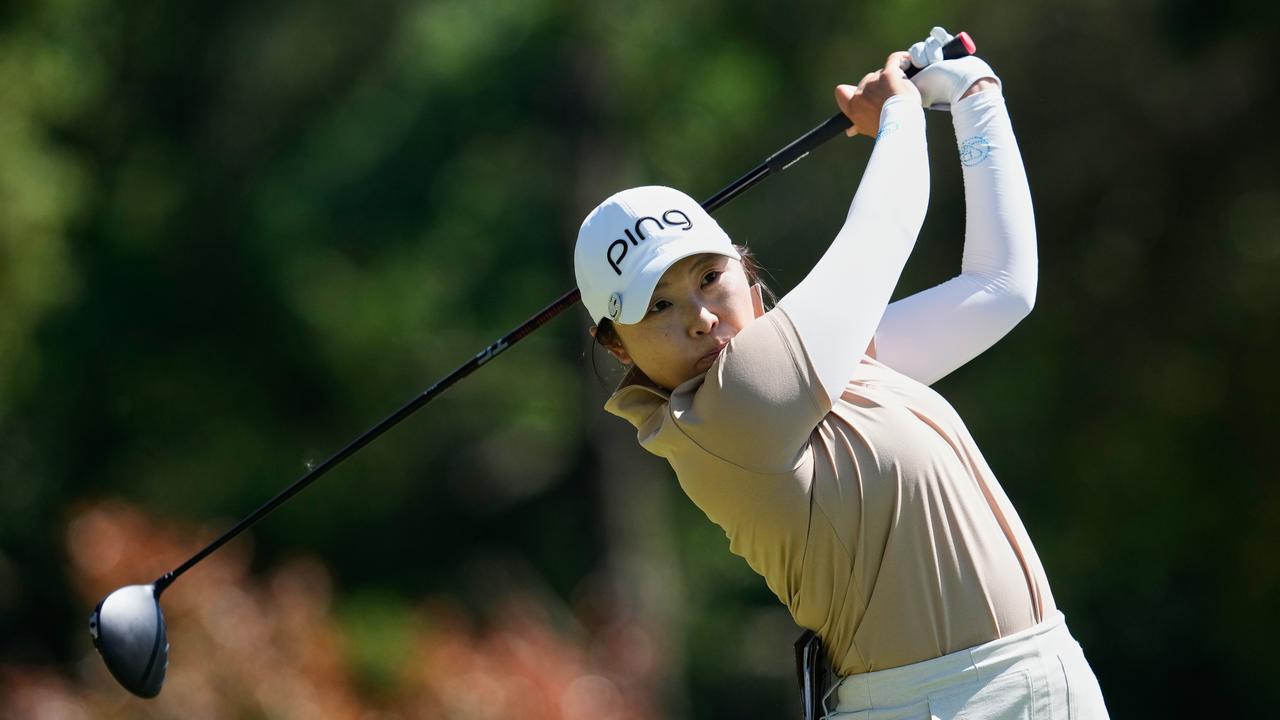
Hall of Famer. Olympic gold medallist. Lydia Ko has done it all and now she’s using that perch to lift the next generation of women’s golf, including the very rivals chasing her records.
Lydia Ko would like nothing more than to talk about Lego. This is not where I expected the conversation to go, 20 minutes into a call with a woman who has an Olympic gold medal, a career Grand Slam and a plaque from the LPGA Hall of Fame sitting in her house. She has just come off a sponsor’s day in Orlando, Florida.
“It’s like Lego blocks,” Ko says, apropos of her entire career, and the sentence I did not see coming from the 29-year-old currently ranked among the most decorated players of her generation. “It’s one block and then two blocks and three blocks and all of a sudden you have this huge home that you’re like, Wow, when did this happen? It’s with time and patience and belief that all this happens.”
Every block she describes, I’ll come to learn, was laid by the same person: a kid from Auckland who never quite let go of who she was before any of this started.
It is, on reflection, a very Ko answer, disarmingly plain-spoken for someone with more than a decade of professional golf. She is not talking about her own career here. She could not possibly be talking about anything else.
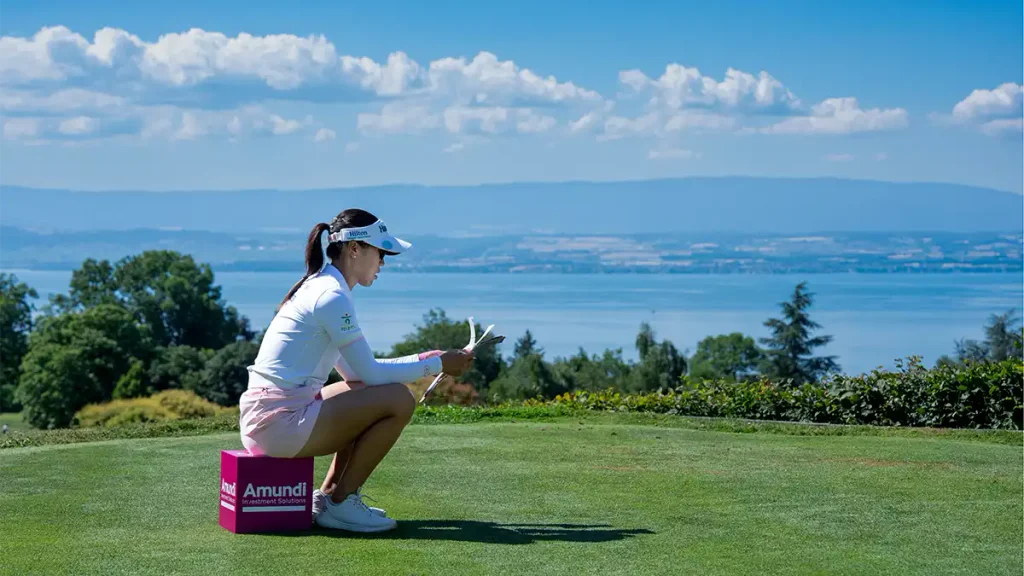
KEEPING HER OWN SCORE
For someone with her résumé, Ko is remarkably willing to admit how hard-won her self-belief has been.
“I’ve had years when even internally I thought maybe I am unbeatable, where I feel like superwoman,” she says. “Then I’ve had years where I’m like, Why am I playing? What is next? Do I deserve to be out here?”
Superwoman one year, questioning everything the next. It’s a swing most women will recognise, even if the stakes for the rest of us rarely come with an Olympic medal attached.
It helps that Ko is so willing to say it plainly in the first place. She’s well spoken, considered, never careless with a word, but she’s not interested in performing confidence for a camera and that same honesty is what lets her talk about 2023 without softening it. It was one of her hardest years. Ko missed the cut at the AIG Women’s Open, played “dead last” as a one-ball at the Canadian Women’s Open and missed another cut the next week in Portland. She remembers a Friday evening spent crying over Thai food with her sister, unsure what would come next.
“I felt like I was putting in the same amount of effort or even trying more, yet the return was nothing,” she says. “It was hard because when you keep putting in and you just keep getting pushed down and down, it’s really hard to see the vision. I felt like I had an ultimate low.”
What pulled her out wasn’t grit in the way we usually imagine. It was a conversation with her mental coach where she finally said the thing out loud.
“I don’t know if I love golf, but I love excelling at what I do,” she says. “I think that is probably the biggest motivation for me.”
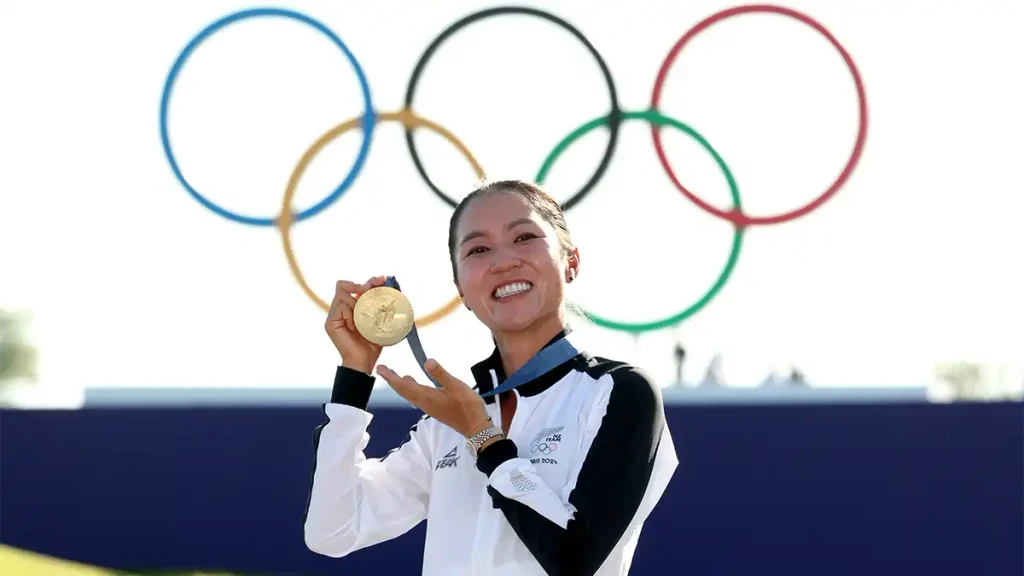
That distinction, subtle but hard-won, reframed everything for her. By 2024, Ko had won Olympic gold at the Paris Games and been inducted into the LPGA Hall of Fame. But ask her what she’s proudest of from that week and it isn’t the medal.
“I’m just so proud of myself for overcoming my own doubts,” she says. “Like, even if this is it, it’s fine. You’ve been so successful before, you’ve got nothing to prove. It really didn’t matter to me, because I felt like I was a disappointment to myself and my team. That was the first time in my career that I felt like I truly persevered.”
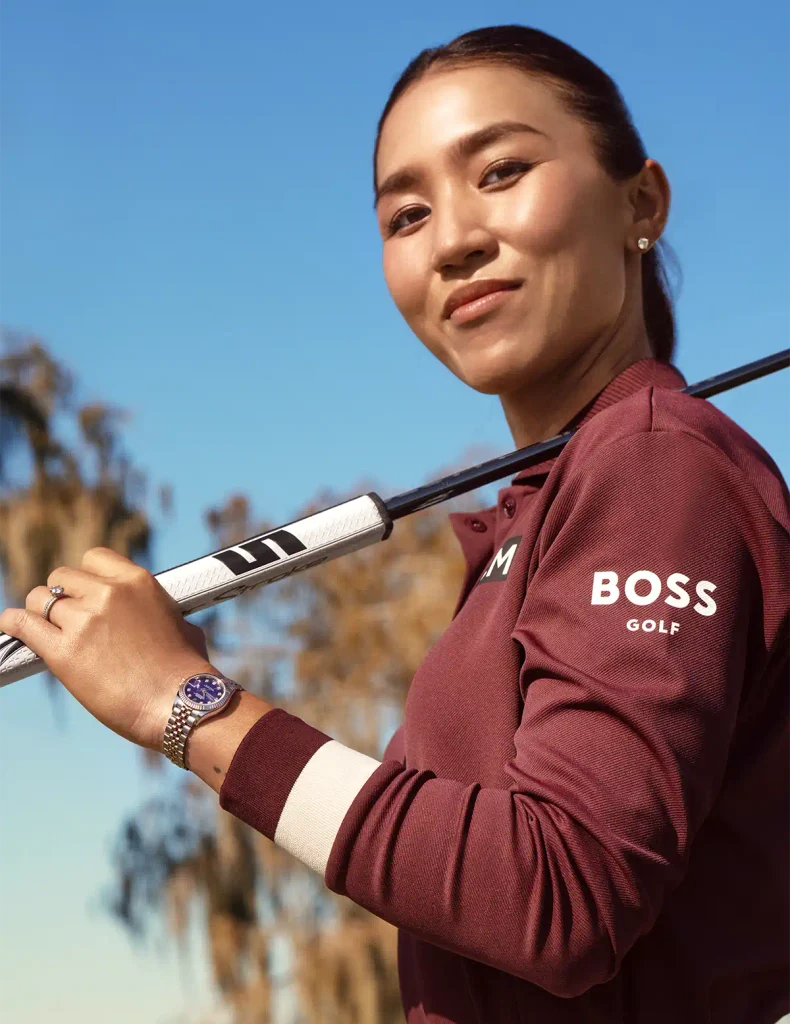
A KIWI FOUNDATION
Ko traces much of her grounded outlook back to where she grew up. She has South Korean heritage and was raised in New Zealand from early childhood, arriving there speaking no English.
“I only knew four letters of the alphabet and I knew it as ABDC,” she laughs. “It was terrible.”
Golf, she says, was never the national obsession there that rugby, cricket or netball were. Her club charged $250 a year, a figure that apparently stunned her American friends, who were paying $500 for a single round.
“I grew up in a country that is so down to earth and nothing is so flashy, I was just part of a club,” Ko says. “It’s unheard of [in many places], right? But for me, that was normal.”
That upbringing, she believes, shaped more than just her values, it shaped how she plays.
“I think a lot of how I go about things is kind of like that Kiwi style and I really embrace that,” she says. “I honestly miss home. But I do think that a lot of the way I think about things, and especially on the course, is a lot of that same girl from New Zealand.”
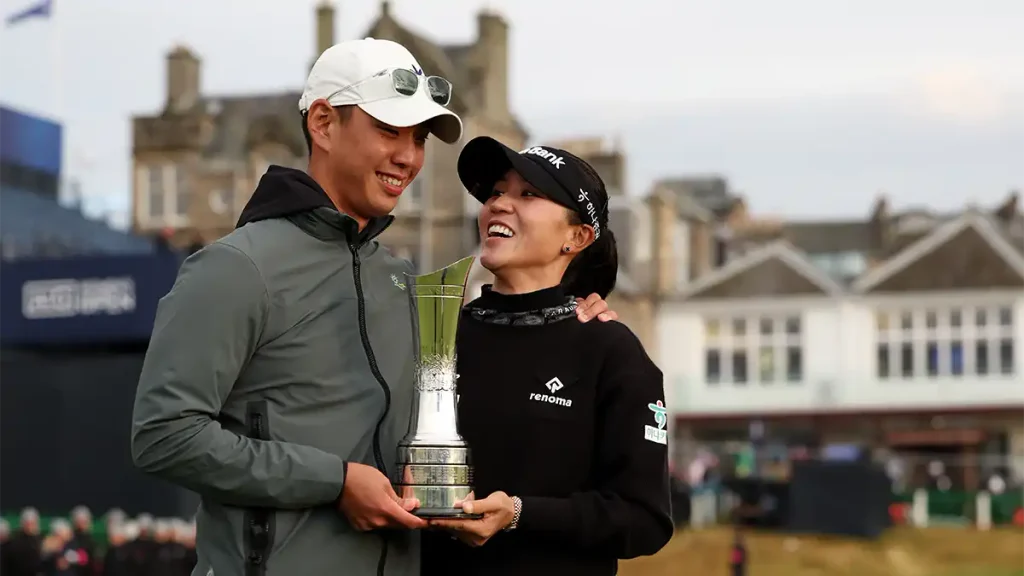
LIFTING AS SHE CLIMBS
If there’s a throughline in everything Ko says, it’s an instinct to look inward, then reflect what she finds back out. To credit the players who came before her. To actively will success for the ones coming up behind.
She talks warmly about Karrie Webb as a role model for Australian golf, crediting her influence for the rise of players like Minjee Lee, Hannah Green and Cassie Porter. “I think we are going to be in her kind of shoes in a little time,” Ko says, “so it’s very important for us to keep those standards high, just like our role models ahead of us.”
She is equally generous about her fellow competitors on tour today, describing the camaraderie of the LPGA as one of its defining features. “I think one of the best traits about the LPGA Tour is when a player wins, there’s another player spraying champagne or there to congratulate them,” Ko says. “I truly think that is one of the greatest things about the LPGA. One day when I retire, I know that there’s still going to be some players that I’m going to keep in touch with and they will be some of my closest friends.”
That spirit extends directly to Jeeno Thitikul, the young Thai star widely tipped to inherit Ko’s mantle at the top of the game.
“Whenever I play with Jeeno, there’s aspects of her game that I look up to,” Ko says. “But I think one of the big things is her demeanour and how she carries herself on the course. She could be having a bad day, even though bad days don’t happen very often for Jeeno and she has the same composure. I think that makes a very high-calibre golfer.”
She’s also thinking generations ahead. Asked about Rolex’s “Reach for the Crown” philosophy, Ko turns the conversation towards the girls who’ll be watching her now.
“There’s going to be 12-year-old girls in 10 years’ time who maybe will be a Rolex testimonee, and how I carry myself is going to be a reflection of how they’re going to go about their business and who they want to be,” she says. “So I think it really matters.”
Ko has watched the women’s game globalise dramatically since she turned pro, moving from a period of Korean dominance to a genuinely international leaderboard spanning Japan, Thailand, Australia, Europe and the United States. Rather than seeing that as competition for her own legacy, she frames it as validation of everything the sport has built.
“I don’t think one country has a secret to it all,” she says. “In the game of golf in general, the leaderboards have become a lot more global. It’s crazy to think, because it just means it’s way more competitive. I think this is great for the game of golf.”
BALANCE, FINALLY
Much of Ko’s current perspective comes down to a balance she’s had to properly fight for after more than a decade at the top of a sport that doesn’t hand it out freely.
Her husband, she says half-jokingly, was “my lucky charm”, arriving in her life the same week she snapped a three-year winless drought in 2021. “Golf has given me a lot,” she says, “and thanks to my husband, I really have a little bit more of that balance in my life and something to come back to.
“It would be a lie if I said golf didn’t affect me and still doesn’t affect me, because it still does,” she says. “And the day it doesn’t, it probably means I don’t care anymore. And that’s when I should probably go look for another job.”
Ko isn’t building just for herself anymore, not entirely. Every block she lays now, on the course and off it, seems aimed at making the path easier for whoever comes next, whether that’s Thitikul or a 12-year-old somewhere who hasn’t picked up a club yet.
“I know that there are not many things in the world that I’m going to be able to do at a very high level,” she says. “I’m trying to take that in as more gratitude. One day I’m going to be 70 years old, watching the LPGA Tour and seeing an even more diverse leaderboard. That’s honestly what I really look forward to.”
Photographs by Rolex/J.D. Cuban; getty images/kevin c. Cox, Rolex/chris turvey