WHAT YOU NEED TO KNOW: The new TaylorMade Qi4D family of drivers (Qi4D, Qi4D Max, Qi4D Max Lite, Qi4D LS) aim to manage the complicated challenges of faster ball speed mixed with forgiveness and aerodynamic speed. It’s a mean feat, but the company’s lineup of clubs all feature a newly designed variable face thickness pattern in the fifth generation of industry-first carbon composite face, coupled with optimised face curvature for consistent spin and directional control.
A new ultra-lightweight structure (completely titanium-free) in its oversized, super-forgiving Max/Max Lite models and an ultra-low-spin push in its LS heads occupy two ends of the spectrum, while the meat of the market is the full-service standard Qi4D model. It offers a tour-influenced shape with forgiveness and speed average golfers also can appreciate. Across the entire Qi4D lineup is a new shaft-fitting regimen that simplifies the choice to one of three profiles based on how a golfer rotates the club down to the ball at impact.
MORE: TaylorMade Qi4D fairway woods, hybrid: What you need to know
PRICE: Qi4D drivers will be available for preorder on January 9, and at retail locations on January 29 for $1,079. Qi4D Launch Monitor Enabled (LME) drivers will be available on the same dates for $1,099. Qi4D: 8, 9, 10.5, 12 degrees; Qi4D Max: 9, 10.5, 12 degrees; Qi4D Max Lite: 10.5, 12 degrees; Qi4D LS: 8, 9, 10.5 degrees (all with a 12-way adjustable hosel, +/- 2 degrees). Available for preorder on Jan. 8, at retail on Jan. 29.
 3 Cool Things
1. Front to back, inside and out. The TaylorMade Qi4D family of drivers marks the fifth instalment of the company’s switch to a ground-breaking all-carbon composite face technology. And because of the change, it seems to have opened a whole new collection of design opportunities that go beyond just the material difference in the face. Those new windows include not only the variable thicknesses in the face, but shape changes throughout the line to improve the mix of forgiveness with aerodynamics and even subtle tweaks to the curvature of the face (bulge and roll) that lead to more consistency in spin, direction and distance.
Like in past models, the carbon face on the Qi4D involves 60 layers that are arranged in a new variable thickness pattern that optimises speed, spin and launch. TaylorMade’s study of face designs has found a slight improvement in the way the ball springs off the face because of the lighter weight of the carbon composite. The Qi4D Max face design features a change with the perimeter and centre of the face getting thinner than past designs to maximise ball speed.
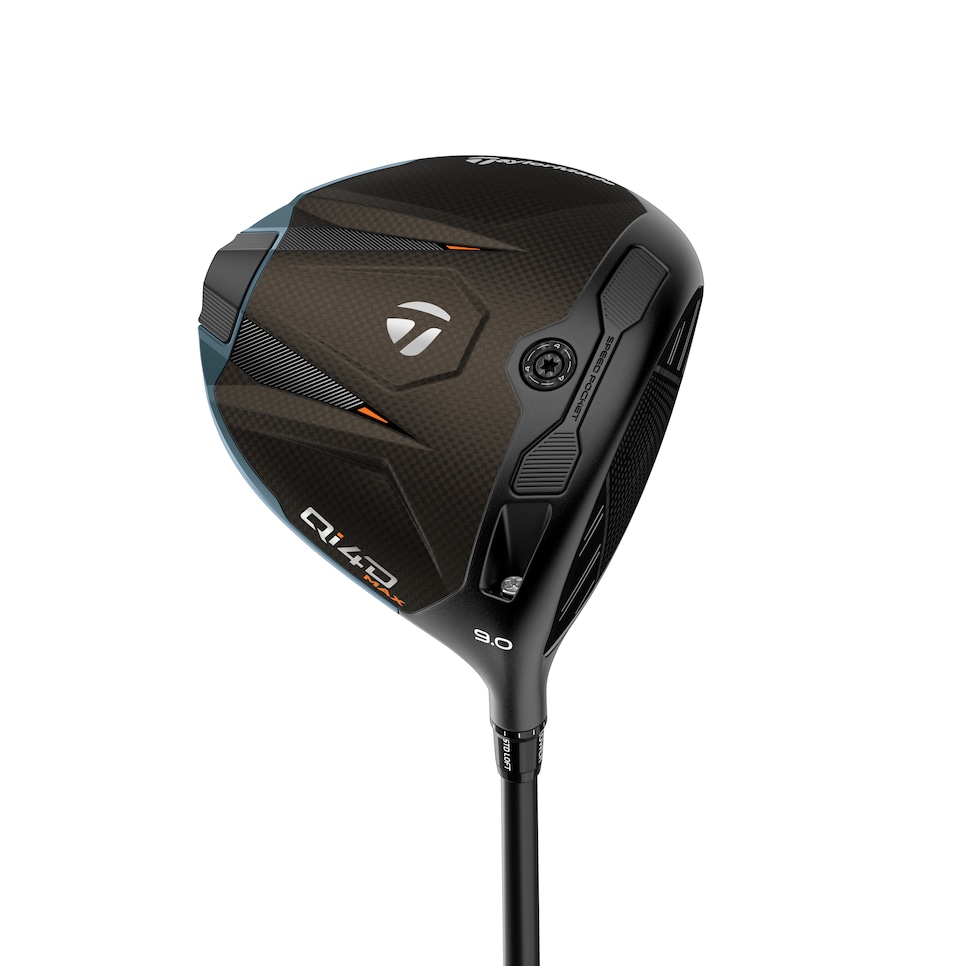
But that pattern and those on the other Qi4D drivers also work to maximise potential with a redesigned channel in the front part of the sole (thinner in the middle and wider at the heel and toe) for improved face deflection on off-centre hits. Again, the way the face flexes improves not only ball speed but spin as well. The improved overall stability of the head (moment of inertia) helps, too, made possible obviously because the weight saved by the lighter face allows it to be redistributed to the perimeter.
“It’s a combination of the inertia and all the aspects of the head,” said Andrew Oldknow, TaylorMade’s director of product creation for woods. “It’s the speed pocket at the bottom of the club being able to eliminate some of the spin. It’s a holistic system, with the whole front half of the driver working in concert to make sure that we can guarantee these type of spin windows that we believe are optimising results based on what we’ve learned golfers need.”

In addition to improving how much of the face produces the fastest ball speeds, this latest carbon face also allows intricate changes in loft at specific regions along the face and a tighter roll radius (all precisely repeatable in terms of manufacturing, too) to produce better spin consistency on shots hit high and low on the face. (Traditionally, those areas vary greatly with high impacts offering very little spin and low impacts producing excessive spin.) Again, that tighter roll radius is only possible because of the manufacturing efficiencies of the carbon composite design, Oldknow said, noting that TaylorMade’s carbon faces had one-third the manufacturing deviation from spec design than typical titanium faces were showing.
The extensive use of carbon composite throughout the body and frame also resulted in aerodynamic shaping tweaks that provide more speed potential for all swings. A large part of that improvement is how the rear sole weight is more recessed than in past models, while a softened edge between the top of the face and the start of the crown keeps the airflow during the downswing more stable and attached for a smoother trip through the air to maximise potential swing speed.
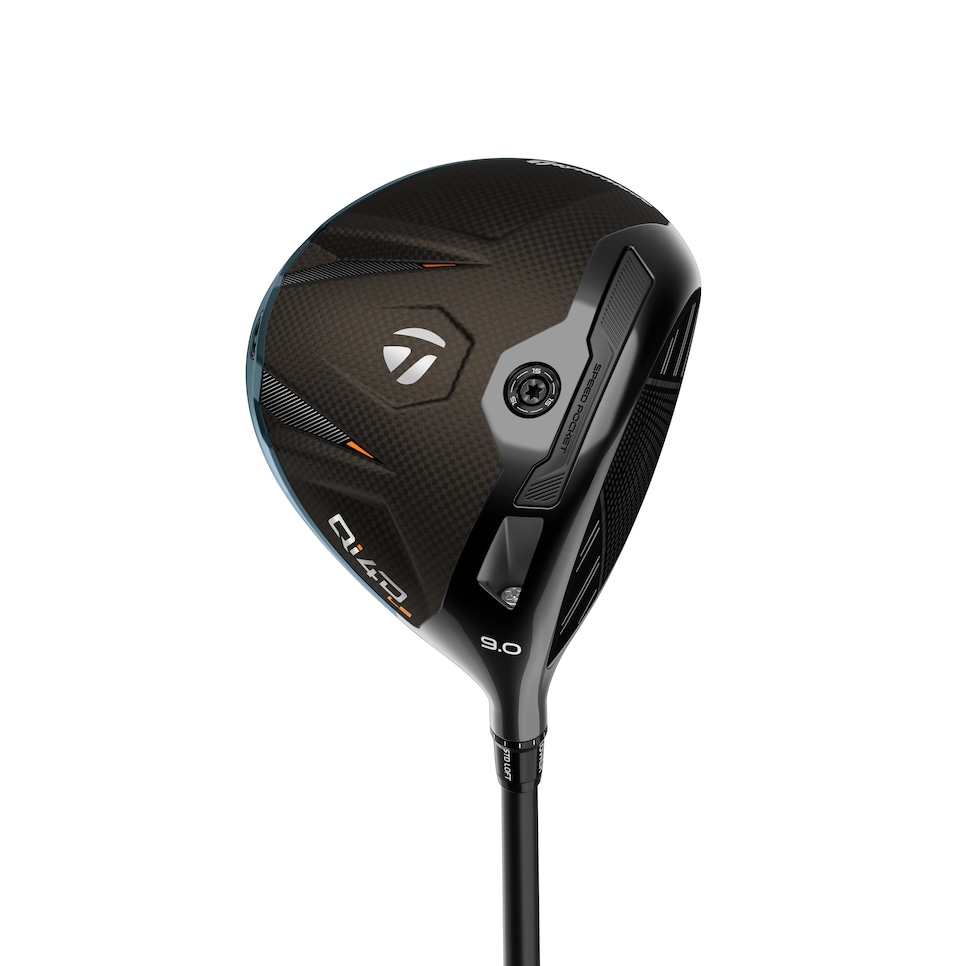
The lineup also includes two models, Qi4D Max and Qi4D Max Lite, that do not use any titanium at all. Both employ an aluminium ring that saves further weight to create more stability, as well as new adjustability options for greater fitting potential.
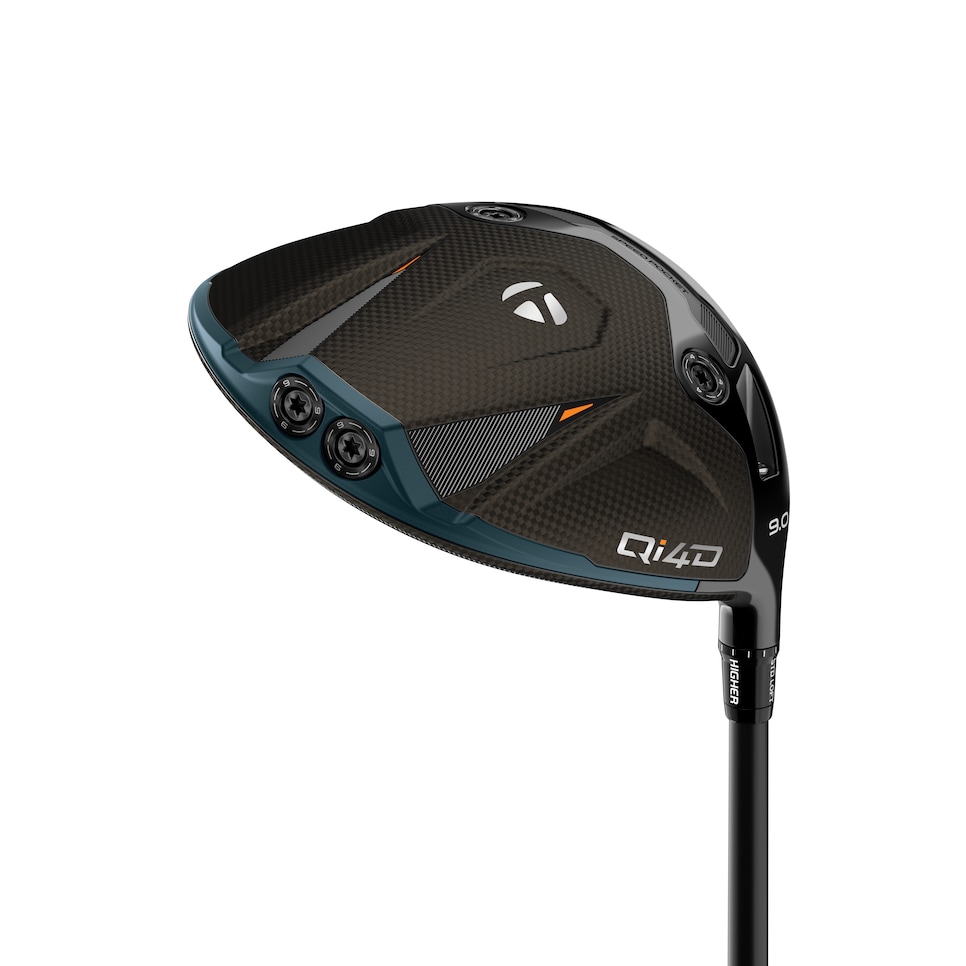
2. The next phase of fitting. TaylorMade drivers have been at the vanguard of adjustable fitting for the last two decades with the launch of the r7 Quad drivers in 2004. Qi4D’s lineup will include adjustable sole weights in all four models, another result of its lighter materials. That’s led by the four sole weights and 26 grams of movable weight in the standard Qi4D model, but there also are front and rear interchangeable weights on the Qi4D Max and Qi4D LS, as well as a single sole weight that can be switched to meet differing length and swingweight preferences.
But while interchangeable sole weights and adjustable hosels have been a hallmark in TaylorMade’s approach to individualised fitting, those seem like almost analog approaches to the subject compared to the Qi4D’s techy digital approach to dialing in the proper shaft. With three distinct REAX shaft profiles developed with Mitsubishi and based on some 11 million shots, TaylorMade is offering a more direct line to deciphering the right shaft. The shaft profiles reflect three typical ways of delivering the ball, based on the rate of rotation in the downswing (high, mid and low). According to TaylorMade’s research, a little more than half of all golfers fall into the mid-rotation (like Rory McIlroy’s motion), while about 20 percent are high rotation (like Charley Hull) and another 20 percent are low rotation (like Collin Morikawa).
The shaft-fitting system works simply through a single face-on video of a player’s driver swing. The correlation grew from study at TaylorMade’s fitting centre at The Kingdom at company headquarters in Carlsbad, California, Oldknow said.

“It really opened up this big ‘a-ha’ moment for our team to figure out how to fit certain people with their swing signatures depending on how you release the golf club at the top of the swing to how you attack the ball at the bottom of the swing,” he said. “There are certain things that happen there that determine what kind of shaft you should be in.”

For the first time, TaylorMade also is offering consumers the option of purchasing models with heads that feature the face markings (“fiducials”) that make it easier to capture clubhead data on a GCQuad launch monitor. Previously, these were only used in a fitting environment.

3. Model citizens. The lineup’s four models look to cover the full spectrum of player and swing types. The core Qi4D emphasises both stability on off-centre hits and aerodynamic efficiency and includes four adjustable sole weights (two in the front heel and toe and two in the back centre, 9 and 4 grams) to reduce spin, increase stability, change trajectory or mitigate left or right misses.

The large footprint Qi4D Max is the company’s most forgiving drivers in terms of moment of inertia, but it adds front and rear sole weights (13 and 4 grams) to tweak launch and spin. It features the deepest centre of gravity for improved stability and higher launch.

Equal in its size to the Max is Qi4D Max Lite, this lightweight offering include a lighter head, as well as a lighter shaft and grip that saves more than 10 percent in total mass (33 grams) compared to the standard Qi4D Max. Like the Qi4D Max, it also features a more upright standard lie angle to fight a slice.
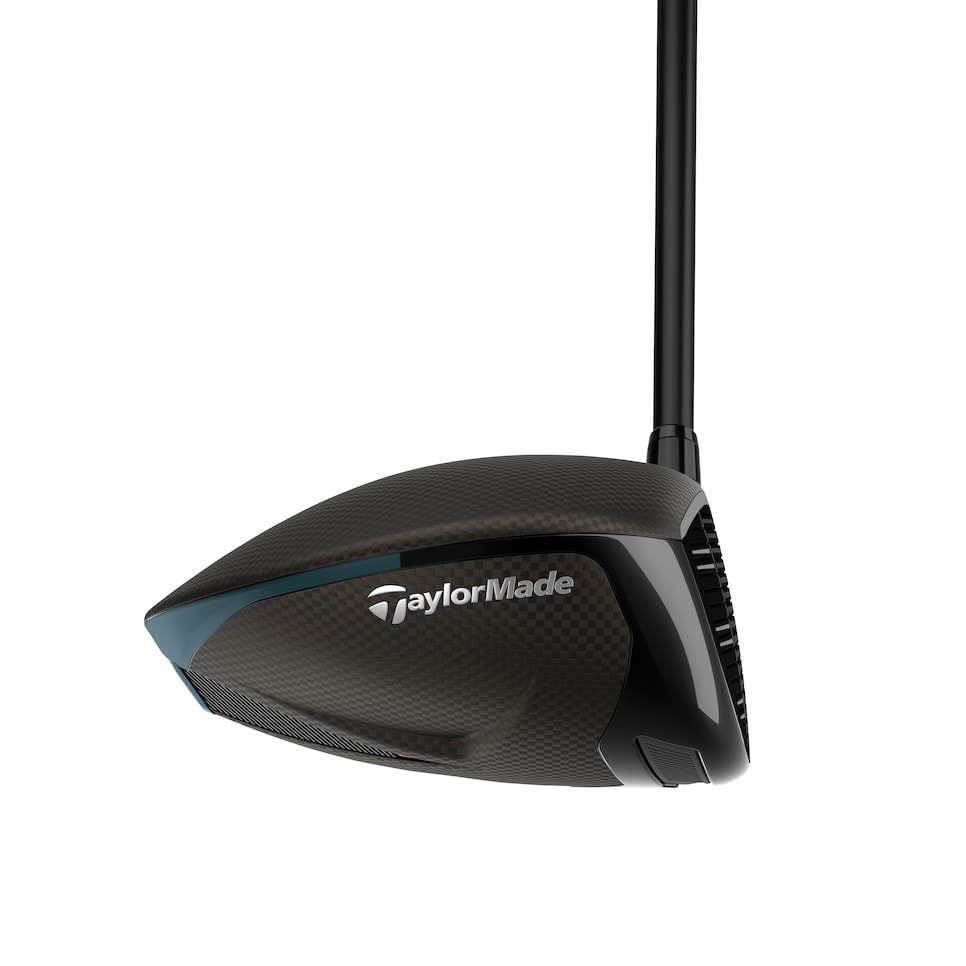
Finally, the low-spin Qi4D LS features the most forward CG in the line to knock off spin. Its two movable weights (15, 4 grams) provide adjustability to add forgiveness by shifting the heavier weight to the rear position. Its more compact size (450 cc) and aerodynamic shaping enhancements are built for faster-swinging players to maximise their clubhead delivery. It’s also improved its overall forgiveness with an improved variable thickness face design that creates a larger area of the fastest ball speeds than last year’s standard Qi35 model.