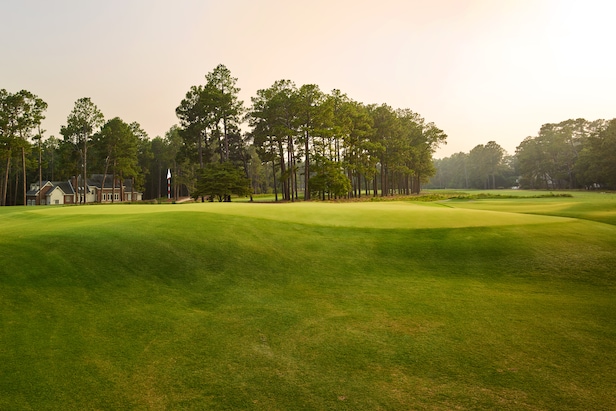
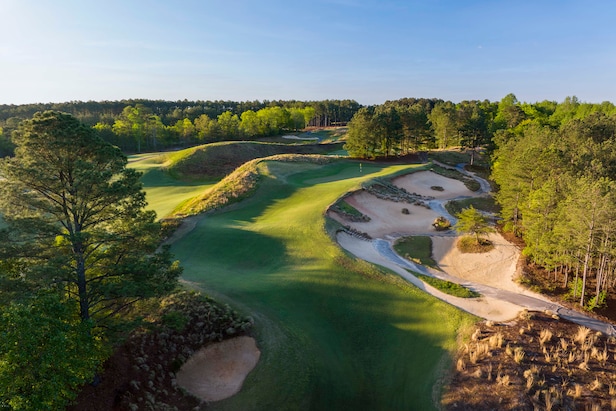
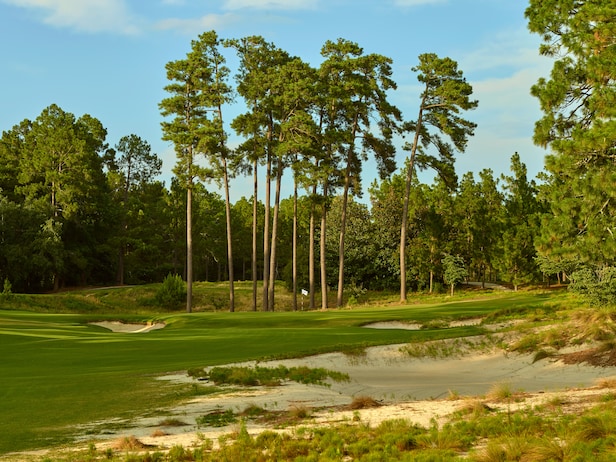
Let’s be frank: the merits of Pinehurst No. 2 can fly right past most golfers. Everyone who visits the resort wants to play the fabled No. 2, ranked 29th on America’s 100 Greatest Courses, but many who do leave thinking either it’s too brutally difficult, or they don’t get the fuss. There are no long-range Read more…
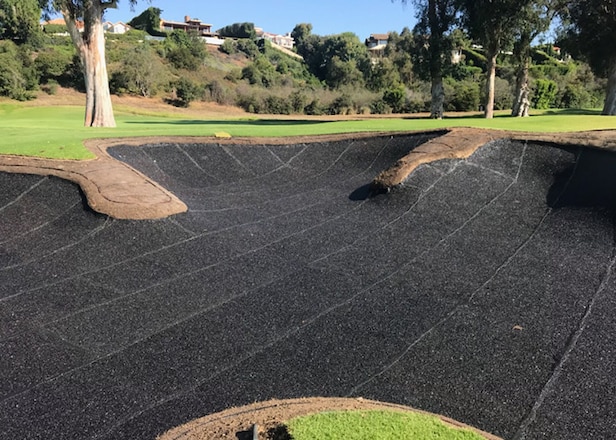
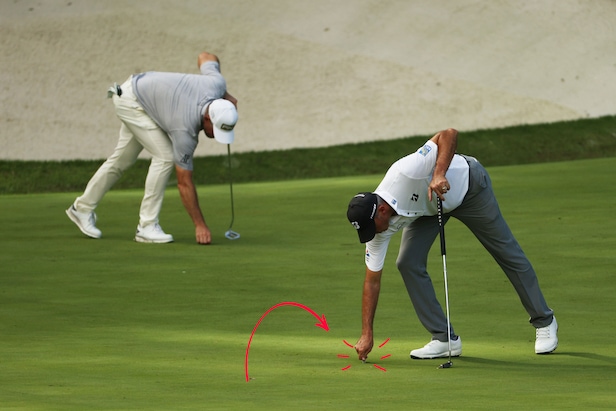
The ensuing days and weeks are the most frustrating of the year. Surely there must be a reason why our golf course superintendents wait until the greens are in good shape to aerate, right?
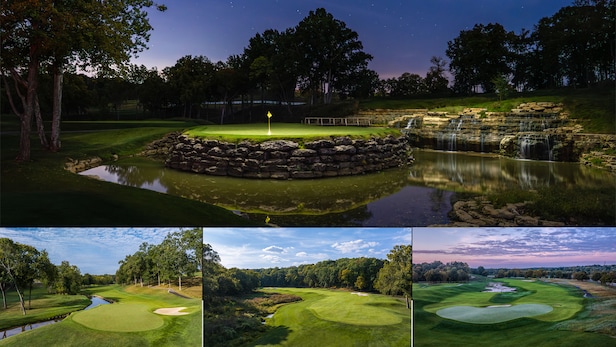
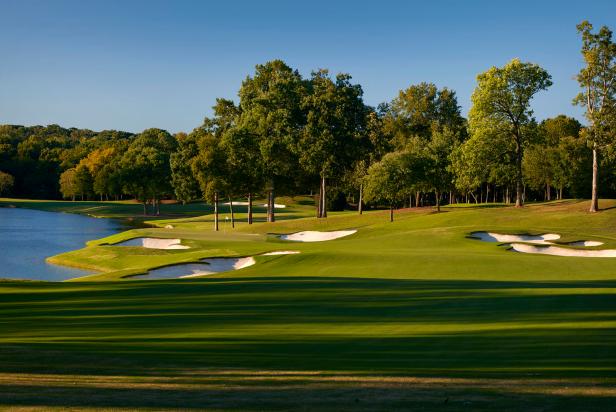
The PGA Championship returns to Valhalla Golf Club this week for the fourth time. Valhalla might not have the history or gravitas of other PGA Championship venues like Oak Hill, Southern Hills, Baltusrol or Medinah #3, but what it lacks in prestige it more than makes up for with its knack for producing dramatic finishes. Read more…
Leading up to the 1953 U.S. Open at Oakmont Country Club, the USGA and club officials clashed over Oakmont’s use of its heavy, wide-tined bunker rakes. The governing body, as well as many U.S. Open participants, complained that the deep furrows the rakes made were overly penal and inconsistent—one player’s ball, for example, might sit Read more…
Sweetens Cove Golf Club, the nine-hole course in South Pittsburg, Tenn., beloved by a devoted group of golf adventurists, announced that it will be closing for three months at the end of May to repair turf damage suffered over the winter. A stretch of severe weather destroyed grass on the course’s fairways and greens. The Read more…
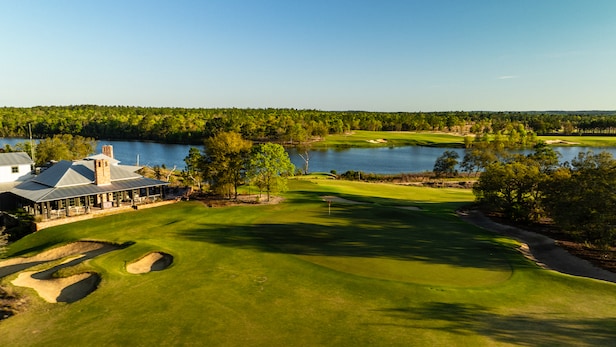
Ohoopee Match Club is in rare air among modern courses. Only five new designs have debuted higher on our America’s 100 Greatest Courses ranking over the past 30 years, putting the Gil Hanse and Jim Wagner design in the same conversation as some of the highest-ranking courses of the modern era, such as Sand Hills Read more…
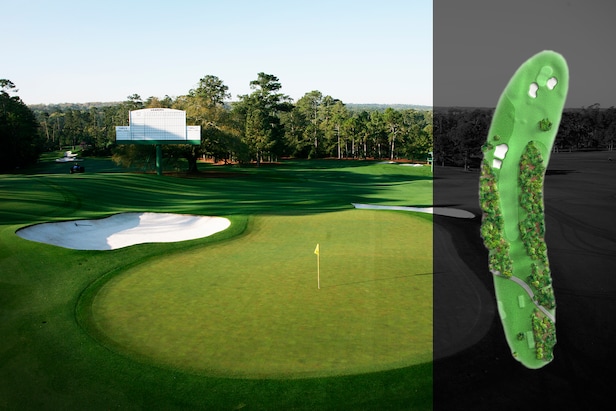
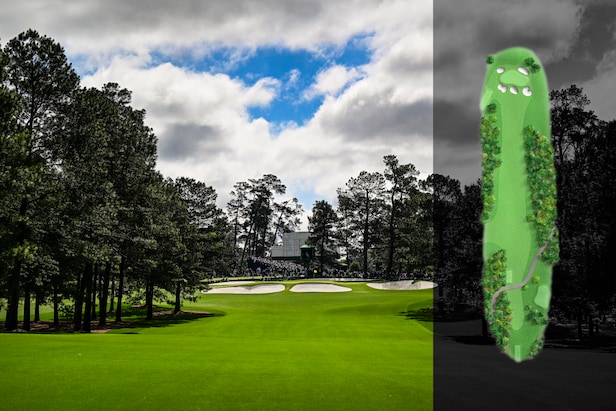
Augusta National’s 18th hole rises about 70 feet from the base of the fairway to the green. The elevation is one of the hole’s defenses as drives don’t roll much and uphill second shots are blind and must cover the front bunker. Uphill shots don’t bother professionals, but they can cause imprecision, and slight imprecisions Read more…
The par-4 11th was named “Dogwood” for the 155 white dogwood trees that lined the fairway when the course opened in 1933. Along with holes 10 and 12, the 11th was cut through the pines on the lowest, most forested section of the property to the south. Augusta National’s seventh and 11th are the most Read more…
The seventh hole is called “Pampas” after a grassy bush indigenous to South America, setting it apart from the course’s hole names that are generally tree and shrub-oriented and more associated with Georgia. It’s an apt departure—the seventh has always been the black sheep of Augusta National, a hole that never quite fit in with Read more…

 Australian Golf Digest