
Our research reveals that you can pick up 10 metres in 10 weeks with some simple exercises.
At my gym, Par 4 Success in North Carolina, golfers come to us with all sorts of goals, but you can guess what just about everyone wants most: more distance. Knowing it’s the No.1, No.2 and No.3 wish of most golfers, we’ve spent a lot of time identifying what truly matters in terms of power and speed in golf. Here’s a fun fact: if you can properly touch your toes, on average you could swing the club 6 miles per hour faster than if you can’t. Like I said, we’ve dug pretty deep.We’ve tested more than 15,000 regular golfers in the past 10 years and we will share some of the data we collected to help you get faster. If you do the program we outline here, you’re guaranteed to gain at least 4mph of clubhead speed (and potentially 10 more metres off the tee) by mid-July. It’s a 10-week program (at least 90 minutes per week) and starts with testing your current mobility and ability to generate speed and then implementing movements and exercises that will allow you to safely swing faster than ever. (I’m going to demonstrate the evaluations while Josh Leyes, our director of coaching, will demonstrate the exercises). If you think of your body like a car, you’ll be ready for improvement with a bigger engine and a better transmission for higher gears. Let’s get started.
STEP ONE: Establish a baseline
It’s important to find out how fast you swing a driver. While your “all-out” speed is nice to know, pay more attention to your “gamer” speed. That’s the speed you typically swing at while playing golf. Have a look at this chart [below]. These are other amateur golfers’ gamer swing speeds by percentile versus
all-out speeds. For example, if you’re in the 50-59 age group and swing 95mph on the course and 98 on a simulator or range, you’re in the 50th percentile.
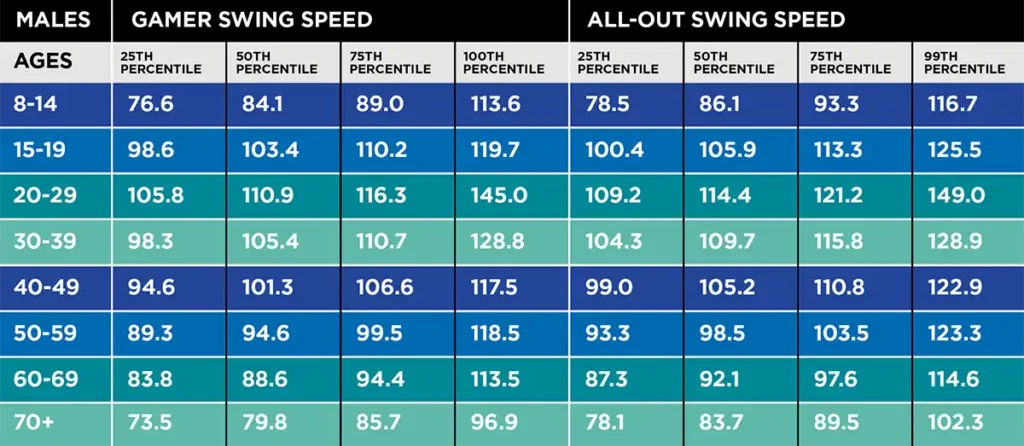
Now that you know where you stack up, let’s see if your body is preventing you from safely swinging faster. Try to pass the following tests. If you can’t, we’ll give you exercises to move better – and unlock real distance gains. Without sufficient mobility, trying to ramp up your speed is probably going to hurt you. Speaking of hurt, please get cleared for all of this by your doctor before jumping in.
STEP TWO: Test your hip, trunk and shoulder mobility
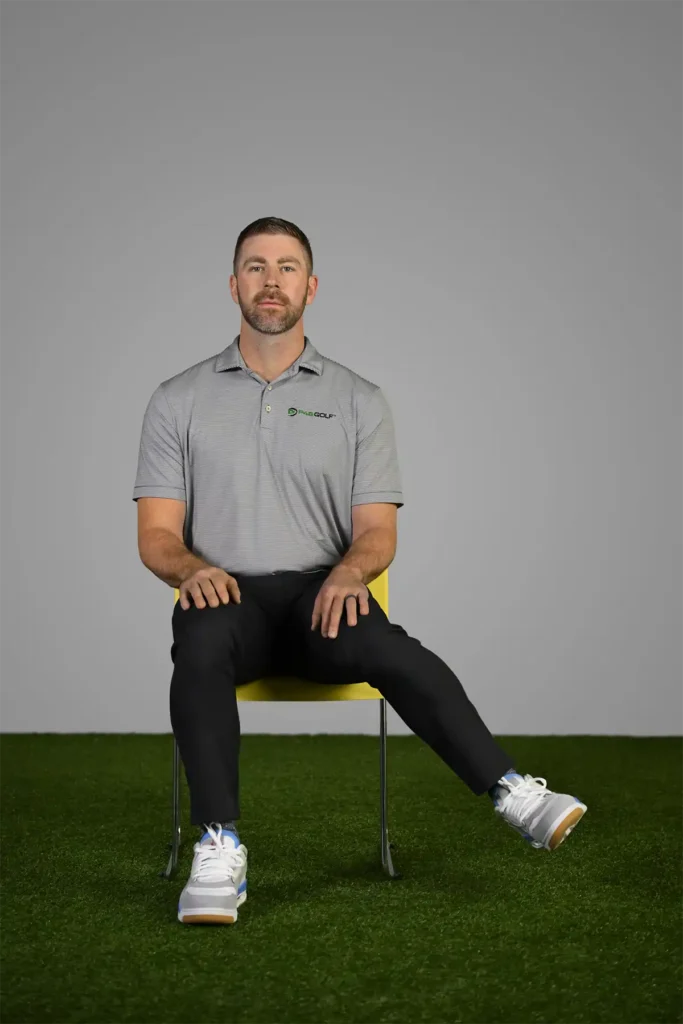
Hip-rotation test
Sitting upright in a chair, rotate your lower legs outward. The goal is to get at least 40 degrees of rotation. (You can measure how far you rotate by doing it in front of a mirror and marking the distance or by downloading any number of smartphone apps that measure body motion when you upload video to them.)

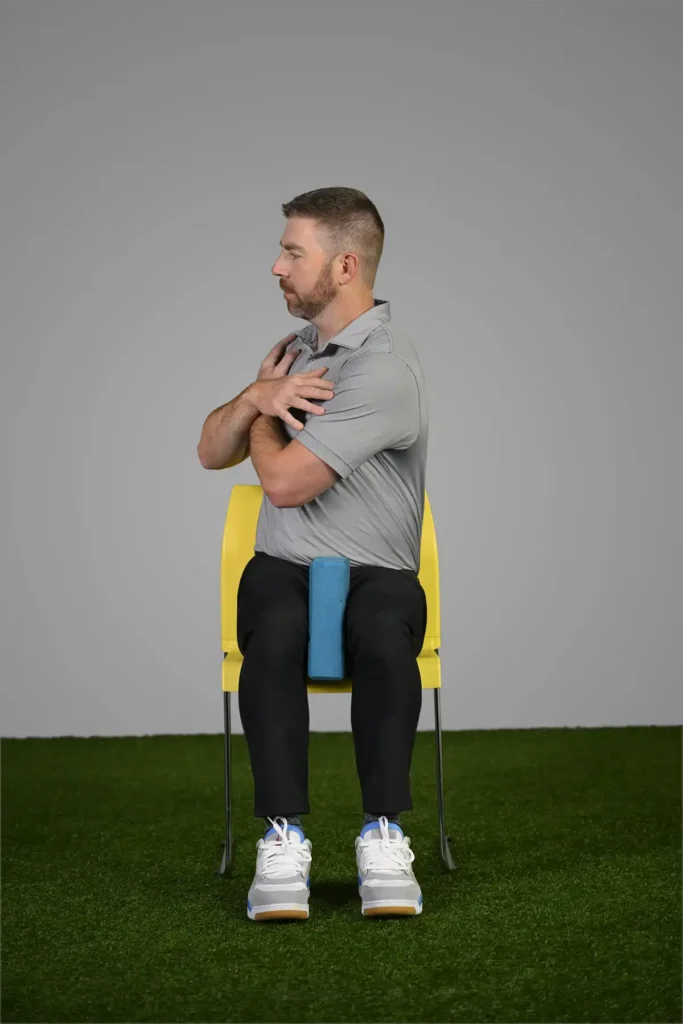
Trunk-rotation test
Sitting upright in a chair with your knees pinching a soft object like a yoga block, cross your arms over your chest and rotate your torso in either direction. The passing goal is at least 60 degrees of rotation without leaning or shifting with your lower body.
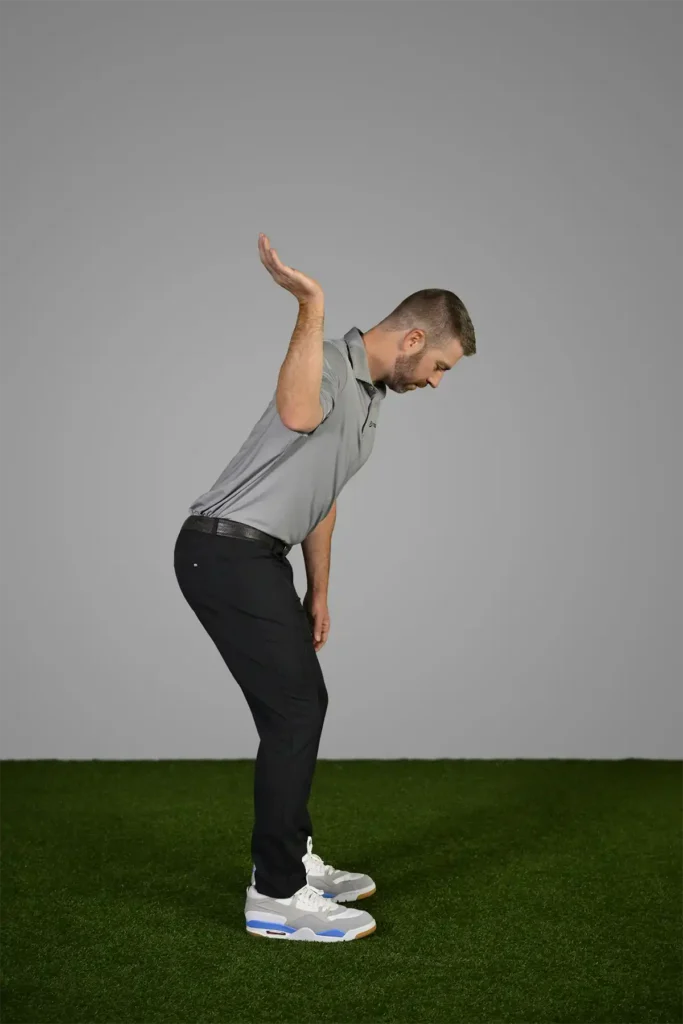
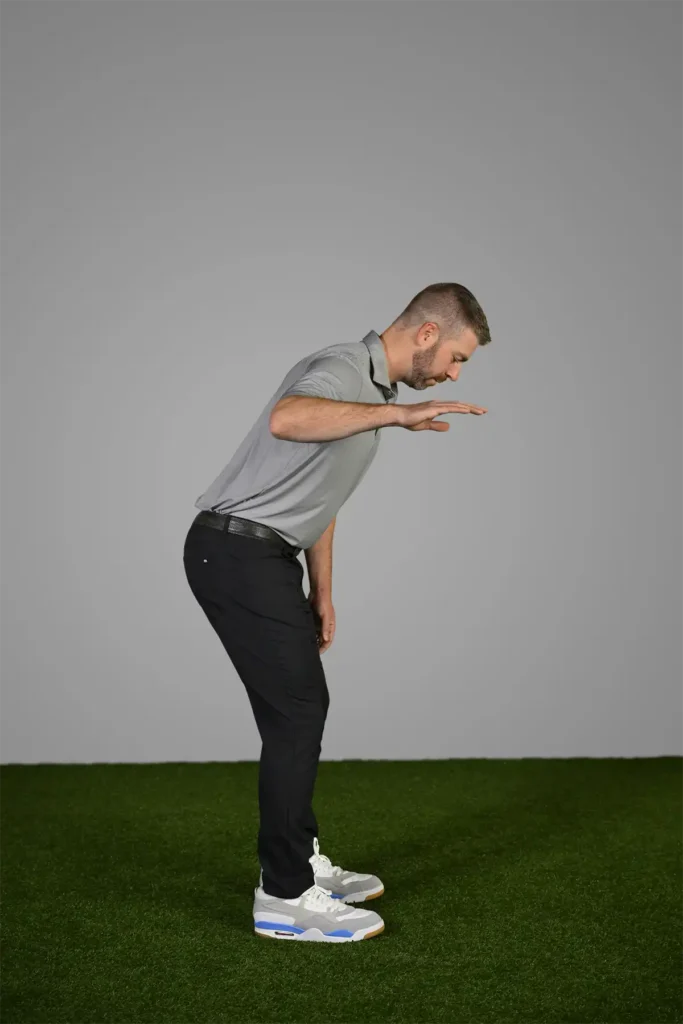
Shoulder-rotation test
While standing in golf posture, bend one arm 90 degrees at shoulder height and then rotate it upward as much as you can. The goal is to rotate the forearm at least 10 degrees past your spine angle (while remaining in golf posture).
STEP THREE: Improve your ‘golf’ mobility
Hip-rotation adjustment
If you failed the hip-rotation test, do these exercises:
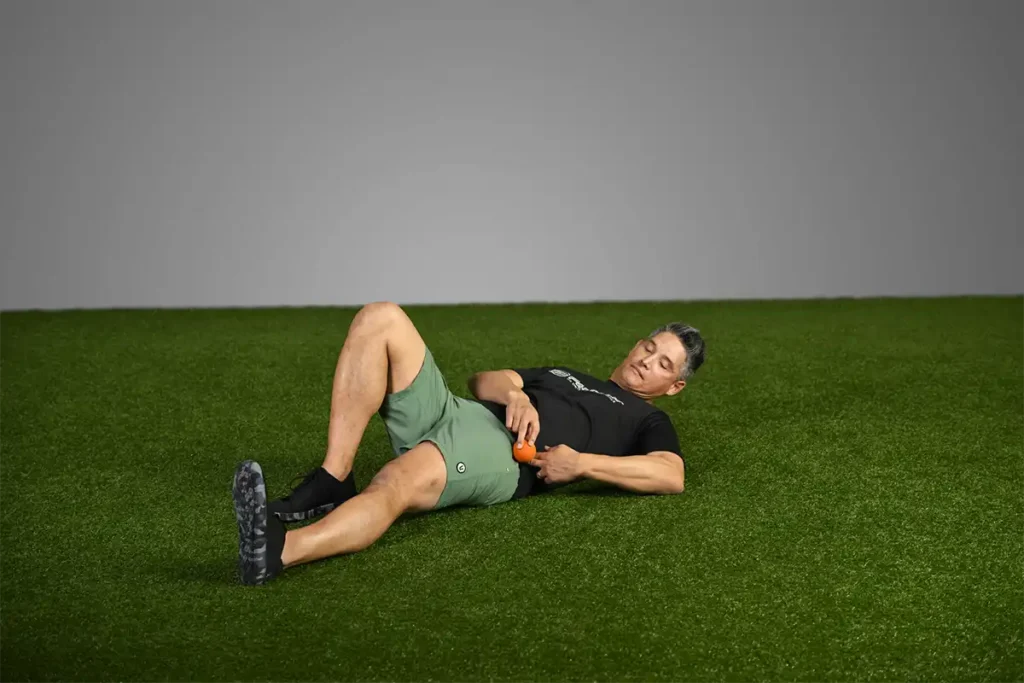
(1) TFL tissue releases: The tensor fasciae latae (TFL) is a small muscle at the top of your thighs that unlocks hip internal rotation – key for coiling into your trail leg in the backswing, posting on the lead side in the downswing and protecting your low back. Pin a firm ball into the front side of your hip crease [above left and right] and then roll onto it. Apply 30-to-60 seconds of pressure while breathing. Do this a few times on each side.
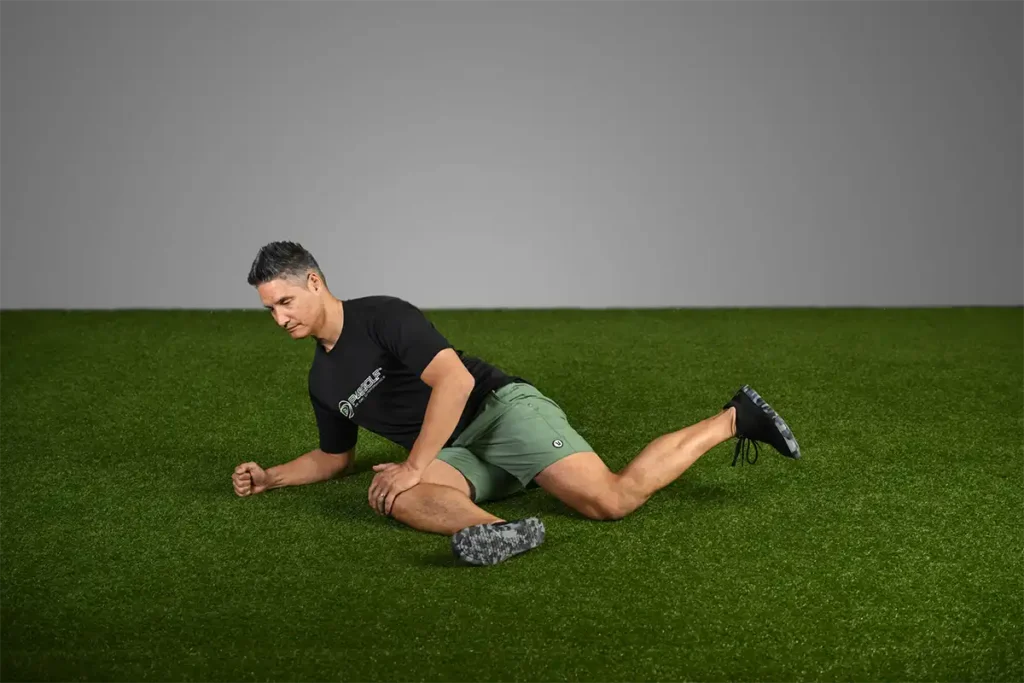
(2) 90/90 hip openers: This targets tightness in the glutes, inner and outer thigh muscles and improves hip function. That translates to better use of ground force and sequencing in the swing and more speed without swinging harder. To do them, get in a 90/90 position (both your legs bent 90 degrees) and lean to the side of the lead leg. Keep your torso still and rotate the back thigh towards the floor, letting the trail foot rise [above]. Do several reps alternating leg positions.
Trunk-rotation adjustment
If you failed the trunk test, do these two exercises:
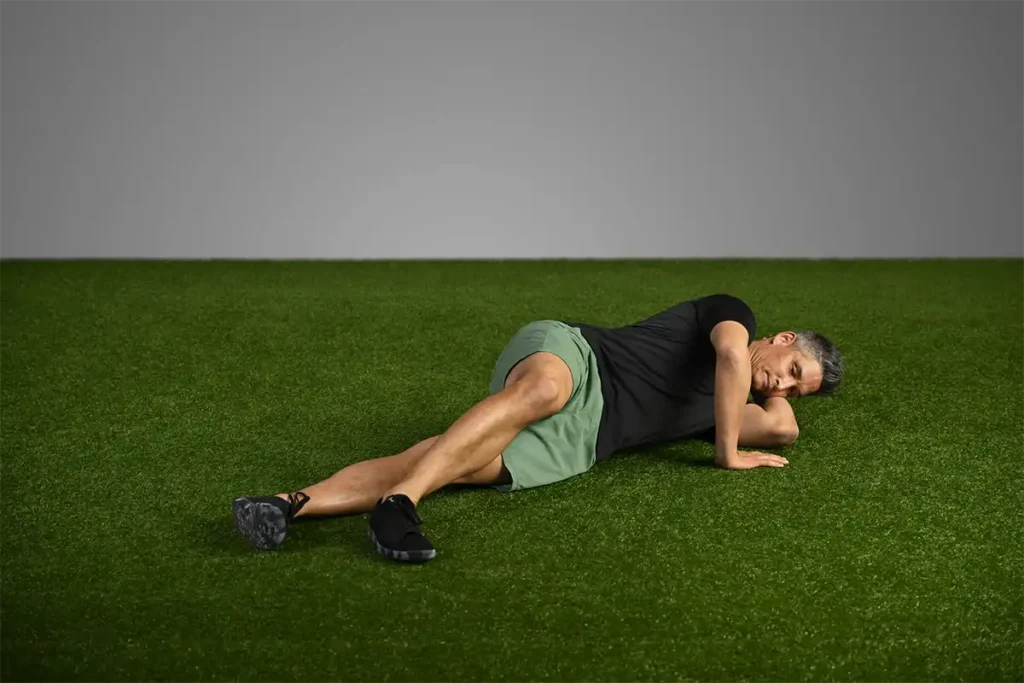
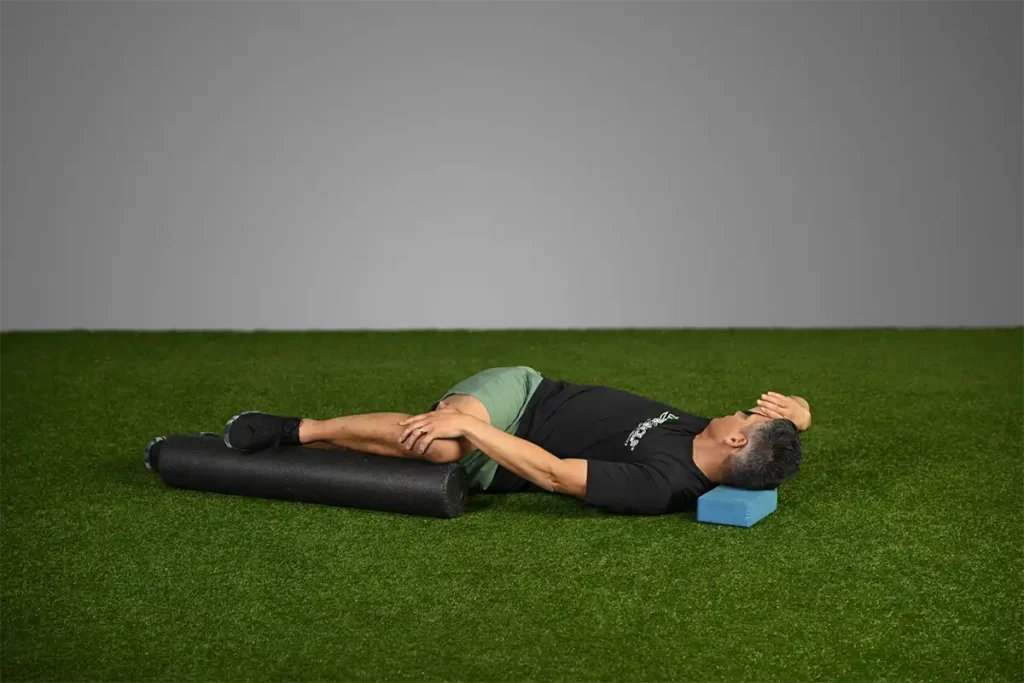
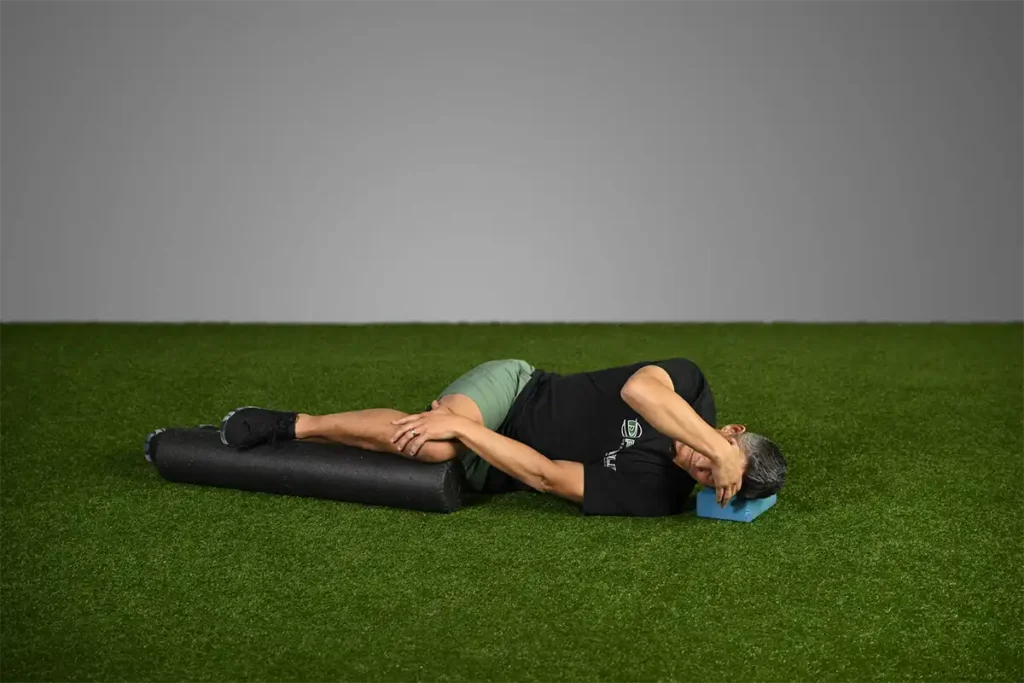
(1) Rib rippers: Isolating movement in the mid back and opening the ribcage while keeping the lower body stable is key to making a full turn and bombing it. Lie on your side with the top leg bent 90 degrees and resting on a pad. Hold that leg’s knee down while you rotate your torso away from it and breathe in [above]. Try to rotate a little further as you exhale. Do several reps, flip over, and do more in the opposite direction.
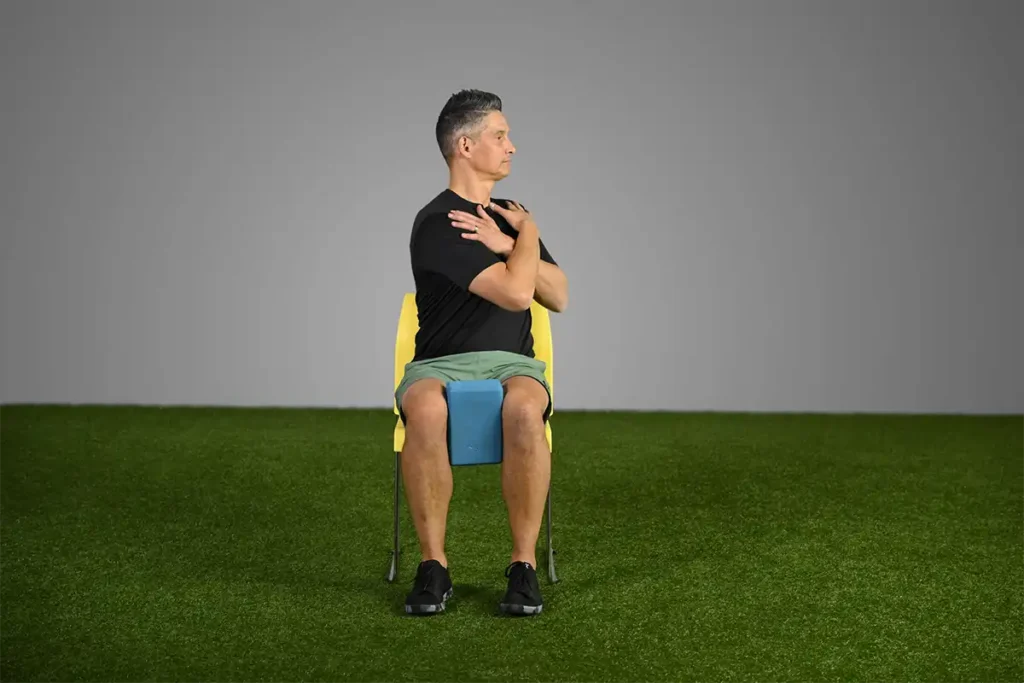
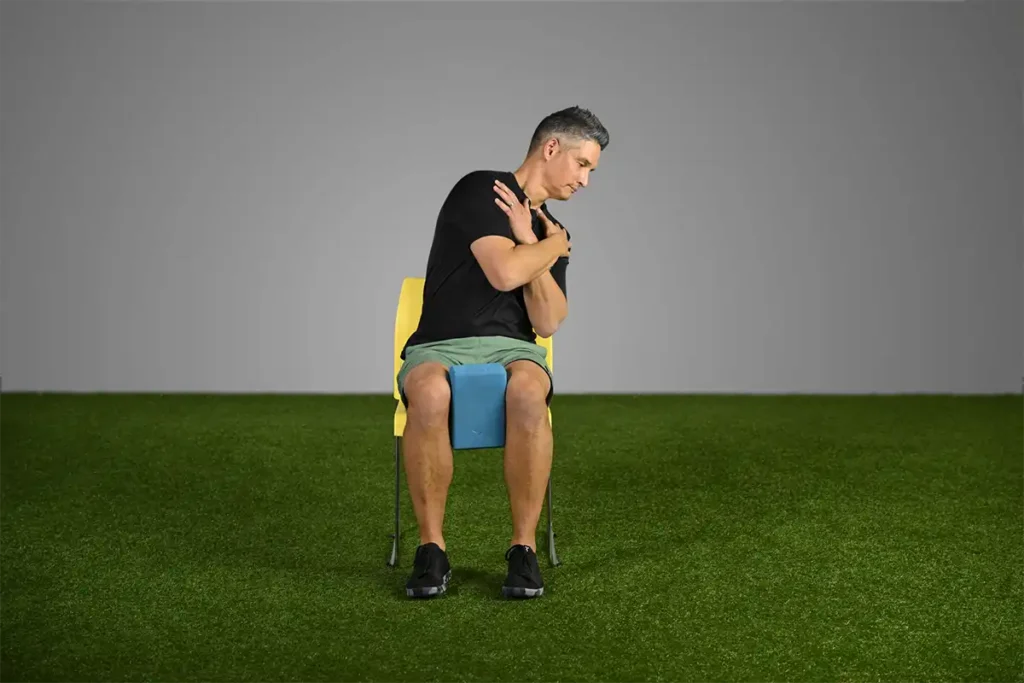
(2) Twists and tilts: These improve spinal mobility and side bending, helping you make a bigger backswing while preventing a flat shoulder turn. Sit in a chair with a yoga block or similar between your knees. With your arms crossed over your chest, rotate your torso in an upright position in either direction and then side bend as shown [above] without losing rotation. With each rep, try to rotate a bit further before bending. Stop when you can’t turn any further. Do several reps in both directions.
Shoulder-rotation adjustment
If you failed the shoulder-rotation test, do these exercises:
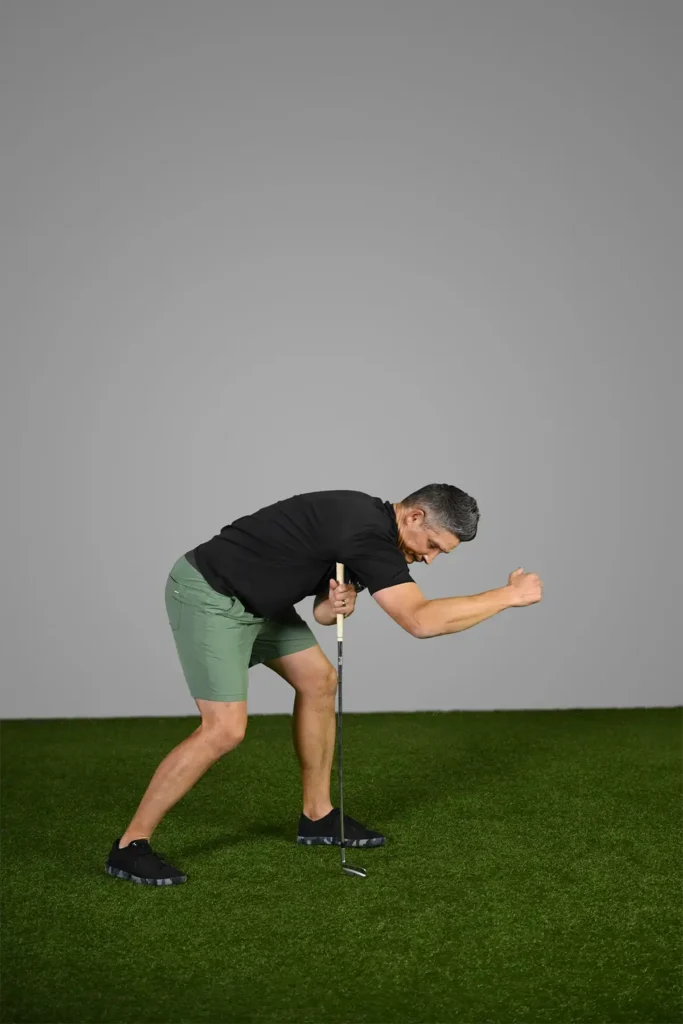

(1) Subscap releases with downward rotations: A tight subscapularis muscle (one of the shoulder’s rotator cuffs) can force an over-the-top move when you swing, robbing you of speed. Pin a mid-iron under your armpit and slowly rotate your forearm down while the club pushes on the tender spot for up to 60 seconds [above]. Do a few reps and repeat on the other shoulder.
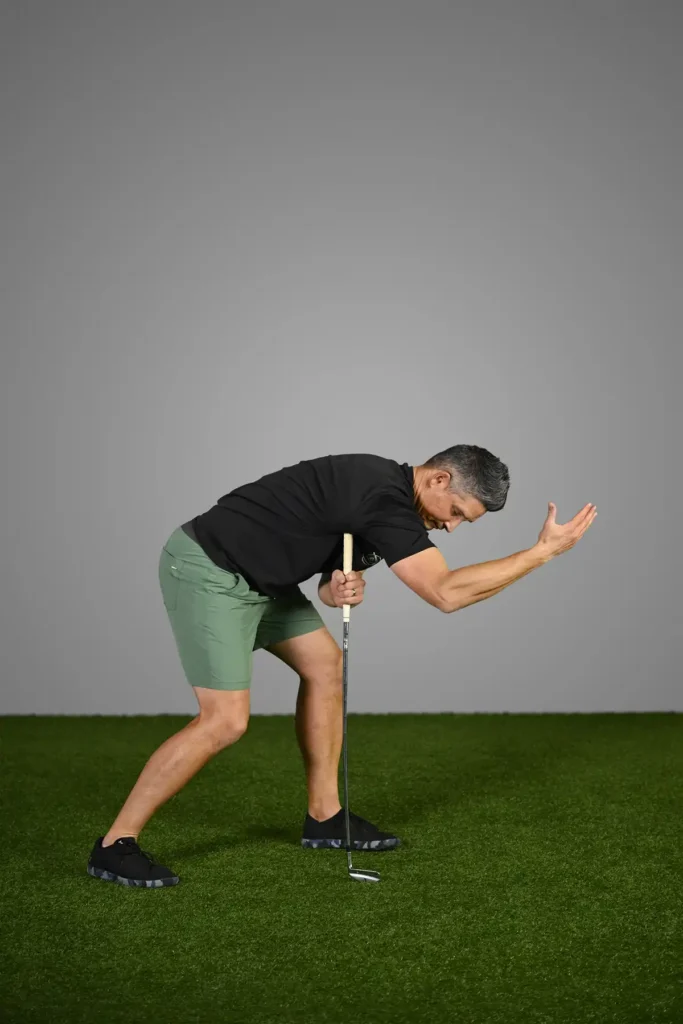
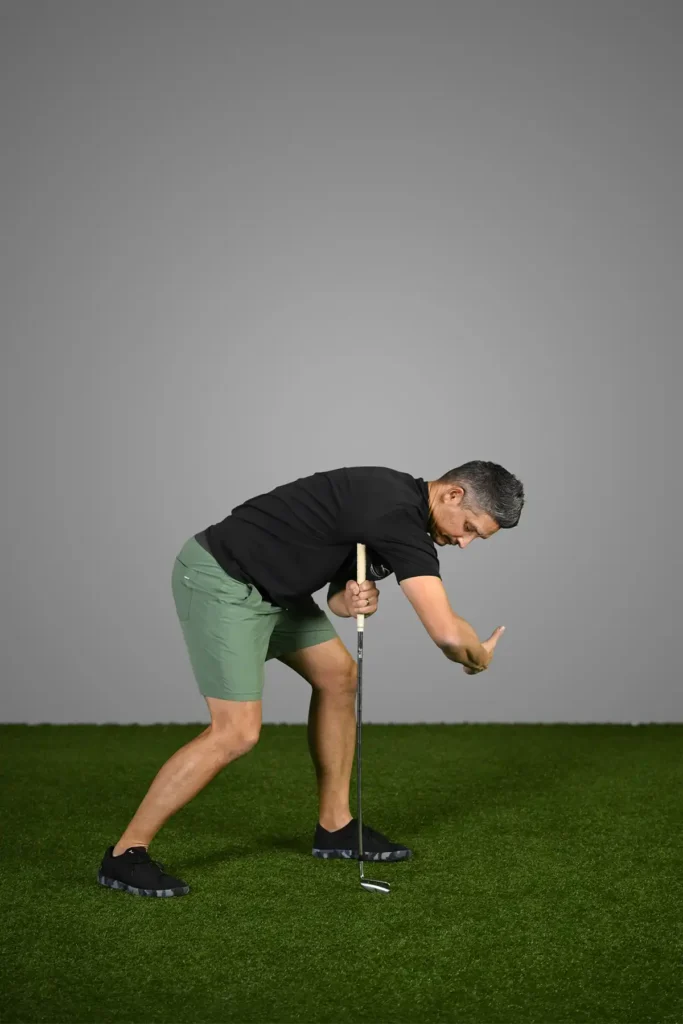
(2) Subscap releases with inward rotations: Improving shoulder internal rotation helps swing path and prevents speed-related injuries. Use the same subscap setup and slowly rotate inward with the forearm under tension [above]. It should feel uncomfortable. Do it for up to 60 seconds. Do a few reps, then repeat on the other shoulder.
STEP FOUR: The exercises you need to swing faster
The mobility work on the previous pages is paramount to avoiding injuries, so don’t proceed to this step until you pass all those tests. Now on to the cool stuff:
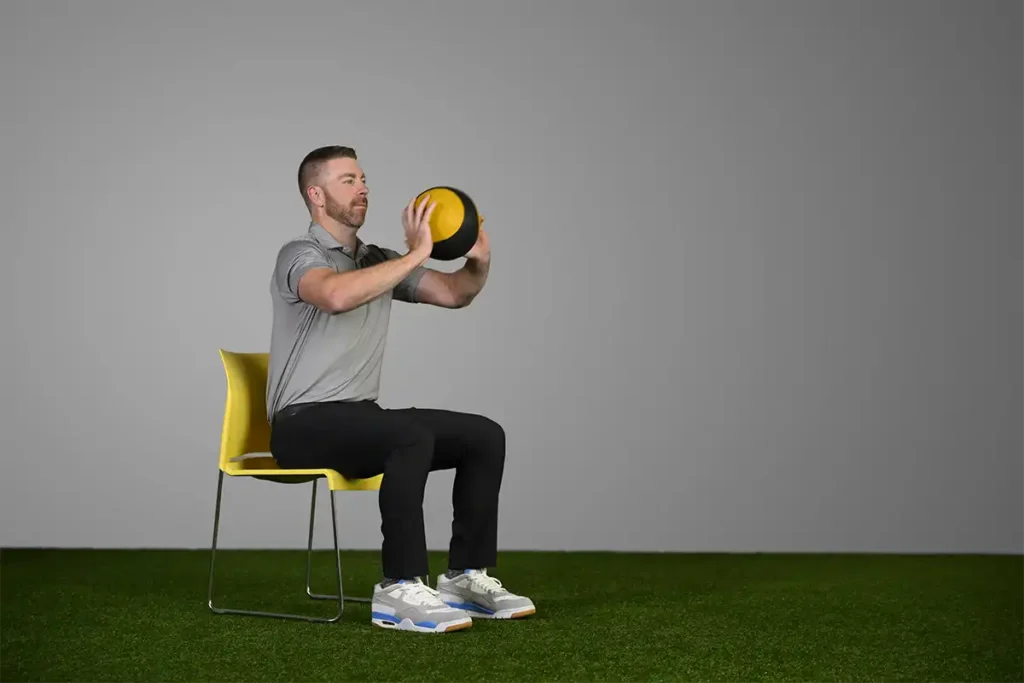
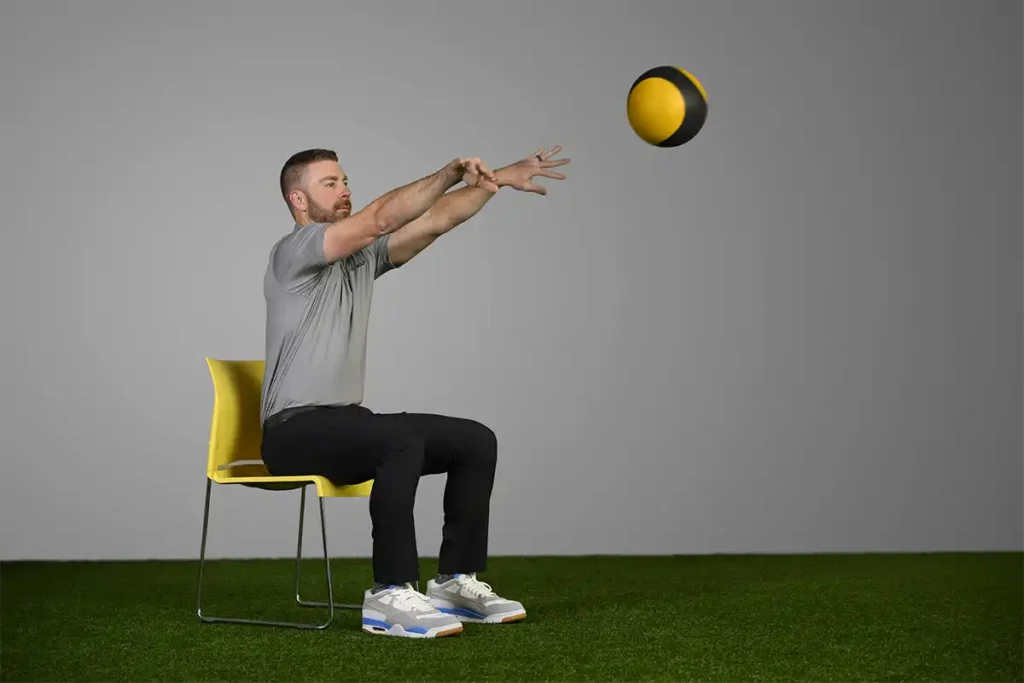
Many assume the core muscles are the engine of the golf swing, but they’re more like the transmission. Their role is to transfer power, while the legs, butt and chest do the heavy work. Knowing that, there are two big indicators in terms of how far you can drive it – lower-body vertical power and upper-body push power. We’ve found that every 30 centimetres further you can chest pass a two-kilogram medicine ball results in six more metres of driving-distance potential. Every 10cm higher you can vertically jump results in 10 more metres!
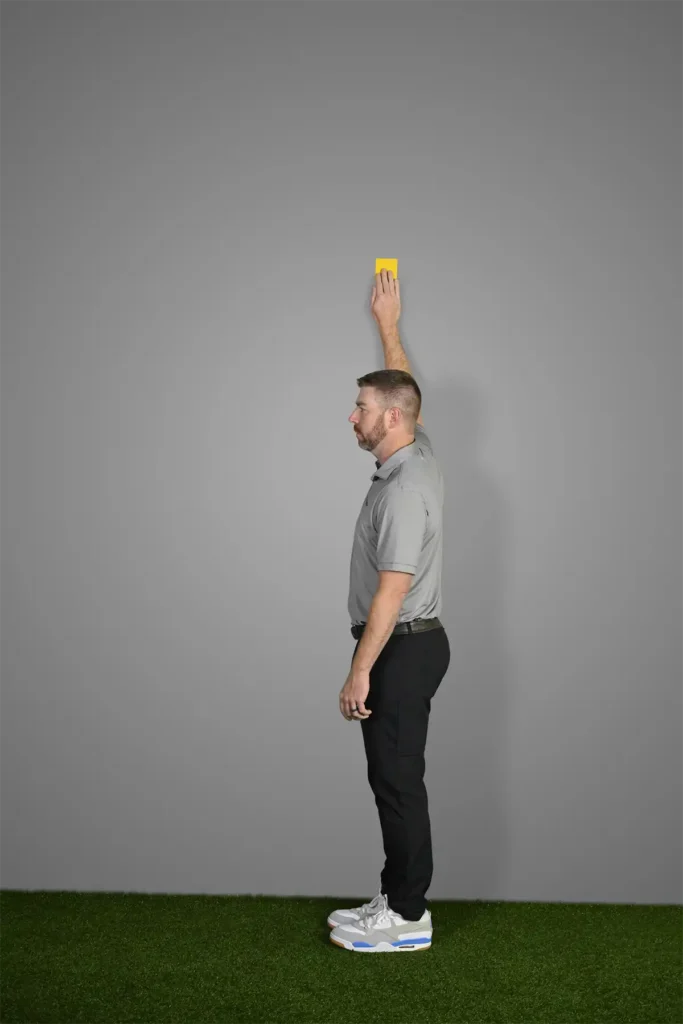
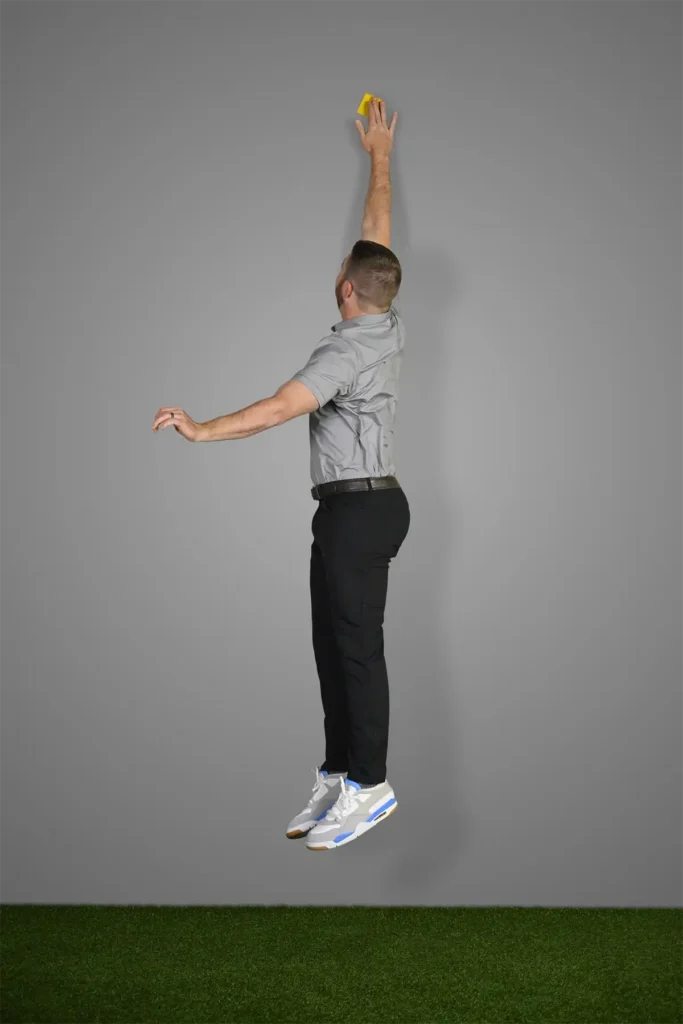
Measure how high you can jump and how far you can chest pass a medicine ball at the beginning and end of this program to get an a real sense of how much further you should be driving the ball. With the chest pass, use a two-kilogram ball and launch it at roughly a 45-degree angle forward. With the vertical leap [below], stick a sticky note as high as you can while standing and then jump and post another note to mark the difference. Your passes and jumps will improve by the end of this program if you routinely do the exercises on these.
Vertical Leap
Exercises to improve lower-body vertical power
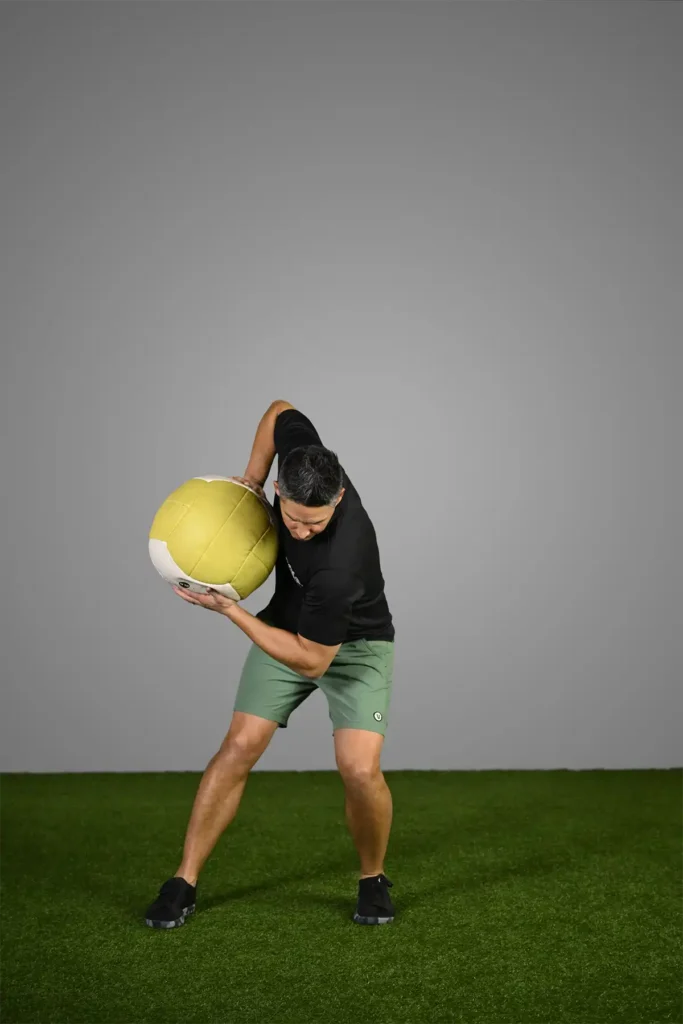
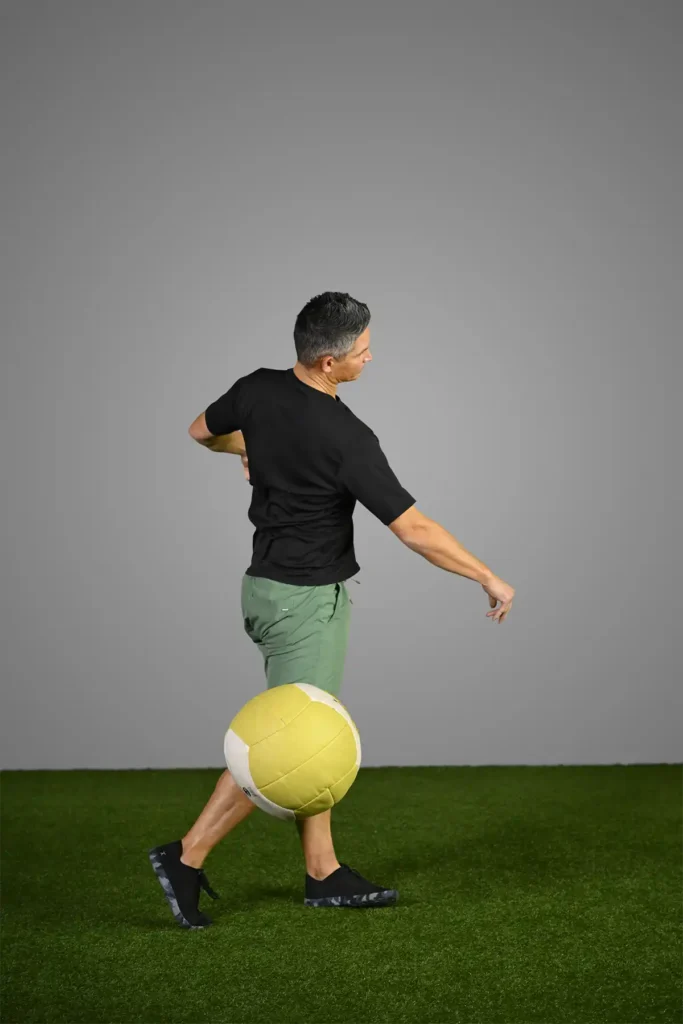
(1) Rotary med-ball slams: These train the sequence of pushing off the lead leg and transferring power from the body to the club. Holding a soft and light med ball in a backswing-like position, push hard into the ground and then rotate your body as if making a through-swing while firing the ball straight down [above]. Do several forceful reps in each direction.
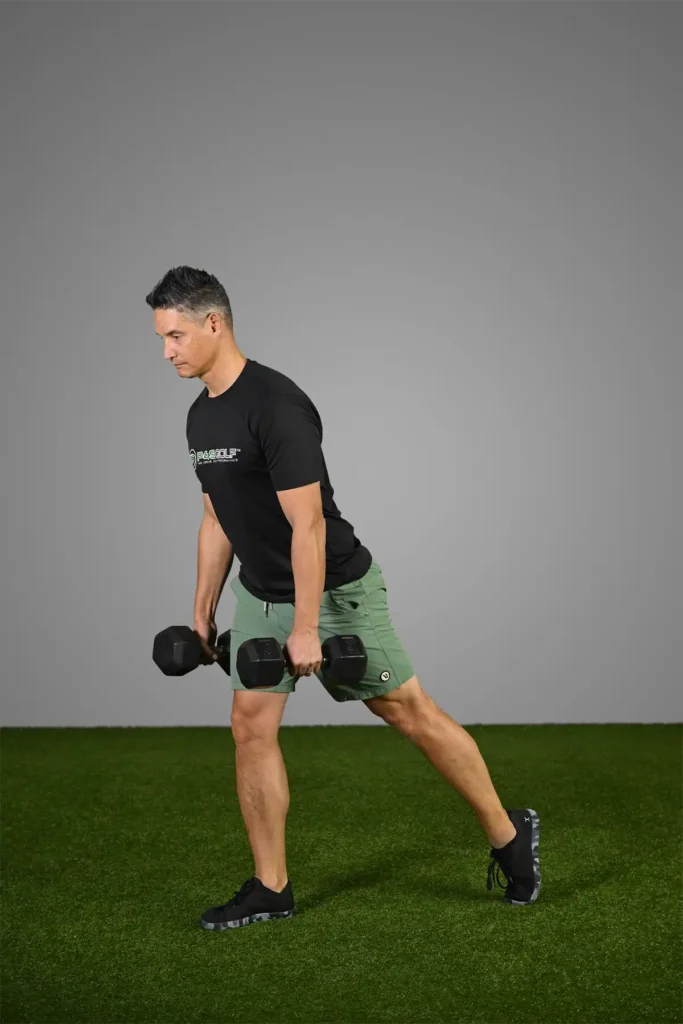
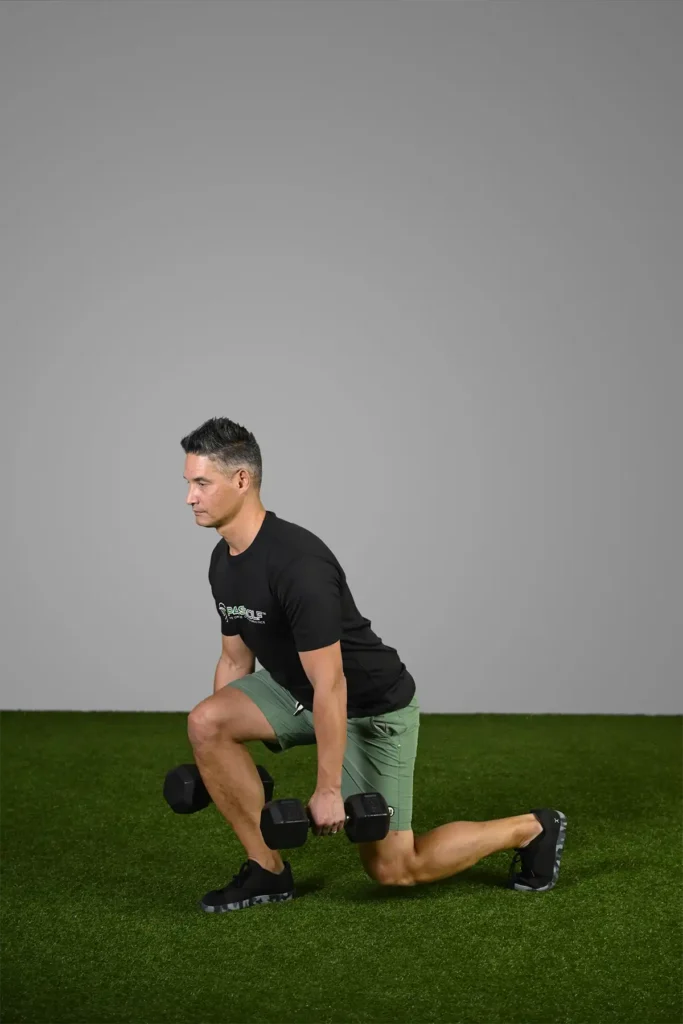
(2) Eccentric dumbbell split squats: Stronger legs allow you to leverage ground forces better – and that’s a real speed accumulator in golf. From a split stance while holding dumbbells at your sides, take several seconds to lower into a squat, then drive hard through the front foot up to the start position [above]. Do
several reps switching leg positions.
The chest pass

Exercises to improve upper-body push power
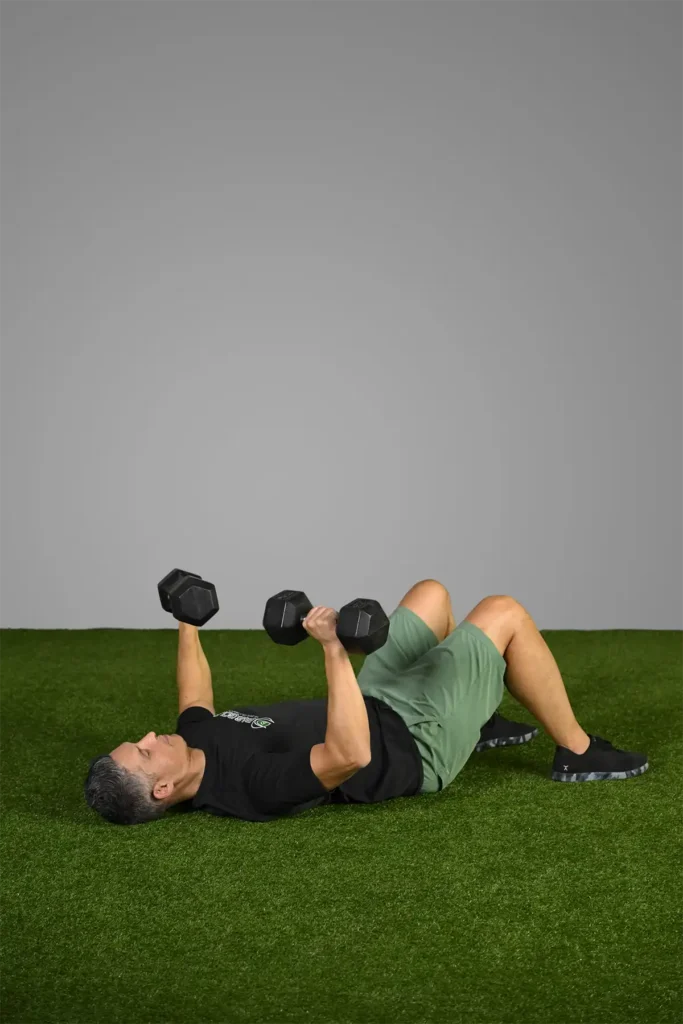
(1) Eccentric dumbbell floor presses: Stronger chest muscles will boost your downswing speed. Laying supine with your knees bent, lower dumbbells of a challenging weight slowly until your elbows tap the floor, then press up forcefully [above]. Do several reps.
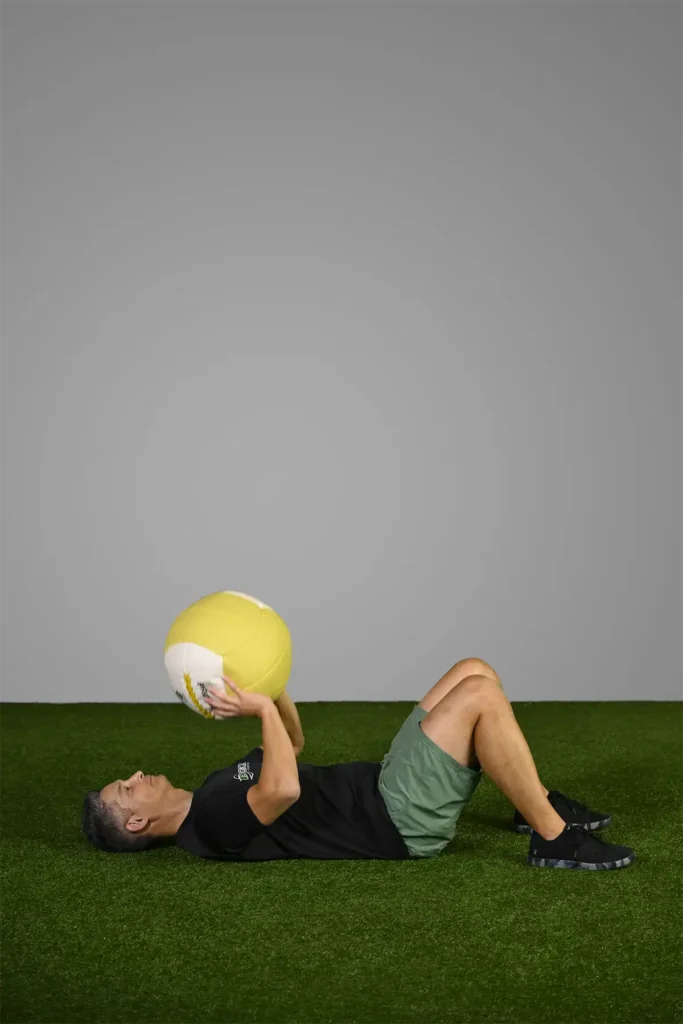
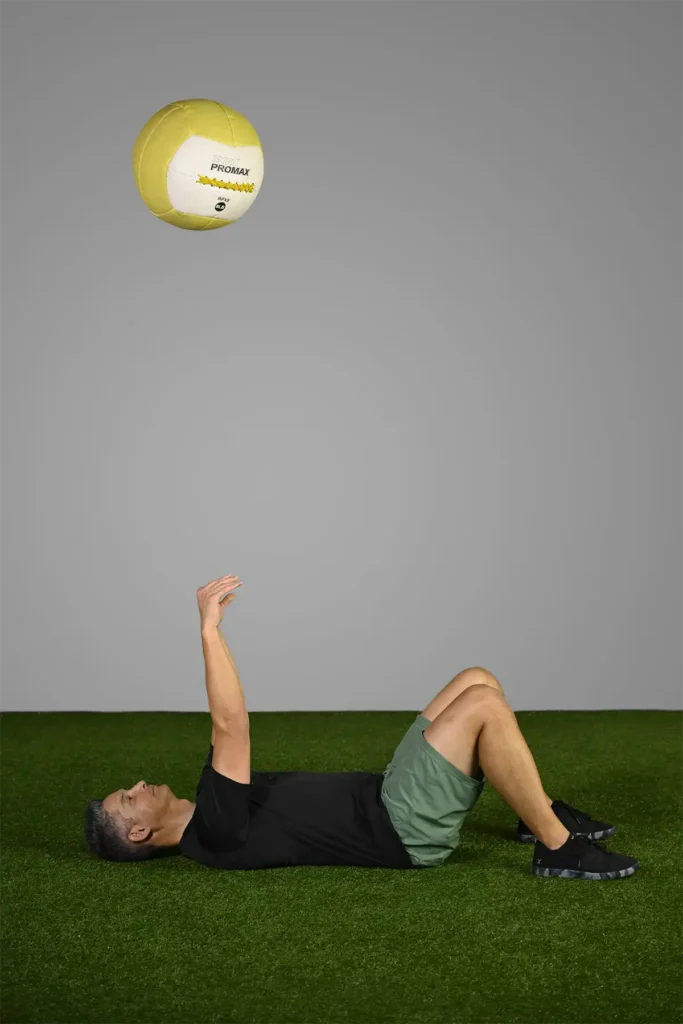
(2) Supine med-ball drop passes: These train the trunk to produce more speed, not just power. Fire a soft, light med ball upward powerfully and catch it as it falls [above]. Do each rep without pausing, focusing on explosive movement. Do several reps. Work on this program as part of your existing routine or as the foundation for a new one. Do the exercises at least a few times each week. Some of our middle-aged clients who have gone through this are now driving it further than they did in their 30s!