Match-play golf, it’s the talk of the golf world. The PGA Tour announced it will adopt the head-to-head format for its Tour Championship, starting in 2028, and we are set for a trifecta of elite match-play team events this month. The Presidents Cup and Solheim Cup return, but first up is the 51st Walker Cup.
The event sees the 10 best amateur players from the U.S. and Great Britain and Ireland face-off at Lahinch Golf Club for one of the most coveted—and oldest—crowns in the sport.
But why should you care? Why, after months of professional golf and a busy summer schedule of major events, should you tune in this weekend? Let me give you six reasons.
1. The course 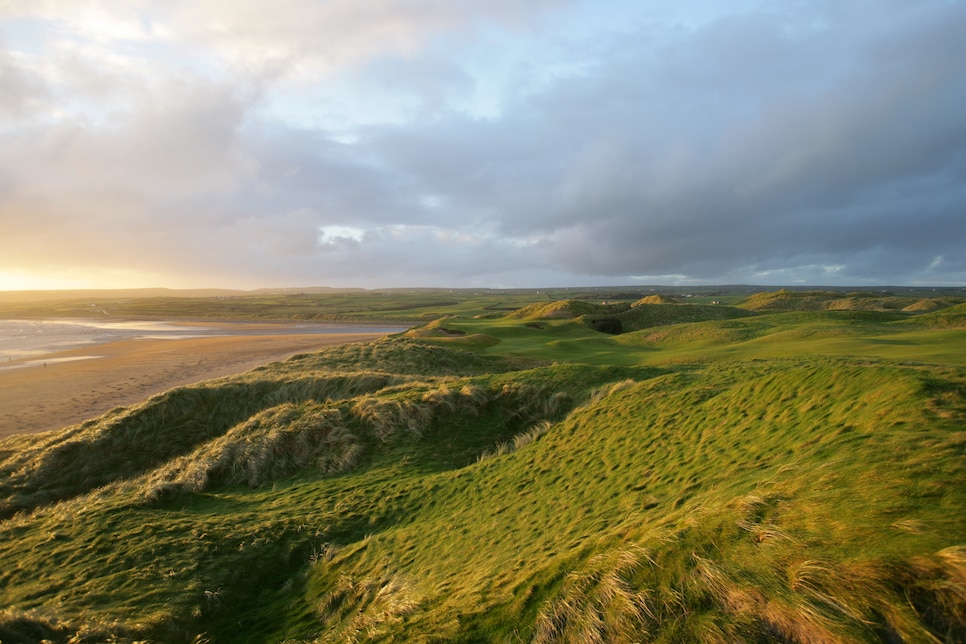
David Cannon
Irishman Paul McGinley once described Lahinch as “everyone’s favorite auntie,” suggesting that “nobody has a bad word to say about it.” And it’s hard to disagree with the winning 2014 Ryder Cup captain, who grew up just three hours from the famed layout. Built across a dramatic landscape of sand dunes, along an inlet of Liscannor Bay that feeds out to the Atlantic Ocean, Lahinch is one of the most dramatic and scenic courses anywhere in the world. It sits 21st in our latest World’s 100 Greatest Courses list, second in Ireland behind only Ballybunion’s Old course.
‘I liken it to everyone’s favorite auntie. Nobody has a bad word to say about Lahinch.’
Paul McGinley
And it’s easy to see why. Originally laid out by Old Tom Morris in 1892, the course was redesigned and lengthened by Alister MacKenzie in 1927. Yes, two men who would happily grace the Mount Rushmore of golf course designers, both had their hands on the layout at Lahinch.
The course weaves back and forth through dramatic dunes on the front nine before twisting internally through smaller yet prominent dunes on the back nine. Not only does the routing feature several blind shots, it has a blind par-3 in “The Dell,” Lahinch’s fifth hole. In fact, caddies at Lahinch will tell you once you leave the second green, the next hole you’ll see every shot land is the eighth!
Ross Parker/R&A
If history tells us anything, when you get 20 of the best amateur golfers in the world together, and put them head-to-head in match play, emotions run high. Unlike the Solheim Cup, Presidents Cup or Ryder Cup, the Walker Cup matches are condensed into two days, only adding to the pressure and drama. There is no time to feel your way into the matches; this a sprint.
Starting on Saturday, four matches of foursomes take place in the morning and eight singles matches in the afternoon. Similarly on Sunday, four more matches of foursomes will be played in the morning before all 10 players on both teams take to course in the afternoon for the final session of singles matches. There’s 26 points up for grabs, with the defending U.S. side needing 13 to retain the Walker Cup, while GB&I needs at least 13½ to keep the trophy on this side of the Atlantic.
Every putt, every chip, every point or half point can be pivotal, starting immediately on Saturday morning. The Walker Cup is considered by many to be the pinnacle of a player’s amateur career, so expect plenty of fist pumps, screams and high fives from the start. (Oh, and don’t expect them to turn this into a three-day event any time soon; the powers that be on both sides of the Atlantic are rather fond of the fact this is a time-tested sprint.)
3. The shot-making 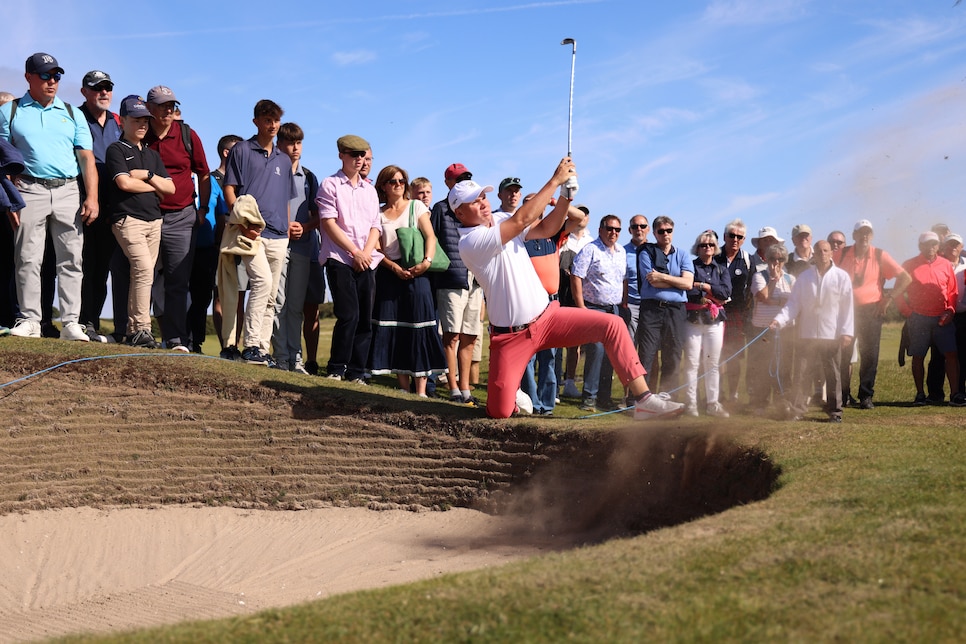
Oisin Keniry/R&A
Links golf is a complex examination. Firm, rolling turf mixed combined with thick rough and windy conditions requires a different approach when compared to traditional U.S. style courses. At courses like Lahinch, the ground, if used correctly, is your friend. The ability to flight shots, work the ball both ways and use contours and slopes to assist you on your way to the hole are fundamental to success.
Lahinch is a golf course that demands that kind of strategy and approach more than most. Whilst length will help you on the shorter par fives at 2 and 4, and help you hit the green on the par four 13th, there are a lot of holes that take driver out of a player’s hands. Par fours like 3, 6 and 7 have split fairways with thick rough around 300 yards and beyond. Without the fourball format, used in other match play competitions, the ability to take on reward will come with an even bigger risk, thus every shot and decision will carry even more consequence.
With some rain and gusts of up to 40 mph in the forecast for the weekend, you can be sure to see shots and ball flights you wouldn’t typically be accustomed to. Get your popcorn ready.
4. The crowd 
David Cannon

Michael Reaves/R&A

Luke Hales

Michael Reaves/R&A
The indelible image of many Walker Cups is the hoards of crowds walking with the players; just look at some of the photos from a year ago at Cypress Point Club. With a smaller footprint than professional events, ropes are used sparingly at Walker Cups. Fans walk the fairways and line the edges of the greens, both adding to the drama of the matches and creating a throwback look and feel of the sport as it was originally played.
This year’s event is a sell-out, with 8,000 fans expected daily over the weekend at Lahinch. Many will be locals, most will be GB&I supporters, but all will be invited to share the course with the players and play their own role in a passionate battle for the trophy.
Another aspect of the crowds this year at the Walker Cup will be the age. The R&A announced that more than 1,700 young people will be attending through the “Kids Go Free” initiative, which provides free entry for 15-and-under youth when accompanied by a paying adult. Possibly the Walker Cuppers of the future.
5. The prodigy 
Ryan Lochhead/PGA of America
Every Walker Cup has its standout names. The likes of Jack Nicklaus in 1959, Tiger Woods in 1995, Rory McIlroy in 2007, Jordan Spieth in 2011 or Jackson Koivun in 2025. This year is no different. Miles Russell, 17, has committed to play at Florida State in 2027 but in the meantime, he is set on collecting silverware. Twice the winner of the U.S. Kids World Championship, twice the Junior Players Championship winner, Russell also became the youngest player to make a cut in his first Korn Ferry Tour event when he was just 15.
Fresh of an impressive debut at the U.S. Open, where Russell made the cut at Shinnecock Hills, the fourth ranked amateur in the world is making his Walker Cup debut this week in Lahinch. The lefty will become just the second American to play in the Walker Cup before turning 18, joining Akshay Bhatia from 2019, and will no doubt carry the bulk of the expectation and attention for the U.S. team.
6. The Upset? 
Ross Parker/R&A
If the Great Britain and Ireland team are going to win the Walker Cup, it would mark one of the biggest upsets in the tournament’s history.
In the first eight Walker Cups of this century, each side won four times. Only one point separated the total combined score, 100½ points to 99½ in favor of the Americans. However, since then the U.S. has won each of the last five editions, outscoring GB&I by 30 points (80-50).
GB&I captain Dean Robertson and his side face another battle to defy the odds at Lahinch. Of the top 15 players in the World Amateur Golf Rankings, nine will tee it for the U.S. this week, while just Tyler Weaver and Luke Poulter feature on the GB&I side.
The home side will hope to use 2023 as inspiration for what could be possible this week. That year, at the Old Course, all 10 Americans ranked inside the top 20 in WAGR, compared to just one for GB&I, and yet the home side nearly pulled off the upset. GB&I led by three points after the first day’s play and by one point heading into the Sunday singles. Ultimately, the team lost by three, but showed that playing on home turf, especially when that is links turf, can make a difference.
It’s nearly 40 years since either team won the Cup six times in a row. Should GB&I achieve their goal this weekend, it’s likely worth tuning in to see it happen.
This article was originally published on golfdigest.com