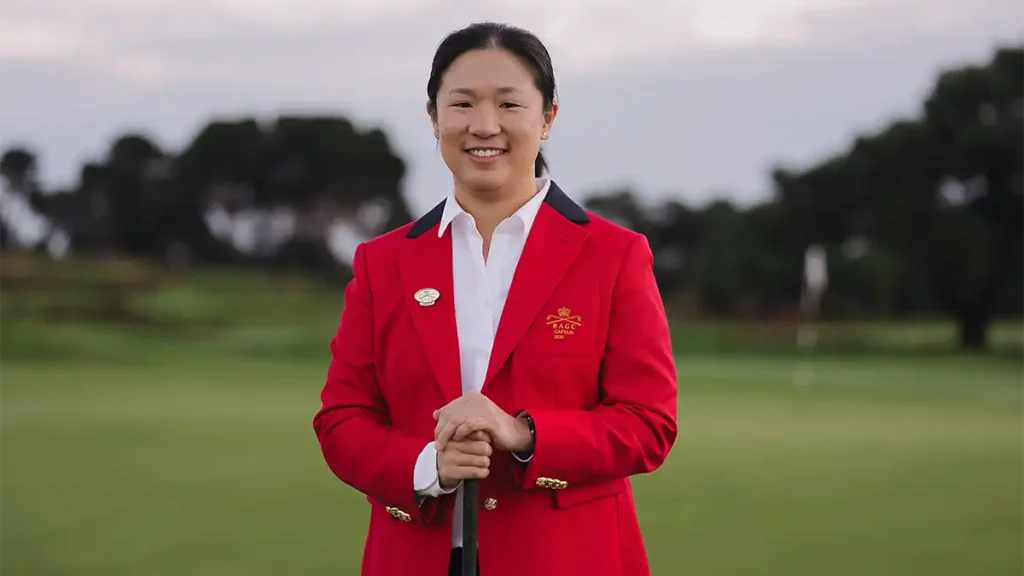
Sarah Chia, the first woman club captain at Royal Adelaide Golf Club, is well credentialled to take the club through the next phase of its storied history.
Imagine, if you will, that halfway through your backswing on a very important shot, with maybe 100 or so people watching, a cannon explodes nearby. It’s not hard to think that it wouldn’t be the best shot you ever hit. And yet, when it happened at Royal Adelaide Golf Club on Saturday, June 20, 2026, all of those 100 or so people applauded loudly.
Why? Because this was not just some run-of-the-mill ‘top’ off the tee. The person hitting the shot was Sarah Chia, the new captain of the club. And this is how every new captain officially begins their tenure. It’s known as the ‘Firing In’ of the captain and since its first iteration in 2016, it has become part of the rich history of Royal Adelaide, host of the 2027 women’s Australian Open from March 11-14.
Chia’s reaction to that cannon going off: “I was extraordinarily nervous. I knew I had to continue to hit the shot no matter what because there’s only one fuse. I never want to go through that again!”
Lest anyone think we are being frivolous about this, be assured that the role of captain at Royal Adelaide is that of the predominant officer of the club and Chia is a highly qualified person for the job. She’s also a good enough sport to see the humour in the situation. And there have been some very serious moments in her time in golf.
The significant thing about Chia’s captaincy is not just that she is the first female captain of the club in its 134-year history, impressive as that is. It’s that her qualifications for this important role stem from a number of separate but complementary elements to her life. Her work in corporate law. Her work in golf governance. Her work in philanthropy. And her own golf.
Chia has been a corporate transactions lawyer with Kain Lawyers in Adelaide for 22 years, specialising in private mergers and acquisitions. While some might find that a dry proposition, to Chia it’s a pleasant business environment in which to work.
“Every day, every transaction, is different,” she says. “I particularly like dealing with businesses where it’s their life’s work and they’re selling something that means a lot to them. You get to be an important and positive part of their journey in life.”
This empathy in a clinical setting is further shown in her philanthropic work. Even as a young lawyer, she showed a propensity to marry her strategic and corporate skills with a bent towards social and civic responsibility. Shortly after joining Kain Lawyers in 2005, Chia became a director of the Kain Foundation and in 2007 was appointed governor of the Morialta Trust. Both are based in South Australia and both focus on supporting young Australians in need.
“I believe that most of us are very privileged, usually not through our own doing, but to be born into families where we have received the education we’ve had, the opportunities we’ve had,” Chia says. “And I’ve been taught and learned that with a position of privilege comes a responsibility to give back to those who have not been given the same opportunities and privileges.”

Chia’s time in golf and especially in golf governance is analogical of that ceremonial cannon shot – explosive. She first had a go at golf at 17 when her mum suggested it, but only had ‘maybe one lesson a year’ as she was more engaged in tennis. It was not until she met her husband, himself a golfer, that she became more interested.
“He got me out there more regularly and that’s how I got into golf a bit more.”
‘A bit more’ is something of an understatement. Chia joined Royal Adelaide in 2009 and by 2015 was a non-executive director of Golf SA before joining the board of Golf Australia in 2017, a position she held until her term finished in 2023.
This wasn’t an easy time to be in Australian golf governance. There was a lot going on then – the influence of COVID-19 through 2020 and 2021 particularly and the ensuing surge in popularity of the game and the strategic alliance formed between Golf Australia, the PGA of Australia and the WPGA Tour of Australasia in 2021. All this was set against the backdrop of OneGolf, the process introduced in 2018 by which Golf Australia hoped to bring all state bodies under a national umbrella. In 2026, only Golf NSW remains outside the structure.
“There was a lot of responsibility,” Chia says. “With OneGolf, you’re trying to nationalise the sport effectively, so there was a lot of work trying to bring them together under one banner. In many respects, we’re not a country that’s big enough to have separate state-based associations. And certainly with the national association, you felt you could make more of a difference with direct links to global organisations running golf around the world as well.”
There was also a change of direction from club membership being the barometer of golf to a philosophy that “All golf is golf” and that participation in off-course facilities should be recognised, this formalised in the 2022-2025: inaugural National Golf Strategy for Australian Golf.
“That was a really interesting time, to see golf evolve and be something that was more accessible to people,” Chia says.
For women especially, the launch of Vision 2025 in Australia in February 2018 – followed by the introduction of the R&A’s Women in Golf Charter three months later – marked a line in the sand around women’s golf, both in Australia and globally.
As early as 2013, Golf Australia had identified a need and an opportunity for increasing the participation of women and girls in golf, with women at that time making up just 22 percent of club membership, down from peak female participation of 34 percent in 1970. An action group of representatives from diverse bodies within golf was set up and from that Vision 2025 was born.
Vision 2025 itself has evolved over the years in response to shifting needs and transitioning to an ongoing framework. The alignment of Golf Australia, the PGA of Australia and the WPGA Tour of Australasia under the banner Australian Golf embedded the R&A Women in Golf Charter in Australia, now overseen by the Women and Girls Engagement Team, led by Virginia Irwin (Women in Golf Charter manager) and Tamara Mason (head of Women and Girls Engagement).
Chia was not only involved in several key strategies which outlined and then implemented the direction of golf in this country, she chaired the Steering Group for Australian Golf’s new Women and Girls Engagement Plan with particular focus on growing female participation and engagement.
“We were very much trying to find different ways for women to be engaged in golf at different levels and we had a lot of buy-in across the whole Australian golf environment, every golfing body wanting to do more for women and girls.”
Just prior to joining the Golf Australia board, Chia was asked to stand for the Royal Adelaide Golf Club committee and joined in June 2017. The timing was opportune with planning for Vision 2025 and the R&A Women in Golf Charter underway.
“In December 2016 the members had just voted to move to gender-neutral membership, in which both men and women can populate all categories, to take effect in March 2017,” she recalls.
Gender neutral membership at that time was quite a progressive move by a club with ‘Royal’ status; these clubs are often more traditional in outlook and membership offerings. But the change was well received. “There was a very high proportion of votes in favour,” Chia says.
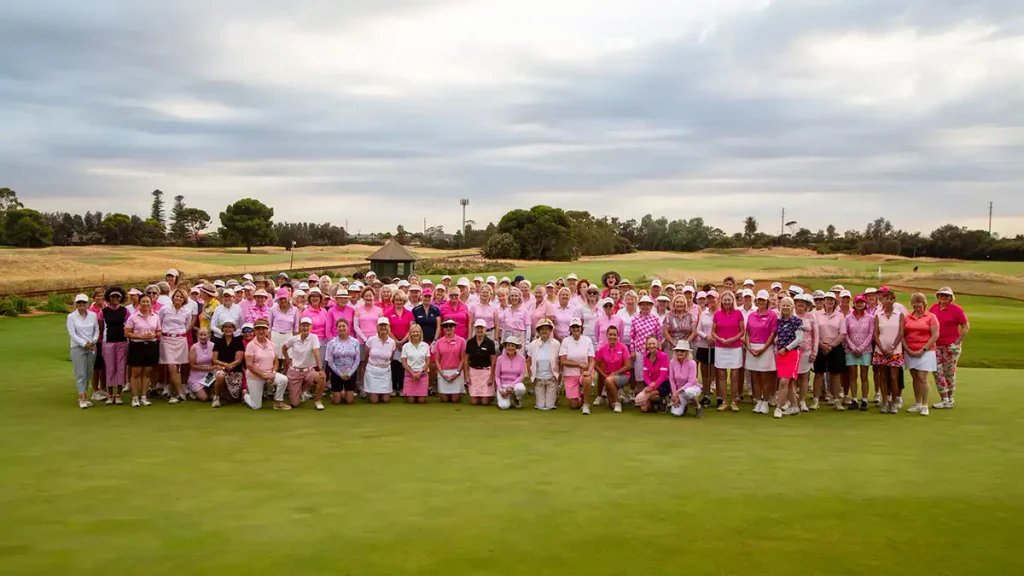
Currently the gender ratio across all categories at Royal Adelaide is roughly 70/30 in a membership of about 1,600, above the state average of 15.6 percent and the national average of 17.7 percent women in club membership revealed in the 2024-2025 Golf Participation Report.
Of course, not all golf is club golf any longer and, encouragingly, a media release from Golf Australia in March stated that participation across all forums of the game has grown by 1.3 million players (48 percent) since 2022 with women a key part of that, particularly in off-course facilities where women entrants tend to gravitate. According to the release, women now account for 42 percent of all golfers nationally and 60 percent of new players are female.
To encourage more women into the club, Royal Adelaide runs a pathway to membership program including the introductory Let’s Go Clubbing, the next stage Fairway Program and then Next Tee which allows participants to remain connected with the club while they await membership. And in 2025, the club formally became a signatory to the Women in Golf Charter.
So, as captain of Royal Adelaide, what does Chia hope to see on her watch?
“When it comes to captains, we want to leave the club in a better place than we found it at the start of our captaincy,” she says. “We think things are going well here. We have a really enthusiastic and supportive membership. We’re currently going through an infrastructure planning process for not just the next two years but much longer than that. And we’re looking forward to hosting the women’s Australian Open.”
On being the first female club captain in the club’s long history, Chia says: “People talk a lot about the gender thing. I don’t think it’s a big deal at all. The privilege is the role, not because you’re the first woman, in my view. You probably carry that weight a bit differently being the first woman but at the end of the day, you want to do it well and that’s not related to gender.”
More recently, and alongside her work at Royal Adelaide, Chia has been a director of the Asia-Pacific Golf Confederation (APGC).
“As a board and as an organisation, we’re trying to advocate for golf in the region,” she says. “We run a number of tournaments, more for the elite amateurs, and have partnerships with the R&A and Augusta National Golf Club. Golf in the regions (according to the United Nations Economic and Social Commission for Asia and the Pacific, there are 52 countries and nine territories) is becoming bigger and bigger. We’ve got so many up-and-coming nations and Australia is very well positioned within that.”
In March this year, Royal Adelaide was announced as host club for the 2027 women’s Australian Open, to be held March 11-14, between the WPGA Championship at Sanctuary Cove from March 4-7 and the Women’s New Zealand Open, which is being played for the first time in 10 years from March 18-21 at Wainui Golf Club north of Auckland.
Royal Adelaide has hosted the women’s Australian Open three times previously – in 1994 when one of golf’s finest, Sweden’s Annika Sorenstam, won her first ever pro event. In 2017 the Patricia Bridges Bowl went to the very talented Ha Na Jang and in 2020 to another South Korean and former world No.1, Inbee Park.
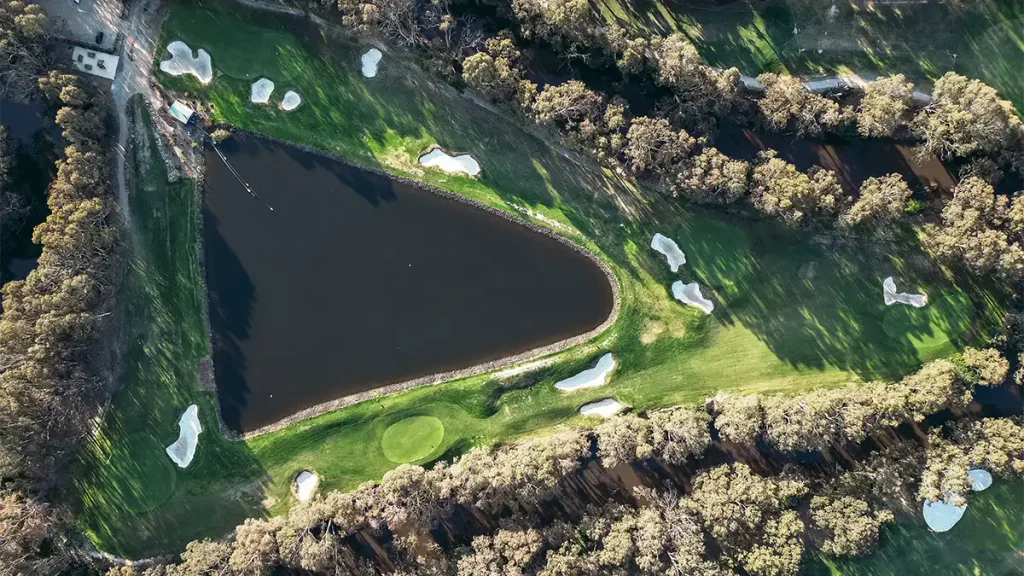
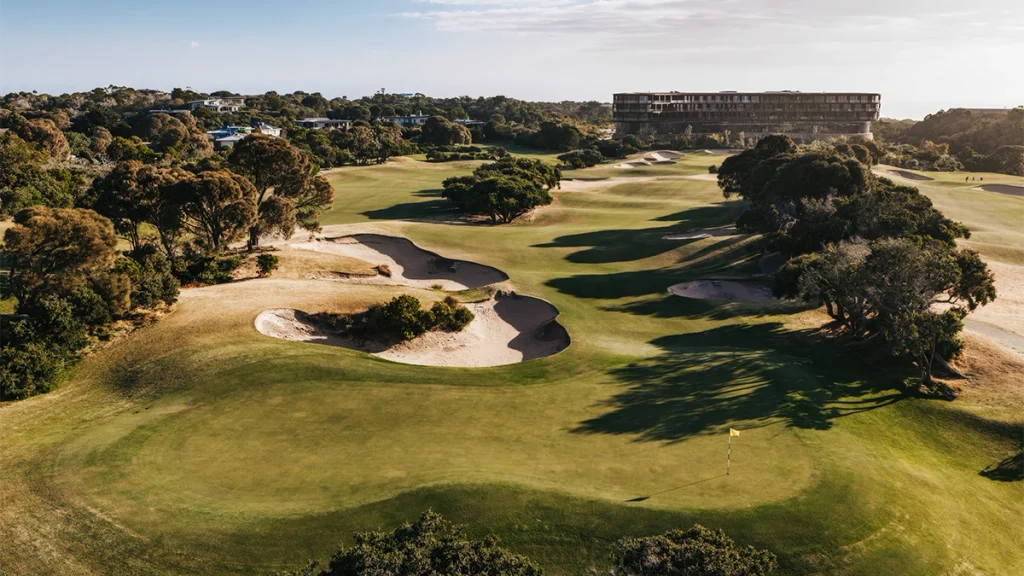
The club has been on its present site at Seaton since June 1906 and its course has frequently been in the top 10 in golf-course rankings over the years. In the Australian Golf Digest Top 100 Golf Courses published earlier this year, Royal Adelaide sits 10th with its most pronounced feature being “character”. It has its quirks, not the least of which is the still-operational railway line that traverses the course, but it also possesses many outstanding holes and one thing is certain: it takes a fine player to win the women’s national championship there.
Sarah Chia is keen to see what unfolds.
“I’m looking forward to it from a whole-of-club perspective, a chance for us to showcase our course and our club,” she says. “To have it on the world stage is great for our club. I’m keen to watch the girls coming to play and how they handle the new changes. We re-did the 17th hole and the 18th tee last year under Brian Slawnik from Renaissance Golf Design and they were opened in January.”
As captain, Chia will play in the pro-am, which brings us to a unique connection between the Firing In ceremony and both Royal Adelaide and women’s Australian Open histories.
The cannon was donated to Royal Adelaide in 1992 by the Cudmore family, in celebration of the club’s centenary. Many of the Cudmore family descendants are still members today and among the family golf history is Kathleen Cudmore, who as Mrs R.G. DeCrespigny, won the 1934 South Australian Women’s Amateur.
The club itself used by Chia and other incoming captains has a persimmon head and a celluloid-coated steel shaft, probably dating back to the 1930s or 1940s. It was made by former Royal Adelaide club professional Willie Harvey, a Scottish expat and popular identity known for playing bagpipes with some enthusiasm. He was also a fine player, winning multiple state titles and defeating Australian legend Norman von Nida in a match just prior to the 1938 men’s Australian Open at Royal Adelaide.
Harvey was at the club for 26 years and unfortunately but somewhat poetically passed away suddenly on Royal Adelaide’s famed 11th hole in a semi-final match in the 1951 SA PGA Championship against Murray Crafter. Crafter just happens to be the uncle of fellow member of the South Australian Golf Hall of Fame and 1997 women’s Australian Open champion, Jane Crafter.
2027 is an auspicious year in the championship’s history. The host club celebrates 135 years, and it will be 30 years since Jane Crafter won at Yarra Yarra and 50 years since Jan Stephenson’s victory at Manly. Only two other Aussies have won their national championship – defending champion Hannah Green and the incomparable Karrie Webb five times, in 2000, 2002, 2007, 2008 and 2014.
Will 2027 see a fifth? It’s all history in the making and hopefully, for Chia’s sake, without a cannon in sight.