On a warmer-than-expected fall Tuesday, at Tamarack Country Club in Greenwich, Conn., 44 employees of Golf Digest gathered for what they thought would be a fun, competitive day of Ryder Cup-style golf. Instead, they got a bloodbath … a merciless whooping that led to a bitter round of second-guessing and recrimination for the losers, and a coronation for the brilliant architect of the winning team. The fallout will likely unfold over months, if not years, but today, I have used my connections to score an immediate and extremely exclusive interview with Luke Kerr-Dineen, the winning captain of Team Young.
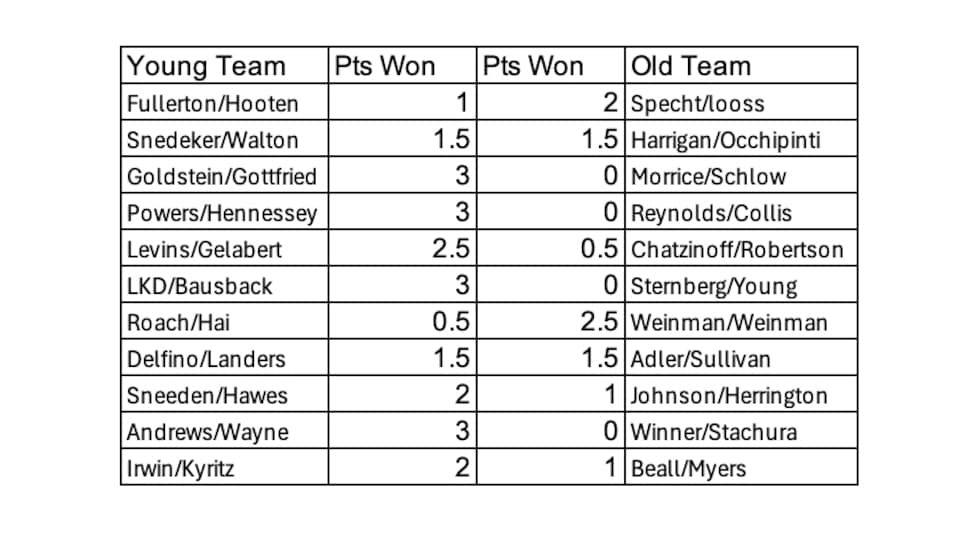
The Seitz Cup was founded in 1997, named after legendary Golf Digest editor Nick Seitz, and for the last decade it has pitted Team Old against Team Young, the squads divided in half by age. This year, Kerr-Dineen’s Team Young smashed Captain Joel Beall’s Team Old by the indecent score of 23-10. What follows is a lightly edited version of my conversation with Kerr-Dineen in the aftermath of his great triumph.
Golf Digest: Luke, first off, congratulations. Can you begin by letting us know exactly how the Seitz Cup works?
LKD: The historical roots of this thing were Golf Digest vs. Golf World magazines, and it only used to be editors, but after Golf World went away and there were fewer editors, the business side came in, and in 2014 it became Olds vs. Youngs.
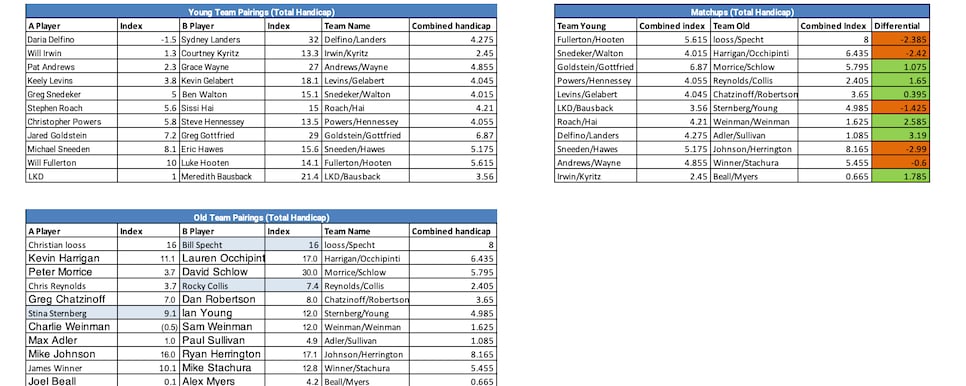
The format is two-player scramble match play, and in each match there are three points at stake—the front nine, the back nine and the overall 18. It’s called a modified Texas scramble, played with handicaps (you take 35 percent of the low handicap, 15 percent of the high one and add them together for a team handicap). This year, we had 44 total players, so 11 matches of 2 v. 2. It’s shotgun start, and match-ups are set in the Presidents Cup style, which Joel and I did at a company meeting.
Tamarack is your home course … did you use your influence to set it up in any particular way?
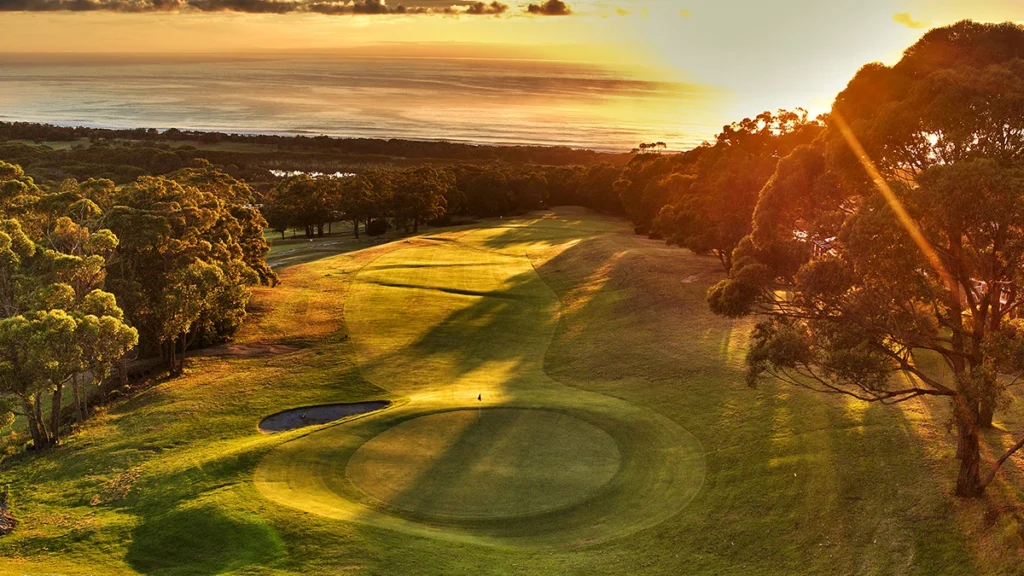
I told them to make it fun, and I requested two pin locations that they agreed to, the funnel pin on the par-3 seventh and in the valley on par-3 12th. I was considering asking them to set it up really tough, but my theory was that that would introduce more randomness, which would be bad for our pairing strategy.
What was that pairing strategy?
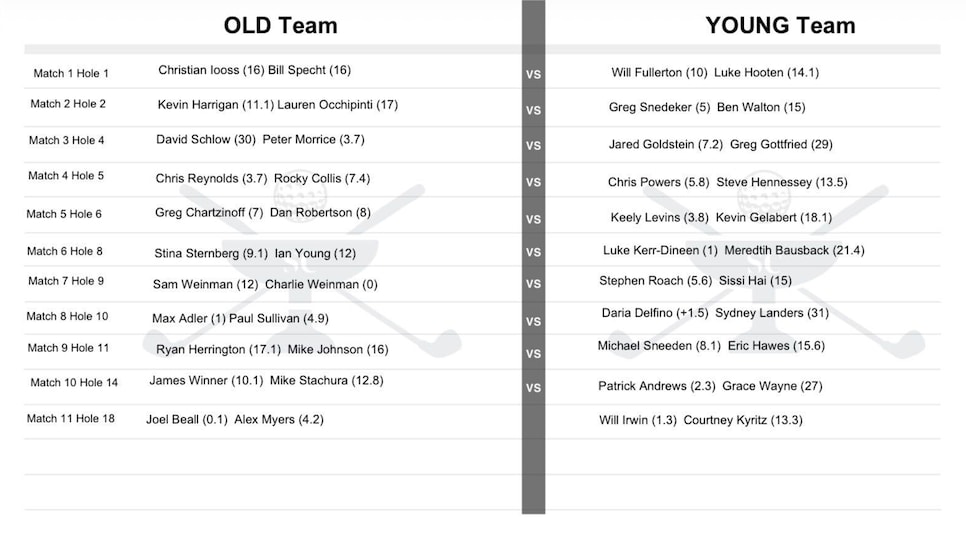
The first thing I wanted to do was to reach out to a few different stats people. I thought it would be funny to get sources close to the Ryder Cup team room. I shot Edoardo Molinari a note, I shot Cory Jez (founder of TourIQ Golf) a note, and from them I mostly wanted big picture principles. They said a high-low handicap pairing strategy makes sense, and that my two most valuable players were Daria (Delfino, a +1.5) and Keely (Levins, a 3.8) because they were both low handicaps playing the forward tees. And they said I should probably match up Daria against Max (Adler, a 1), their strongest player.
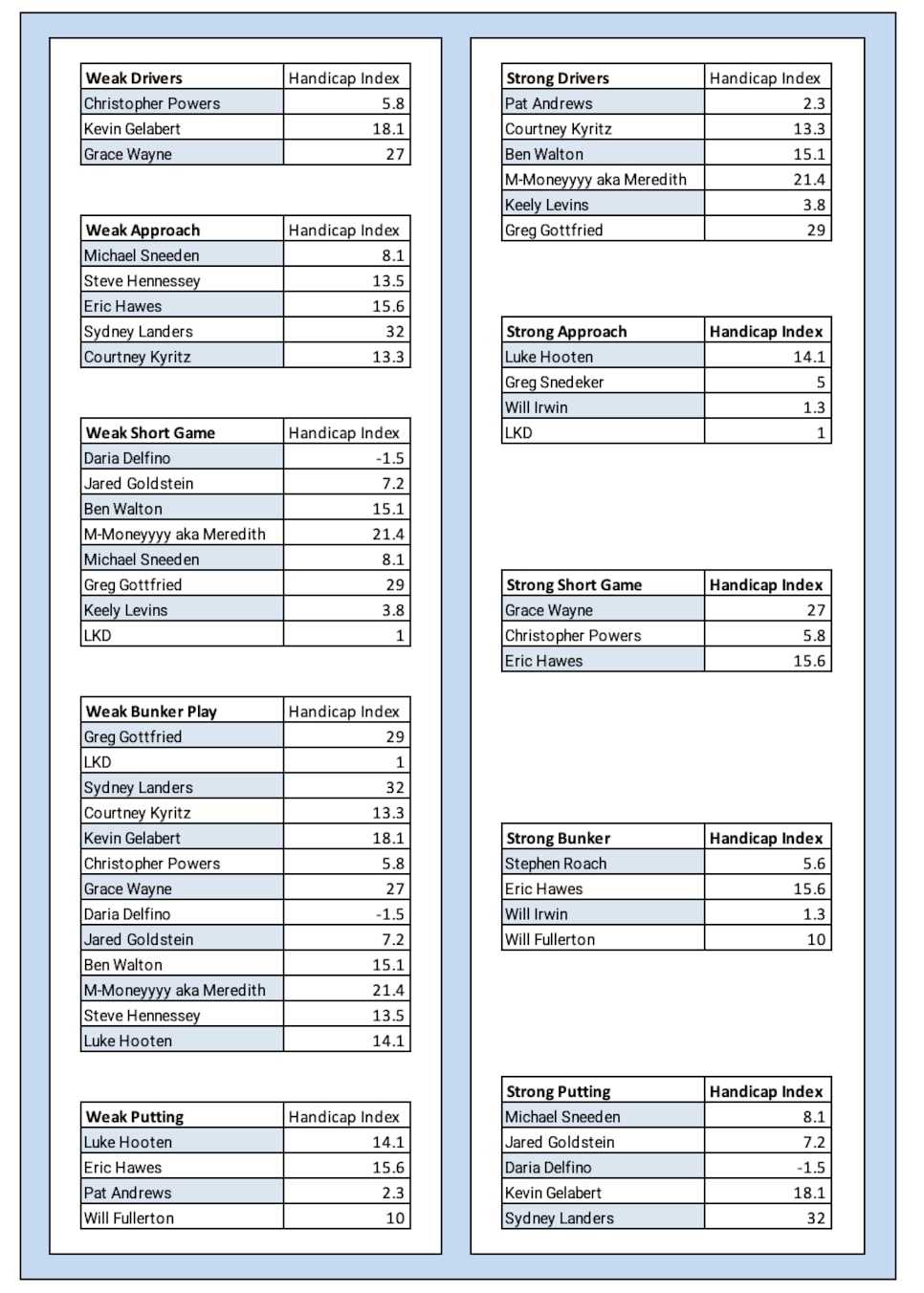
Then, when the teams were established, I sent out a questionnaire to all my players. I asked for their GHIN number and to self-grade their games in certain key areas, from bunker play to long-range putting, all that stuff. We took that, and we went to GHIN to pull their recent scores to check variance. That helped us find compatible partners. Our north star was that we wanted to try to get the low index in every group—to have the best player of the foursome—and then we wanted to use the other player to try to get the handicaps where we could work a tiny advantage or only lose the minimum. We wanted it to net out where every team would average around a 6 index, so no lows together, no highs together, and from there we’ll chase matchups to have the best player in the group and give up as few strokes as possible.
In a practical sense, what on-course benefit is there to the high-low tactic?
The big idea was that we wanted somebody in each group who was going to be in position, because what ends up happening is you pair two 15-handicaps together, inevitably they’re going to end up missing the green at the same time, and at Tamarack especially when you do that, you’re in horrible bunker spots. But the greens are big, and a low index probably isn’t going to miss the green with a 9-iron. They can hit a bunker shot onto the green, and if they can do that, the 20 handicap can hit good drives, they can make putts, they can contribute.
You keep saying “we” here … did you have your own Edoardo?
Yes, and he deserves all the credit. It’s Pat Andrews, who is an audience development analyst for us and is great with numbers. He put all the pairings together and worked on match-ups in this incredibly sophisticated spreadsheet. He’s the true genius of this whole thing. And I told everybody going in, “we’re going to go analytics forward on the pairings strategy” to stop them from vying for pairings. And everybody was good about it. The only real “friend” pairing we had was Steve Hennessey and Chris Powers, but that’s only because it worked out on paper, so we said, “OK, just put the Jersey Boys out together.”
Once the pairings were set after the big meeting, did you like what you saw?
Pat and I had a short meeting after, and we both felt pretty good about it. Every match was within two shots, giving or getting. In six of the 11 we were getting, but we also had the low index in seven of the 11 matches. You could see our strategy play out in my match with Meredith (Bausback, a 21.4) against Stina (Sternberg, a 9.1) and Ian (Young, a 12). We gave them only one shot, and here I am a 1 index. That’s just hard work for them, and we won that match 3-0.
We can’t ignore the fact that we have you, a European captain, facing Joel Beall, an American, and we’ve seen how that’s gone down recently. Did you get a sense that Joel, who once famously argued with me in print that Keegan Bradley was an ingenious pick for U.S. Ryder Cup captain, had anything approaching your level of strategy?
I think Joel was going mostly off vibes. I sensed it was mostly vibe pairings.
Unbelievable. Incredibly on brand.
And I do think that in the Team Old dressing room, there are some big personalities who want certain pairings. Ultimately, though, it’s the captain’s job to manage that dynamic.
So just like the Americans in the Ryder Cup, they’re more selfish and me-first than the team-oriented Youngs.
LKD: It’s just classic.
Let’s talk about the matches. Who came through for you in a big way?
Well, first off the Jersey Boys, Hennessey and CP, murdered. They shot 65 on their own, and I was really not expecting them to go that low as a 5 and a 13 (they won 3-0). Keely was also incredibly good, and that was a great strategic coup for us, because as a 4 index and the best player in the group, she was actually getting strokes since her partner was an 18. And Daria against Max got an even split, 1.5 points apiece, which is kind of the goal.
Is there a Scottie/Tiger parallel here with Max, a great player who couldn’t get it done in the team format because of superior captaining and motivation on the other side?
Well again, it ended up where we had Daria, a +1.5, actually getting strokes, and actually Max did well to come away with a halved match. Another strategy win. It was similar with Joel, their two best players by handicap only came away with 2.5 of 6 points. And with Max, they paired two of their guns together, a sub-1 and a sub-5, and in scramble I almost think there’s diminishing returns in that. I’m not trying to dog on them at all, but if you put a sub-5 with a 15, they can put them in really good positions and they can be really dangerous.
Only two teams for the Olds got more than 1.5 points and “won” their match. One was Christian Iooss, a very handsome man, pairing up with Bill Specht, both 16s, to take two points off the video/social media team of Will Fullerton (10) and Luke Hooten (14.1). What happened there?
For context, I think Hooten had played Iooss twice before and I think swept him both times, and he kept bragging about it to him. I think it fired Iooss up completely, and it’s hard not to be happy for Ioossy. Perhaps a lesson learned for the younger Luke, to not give your opponent a reason to get motivated.
The best Olds team of all was Sam Weinman and his son Charlie, a college golfer and technically a young who had to fill in at the last moment. Has Sam’s almost maniacal obsession with the mental side of golf finally paid off, or did his vastly superior son carry him?
All I can say is Charlie’s been claiming a lot of credit for it.

When did you know this was going to be a massive blowout?
I started getting inklings while checking in with other teams. I saw CP and Hennessey at one point and they were 4 up through 14, then you hear “oh, we’re 3 up,” and this match is tied, and just every time I got in touch with another team, everything seemed to be going our way.
Does this damage the legacy of the Seitz Cup? Has it become noncompetitive, will the ratings plummet and global interest wane?
There’s a clear need for a Team Old Task Force. Luckily, I can probably be on it, perhaps as soon as next year.
How did the olds take the loss?
I think they have realized Joel’s strategy error. But I didn’t talk to many of them right after … maybe they were too tired.
Would Joel shake your hand?
He was pretty pensive and quiet afterwards, I think he was bummed. But we did have a gentlemanly handshake, and he said congratulations.
Did he abuse any officials?
No abused officials.
OK, look, you’re friends with Joel, and you’re a consummate professional, but you’ve probably seen some of the nicknames he’s been given around the Internet after this loss. “The Hack of Tamarack,” things like that. It’s really poor form, in my opinion. What do you make of it all?
I saw a few plays on his last name. “Joel Squeal.” “Joel Kneel.” “Beall of Misfortune.”
“The Shat-Mo-Beall.”
“Achilles Beall.”
“Slow-Mo-Beall.”
“Un-Electric Beall.”
“Brainless Beall.”
“Beall-bo Gaggins.”
“Beally Cry-dol.”
I think there were some captain-based ones too.
Right, right.
“Captain Cooked.”
“Oh Craptain, My Craptain.”
“Captain No-Plan-et.”
“Captain Sobvious.”
“Captain Shirk.”
“Captain Clanger-oo.”
Were there more?
I heard “The Wizard of Flaws.”
That’s right. “The Errorist.”
“Napoleon Fall-Apart.”
“Genghis Yawn.”
“Alexander the Great (At Losing).”
“Keegan Sadley.”
“Bomb Watson.”
“El Tonto Hombre de Golf,” in the Spanish-speaking world.
“Epic Loserboy.”
“Big Bumface.”
Truly unfortunate stuff. And I think we can both agree, that kind of thing has no place in the game.
Absolutely.
Luke, thanks for your time, and congratulations again.
This article was originally published on golfdigest.com