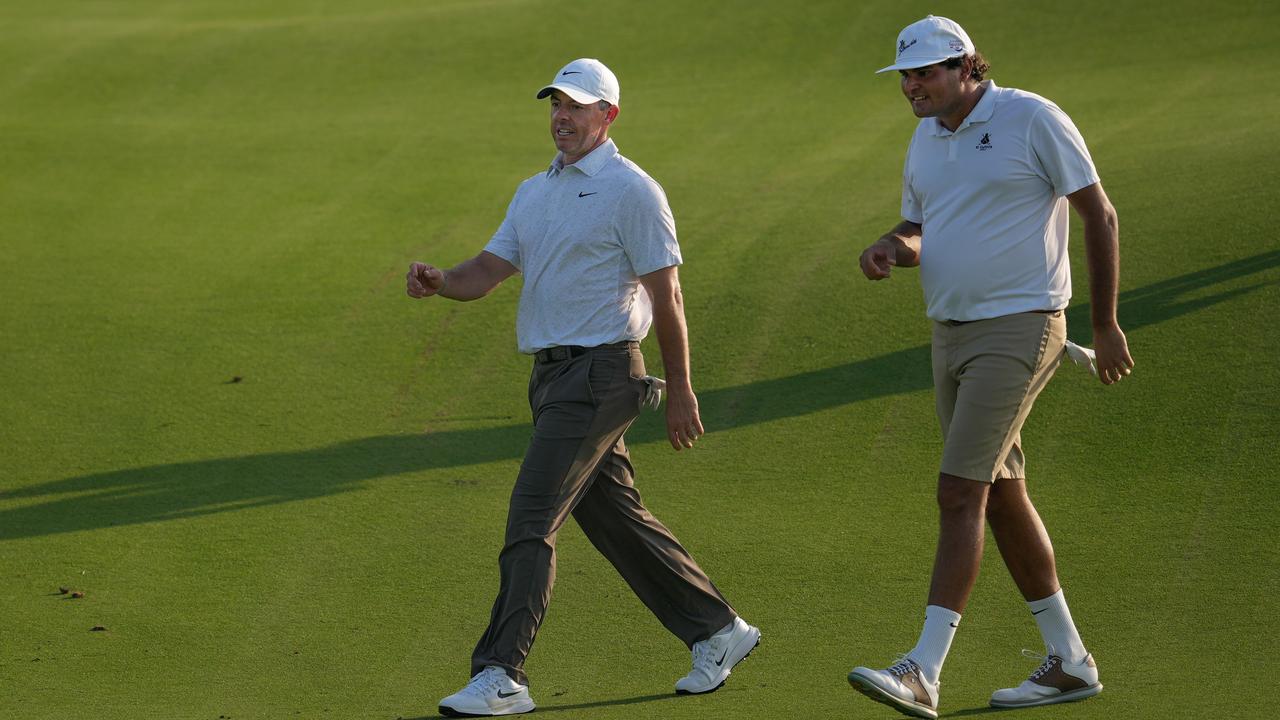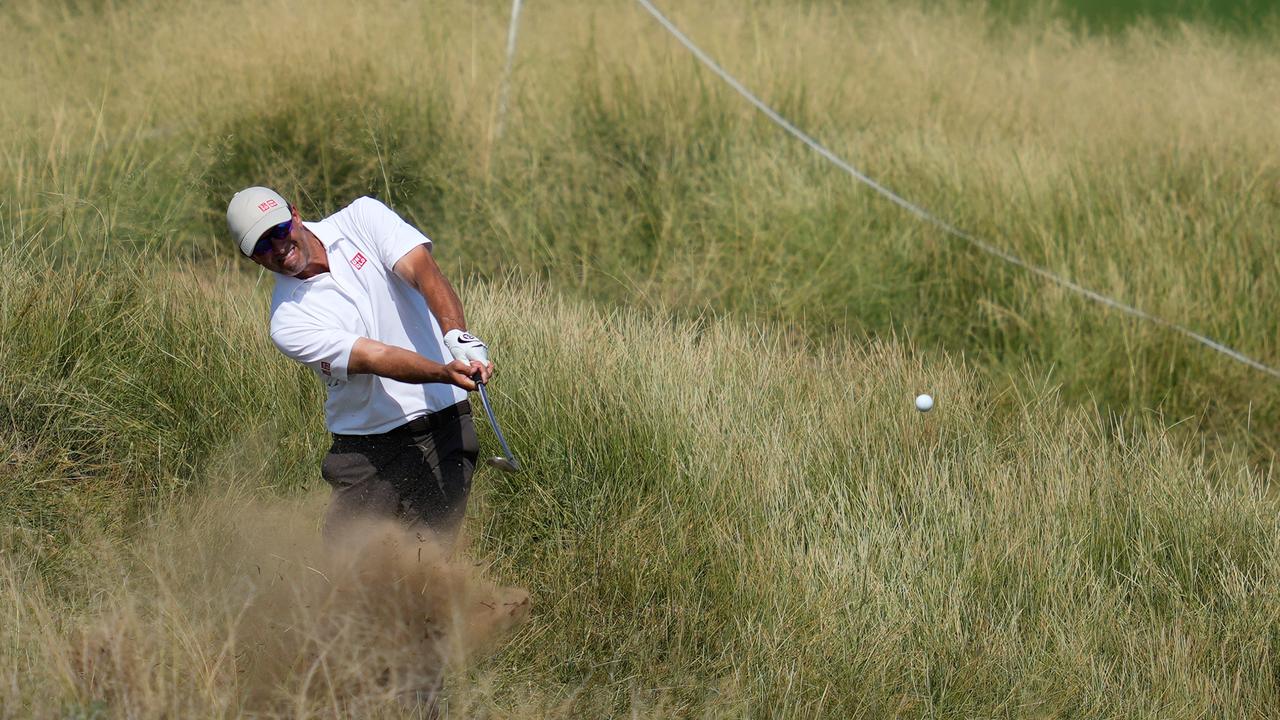
To catch you up, overnight (Australian time) at the Abu Dhabi Aldar Championship, Rory McIlroy chunked a short pitch shot on the 12th hole and watched his ball roll back almost all the way to his feet. When he approached his ball, he placed the wedge behind it and clearly tamped down a clump of grass. When he removed the club, the grass stayed down – a textbook case of improving your lie illegally. After the round, he was assessed a two-stroke penalty, turning his double-bogey into a quadruple-bogey. Watch the video here:
There are a few things we can say about a move like this that are basically beyond dispute:
1. It’s obviously a penalty.
2. Since he didn’t call the penalty on himself, it doesn’t look good – it’s very easy to accuse him of intentional cheating and not very easy to defend him.
3. Since we can’t get in his head to determine intent, there is no good way for him to “prove” he wasn’t cheating after the fact.
RELATED: McIlroy best placed as Race to Dubai nears conclusion
It’s an all-around bad situation, and one that will be familiar to golf fans who have seen similar incidents play out the past few years. It puts the player in a difficult position, because as noted, there is no possibility of total exoneration – the minute you get caught on camera, regardless of intent, there will be lots of people who believe you were improving your lie on purpose, and those people will call you a cheat.
So what did McIlroy do? He took a pretty simple three-step approach. First, he didn’t hide from the cameras. Second, he described the situation, accepted the penalty, and admitted that it looked bad – no defensive behaviour here. Third, he invoked his reputation, claimed he didn’t do it on purpose, and implicitly asked his fans to trust that he’s not a cheat. All the while, he keeps a resigned smile on his face. It’s worth watching the clip here:
Again, there is no way to definitively prove intent. If you think he’s lying, great. If you trust his version, great. In either case, you’ll find people who share your view, and others to debate. The larger point is that he responded in a way that is most likely to mitigate criticism, mute the controversy, and disarm his critics. Whatever else – and in stark contrast to those recent incidents alluded to above – he didn’t dig the hole any deeper.
In a situation where innocence is unprovable, the best you can do is try to seem innocent. Fair or not, engaging in defensive behaviour, lashing out at your critics, and arguing your case pointlessly all have the opposite effect. This is human behaviour 101, and sometimes I think the failure to understand the futility of fighting a losing battle is the main engine of unpopularity in a world like professional golf.
You might have noticed in McIlroy’s response that he had a question about the technical nature of the rule – did he actually “press” the grass down, per the official language? – but the most telling part of the entire sound bite is when he followed that up by saying, “At the same, I don’t want the perception of people thinking I got away with something either, so I’m happy to take the two-shot penalty.”
RELATED: Where does the Bryson DeChambeau Open Championship controversy rank among all-time rules blunders?
Those are the words of somebody who intuitively understands the bigger picture, and how much perception matters in the immediate aftermath of these incidents. Imagine how much worse it would have been if the entirety of his response was a defence-based on the semantics of one word! Instead, he put a higher value on just taking his lumps and not exacerbating the situation by trying too hard to be “right” in a situation where “right” doesn’t exist. Because of that, he’ll take his share of flack over the next 24 hours, but afterward it will be a memory that lives on only in the hearts of the real haters, and their future grumblings will go mostly unheard.
We have no evidence to say that McIlroy’s act was any more or less intentional or “legal” than the other notable examples we’ve seen in the recent past, but it’s a certainty that he’s going to get off far easier in the court of public opinion than Bryson DeChambeau at The Open or Patrick Reed at the Hero World Challenge, to name two similar high-profile examples. You can fixate on the double standard of that truth – plenty of people will – but it’s far more interesting to ask yourself why it exists, and how the players themselves influence the reaction.