An issue that’s been percolating in the background of golf has bubbled nearer to the surface in the past week or so, and it’s a divisive one:
Should former professional golfers be permitted to return to the amateur ranks?
The term most commonly applied to the process is “reinstatement” and it happens more often than you perhaps realise.
The reason this issue has received more attention in recent weeks is multi-layered. Firstly, former US Amateur champion-turned-tour-pro-turned-TV-analyst Colt Knost applied for and was denied in his bid to the USGA to return to the realm of the lilywhites. Then, Mike Sposa [above], who earned $US2.3 million in 334 starts during a 16-year career across various pro tours, won the US Senior Amateur Championship. To cap off this epic run of ‘the reinstated’, reigning British Amateur champion Stuart Grehan spearheaded Great Britain & Ireland’s electric run to victory at the Walker Cup this past weekend, having previously played as a pro for seven years.
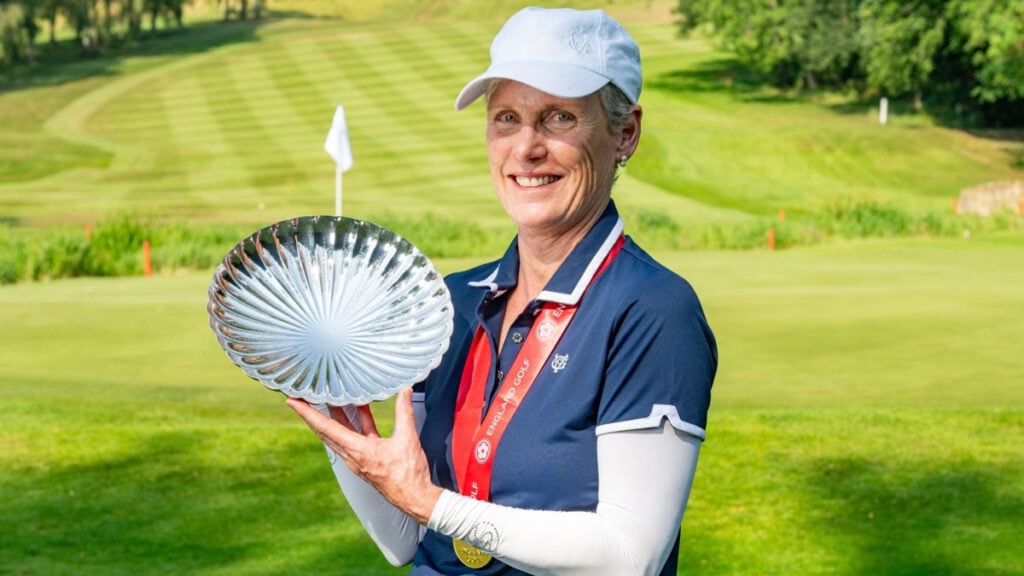
In Australia, the most high-profile reinstated amateur is Nadene Gole [below], who is enjoying a phenomenal run in the international senior amateur ranks after a seven-plus-year pro career before she became a mother.
Whether former professionals should be permitted to return to amateur competition is perhaps the greyest of golf’s many grey areas. And, if your answer is ‘yes’, that stance opens up several more questions. How successful does one need to be as a professional to be denied or permitted a return to the amateur ranks? How long would a pro career need to be to work against a return? How much time needs to pass between the two careers? And, in each case, where should those thresholds be set?
Then, what about club pros who never played on tour but nevertheless remain professional golfers? Where do they sit in this debate?
As things stand, the R&A and USGA treats each request for reinstatement via a prescribed methodology that takes in money earnt, longevity on tour and similar. Golf’s two primary governing bodies used to manage such requests much more individually, but that approach left them exposed to questions over favouritism, perceived or otherwise.
In Australia, there is a six-month waiting period for reinstatement, a duration that has come down over the years, says Simon Magdulski, Golf Australia’s long-time head of handicapping and golf experiences. He says most applications for reinstatement that Golf Australia sees are club pros seeking to be allowed to play against their mates.
The motivation to return is different here as the elite amateur tournaments aren’t on the same level of prestige and reward as in the United States or United Kingdom. The US Mid-Amateur Championship, for instance, provides an exemption into the Masters for its champion each April. The same link exists between the British Amateur and the Open Championship.
RELATED: The queen of the senior amateur circuit is not slowing down
However, that hasn’t prevented an avalanche of takes on the matter. As the always-genial Peter Senior once said when being scrutinised for his use of a broomstick putter when they first emerged on tour, “Opinions are like backsides – everyone has one.”
It’s the same case on the subject of amateur status, and that’s largely due to the scope of the grey area involved.
Of course, the easiest solution is also the harshest: once you turn pro, there’s no coming back. Fullstop.
Making the transition a one-way door would clean up any inconsistencies and create genuine separation between the two ranks – especially during a period when the lines between pro and amateur golf have never been so blurry.
Yet Gole is a classic example of pro golf also being a ‘time and a place’ thing for many players. Her two careers were separated by decades, not years, as well as by stages of life.
If ever a case existed in favour of reinstatement, it’s Gole’s. As for Knost, Sposa, Grehan and co, it’s proof that in this debate, there remain plenty of shades of grey.