
This is going to sound like I’m being a Presidents Cup hater. But I’m not. What I am is a Presidents Cup realist.
I like the Presidents Cup … well, the idea of it at least. What I don’t like is the systemic flaw in its design that means one team dominates year after year. The overall record in this match that dates back to 1994 is 13-1-1 in favor of the Americans. Even if the International Team pulls off a historic upset this year at Medinah No. 3, the competitive imbalance would remain.
I played around with a bunch of different variations, and these were the two fairest.
Keep an open mind, and let’s get into it.
More Presidents Cup preview stories  Presidents Cup 2026 Presidents Cup 2026: Medinah holds vastly different experiences for team captains
  Presidents Cup Presidents Cup 2026: The team match-play strategy every captain should adopt
  Golf Digest Logo Presidents Cup 2026: The transformation of Medinah No. 3 Option 1: International Team vs. USA-B Team
Think of this as an interim solution.
For a bunch of macro reasons that I don’t fully understand, the United States team is consistently stronger than the International Team, and in such a way that the results over time have proved it. There are fantastic players on the International team, but the scales never quite balance. If that changes, this should change, too.
But in the meantime, what if the competition was the International team against the U.S.’s next best group of players? I’ve termed it the B team here, but I’m sure a marketing genius could rebrand it in some snazzy way that doesn’t feel quite as pejorative.
Regardless, the idea is that the U.S. benches its top players, and sends out a team of its next best. Up-and-comers; guys right on the edge; players in the midst of a comeback. In this universe, here’s what the U.S. team would look like if you benched its current lineup and picked the next 12 highest-ranked U.S. players by OWGR.
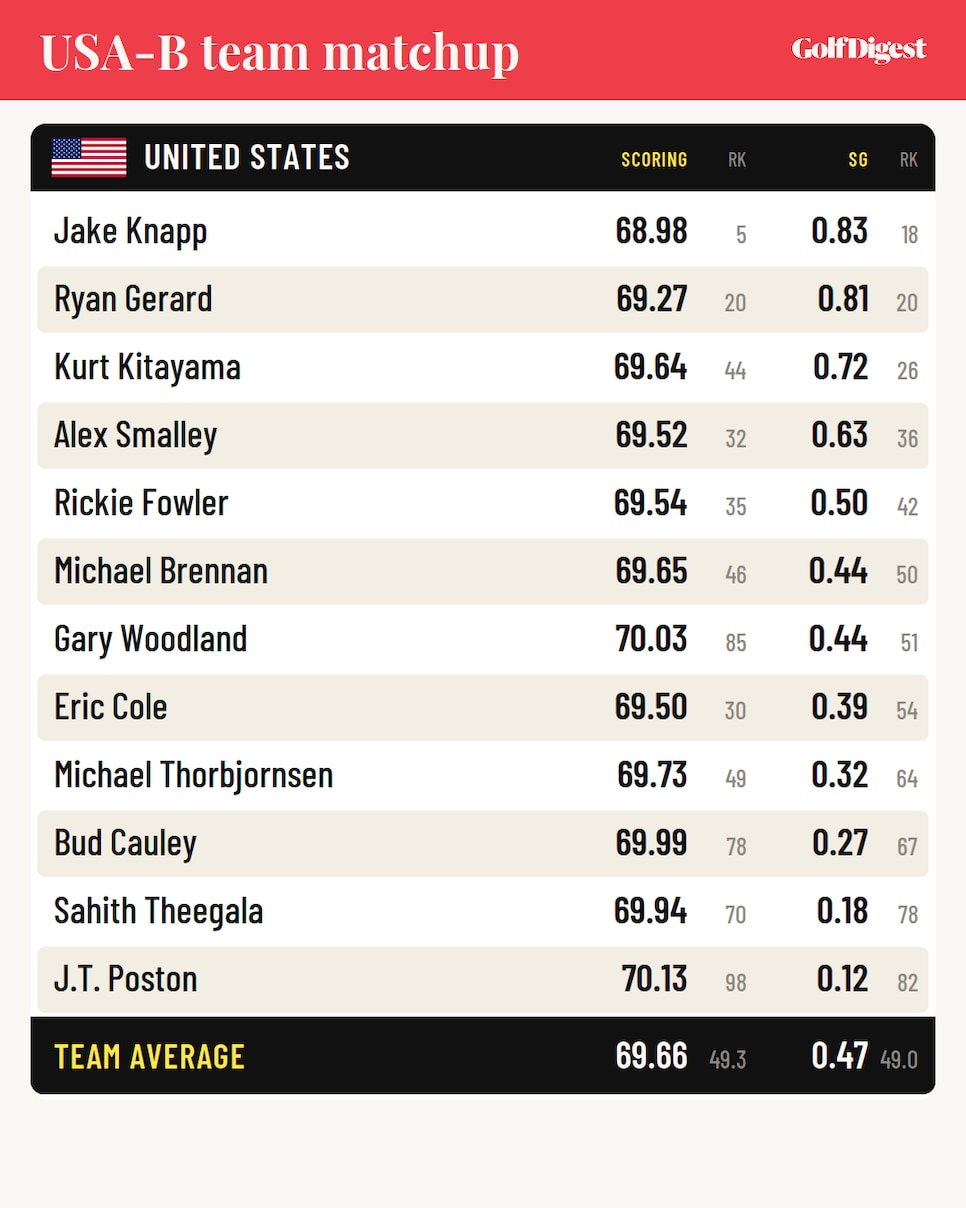
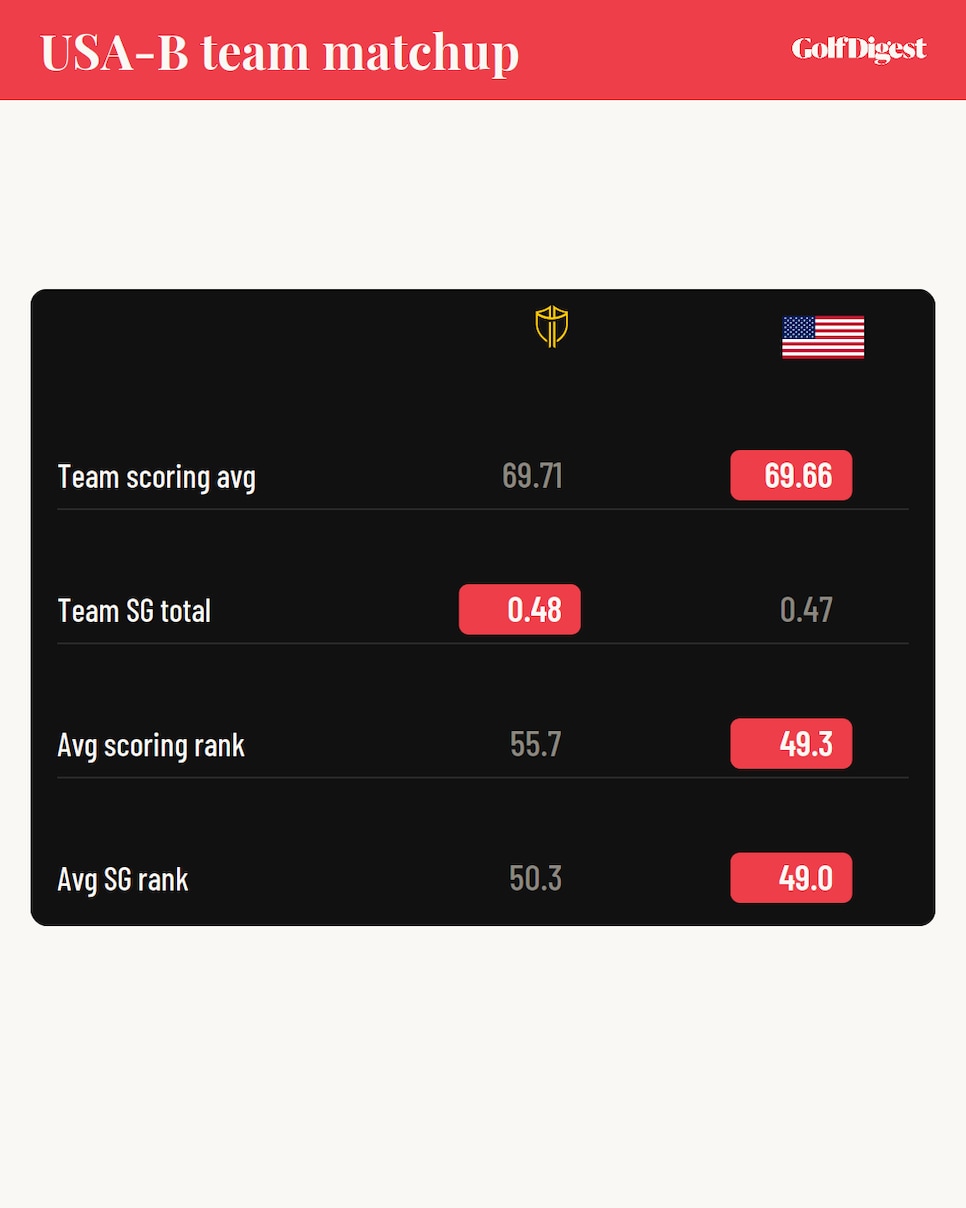
And if you compare this team’s scoring average and Strokes Gained stats to the current International team, it is a statistical dead heat. Combined Team SG ends within 0.01 of each other, and each team’s combined scoring average is within 0.05 strokes.
Think of the benefits of this idea for the U.S. team, too. You can see how some new names fare in match-play conditions. The U.S. team can test new pairing strategies. When the Ryder Cup rolls around the following year, the U.S. team has some new information to work with.
Option 2: A mixed-team event
I can already sense some executive in a suite somewhere shaking his head, dismayed at the thought of having to cut the LPGA Tour into a PGA Tour asset and make less money because of it.
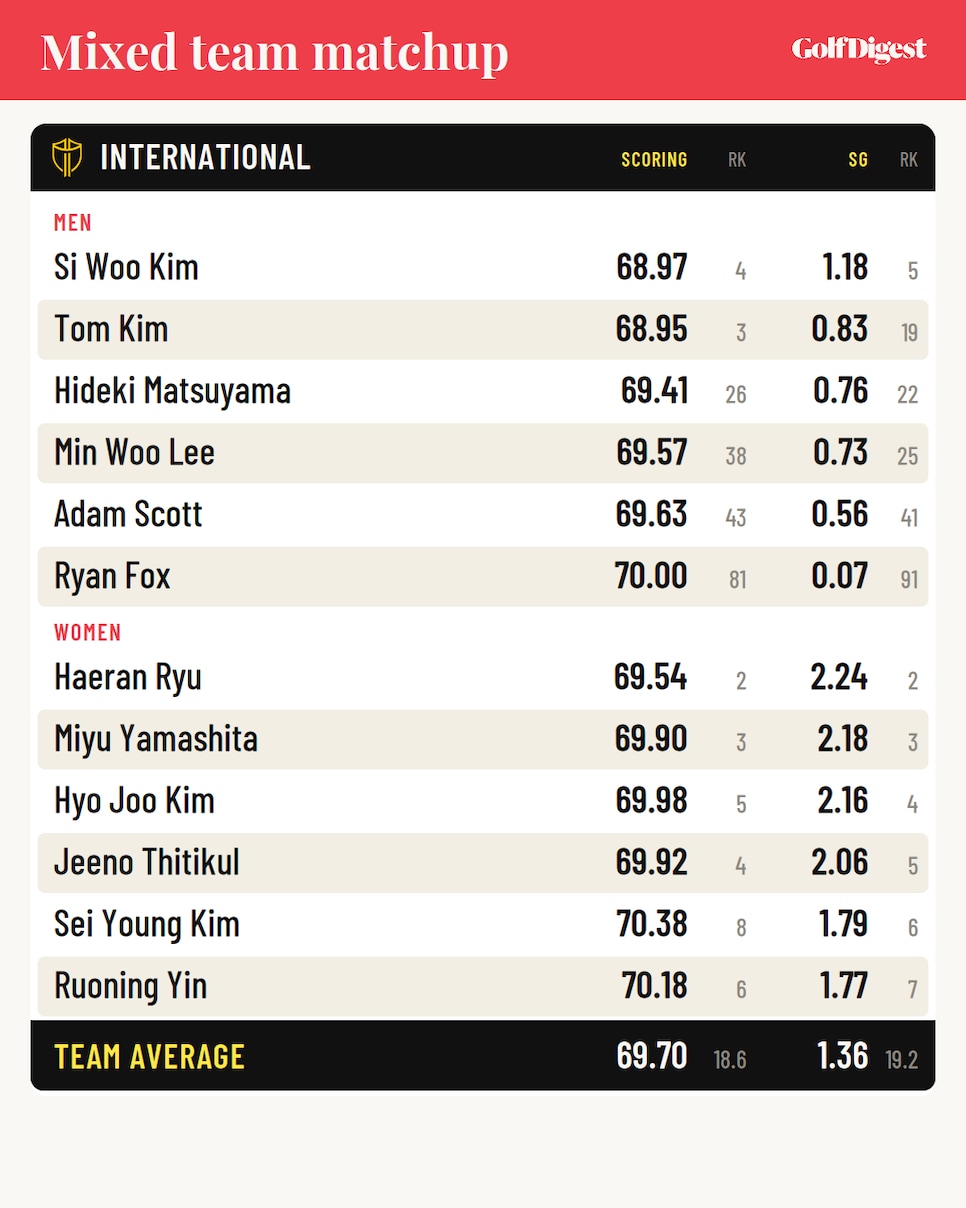
But the thing is, this idea really does make sense! If you took the six highest-ranked men and women on each side, here’s how the International Team would look:
And here’s how the U.S. team would shake out:
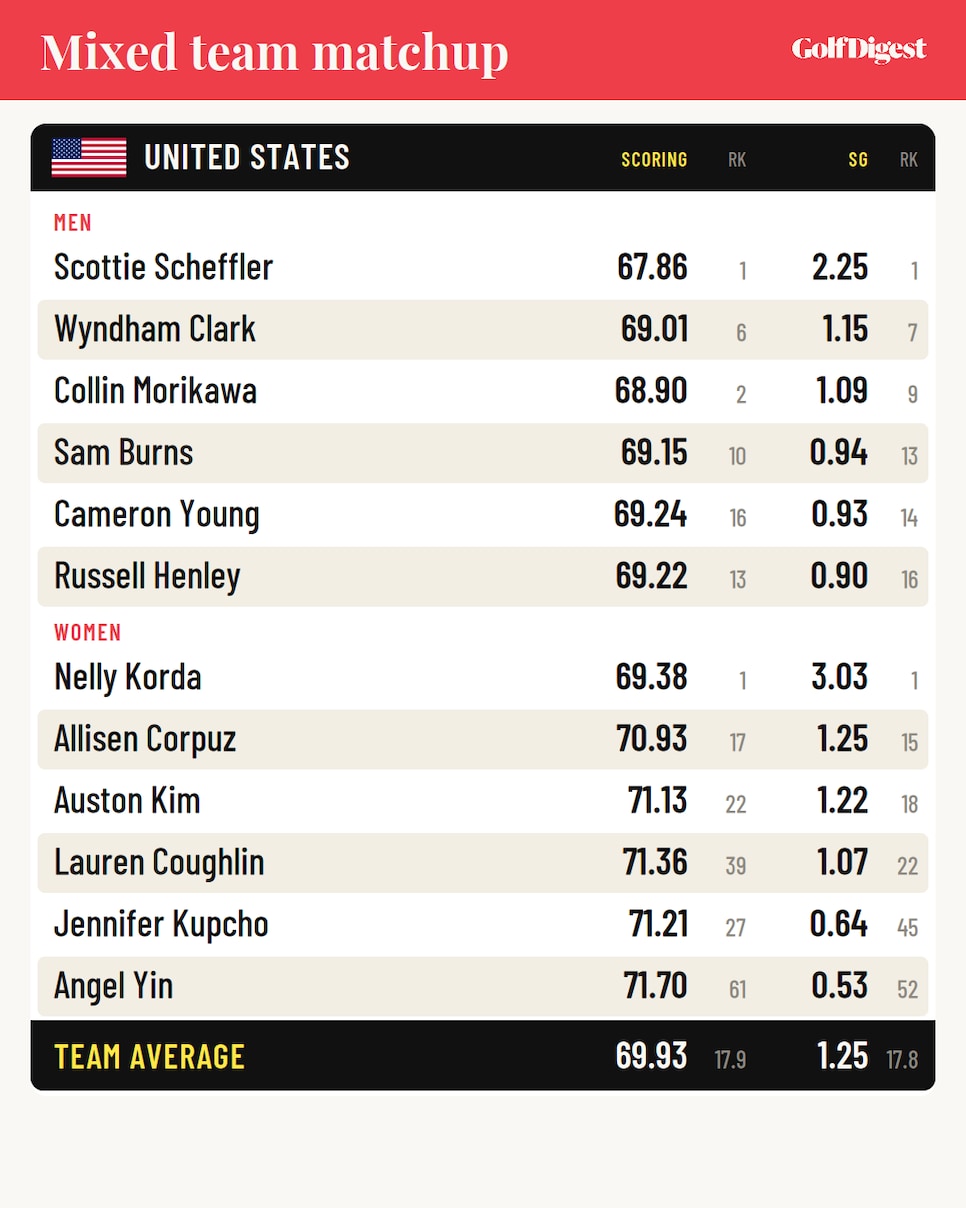
As you can see, the international women are stronger than the American women, and vice-versa on the men’s side. Put it all together and it’s astonishingly fair, at least by the numbers. Each team’s scoring average and average Strokes Gained are each within about 0.2 of each other.
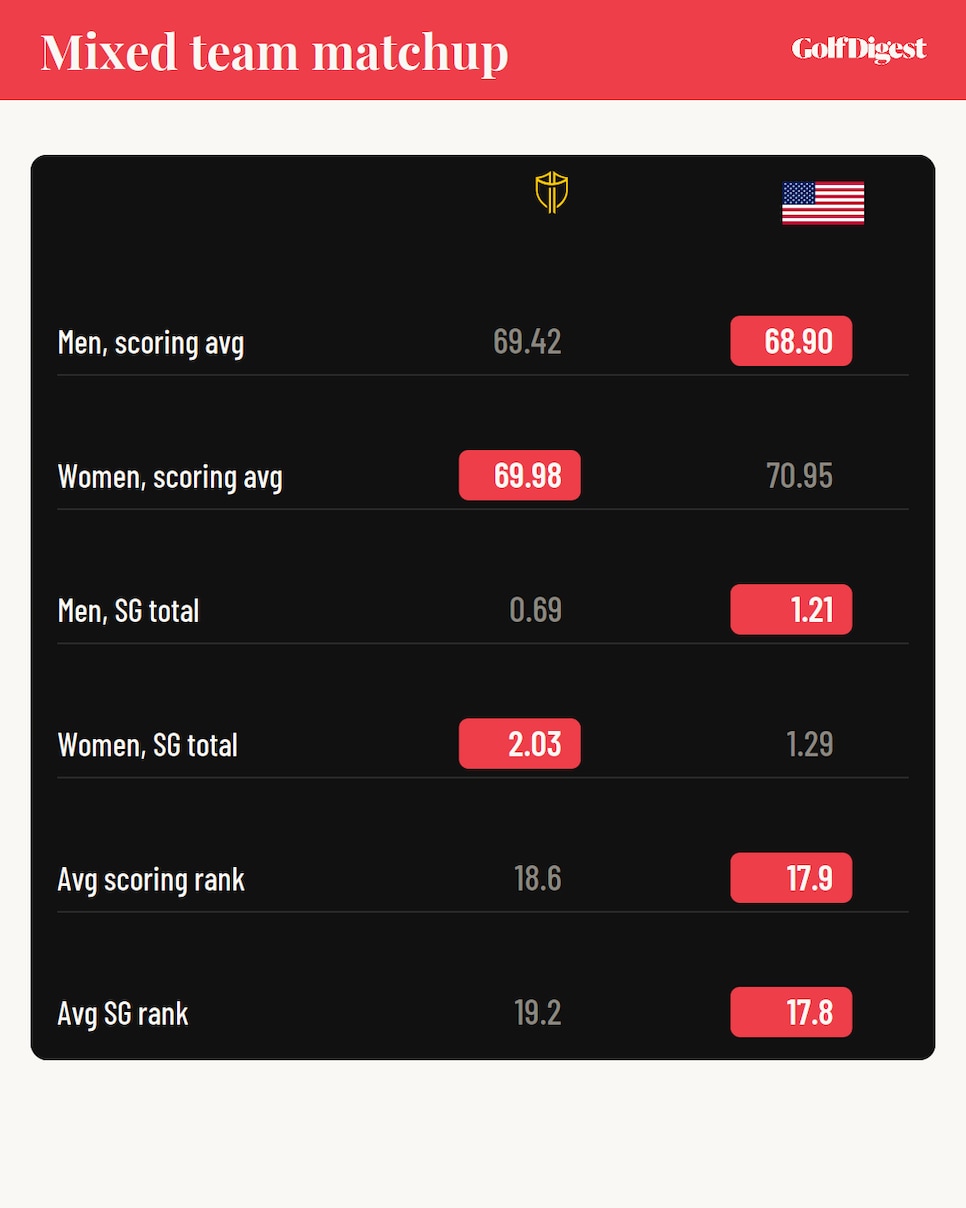
It seemingly solves the competitive balance problem, and in a way that feels good. We can see men and women compete alongside each other in a format that makes sense.
This article was originally published on golfdigest.com