One of the sport’s most iconic brands is making a comeback in Australia.
More than a century after the Maxfli name first became part of golf, one of the game’s great heritage brands is preparing for a significant Australian return. For older golfers, it is a name synonymous with Greg Norman, major championships and some of the finest players of an extraordinary era. For a new generation, Maxfli is becoming something different again: a performance brand with history, credibility and a growing presence at the highest level of the game.
There are certain names in golf that immediately transport you to another era. For Australian golfers of a certain generation, Maxfli is one of them. The familiar logo, the boxes of balls behind the counter in golf shops, the equipment and bags, and most importantly the players who used them. Maxfli was once everywhere. It was associated with some of the greatest players in world golf and became particularly intertwined with Australian golf through names including Norman, Craig Parry, Graham Marsh and Robert Allenby.
But Maxfli’s story is more than nostalgia. Today the brand is writing another chapter, one that connects more than a century of golf history with a new generation of players. On the professional stage, PGA Tour star Ben Griffin and major champion Lexi Thompson have put Maxfli back into the conversation, while the brand has also returned to manufacturing irons after an absence of more than two decades.
And in Australia, another significant chapter is about to begin. Maxfli is set to officially return to the Australian retail market in early October, available exclusively through The House of Golf stores.
It is a comeback that carries considerable history.
FROM THE BEGINNING
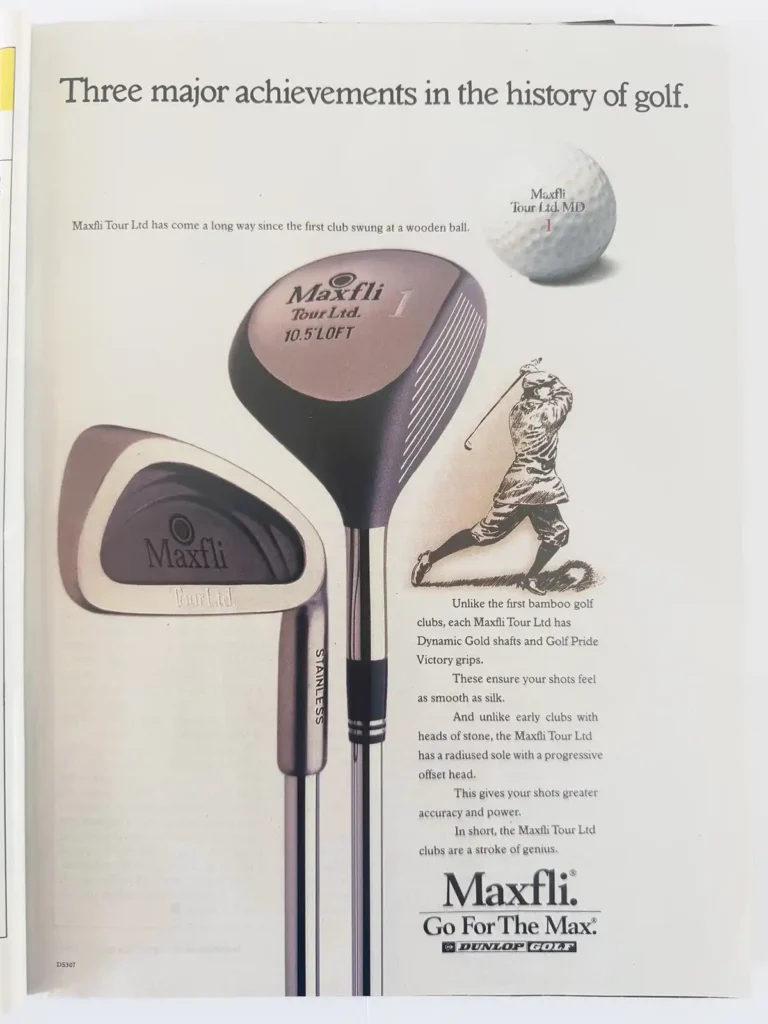
The roots of Maxfli stretch back to the early part of the 20th century, although accounts of its precise beginnings differ. The Maxfli name itself emerged under the Dunlop umbrella in the early 1920s, when Dunlop rubber specialist Albert Penfold developed a new golf ball that would quickly establish itself at the elite level of the game.
The impact was almost immediate. By the 1923 Open Championship, according to historical research published by MyGolfSpy, about 75 percent of the field was playing Maxfli, including the eventual champion, Arthur Havers.
This wasn’t simply another golf ball manufacturer competing for shelf space. Maxfli was one of the game’s benchmark performance brands.
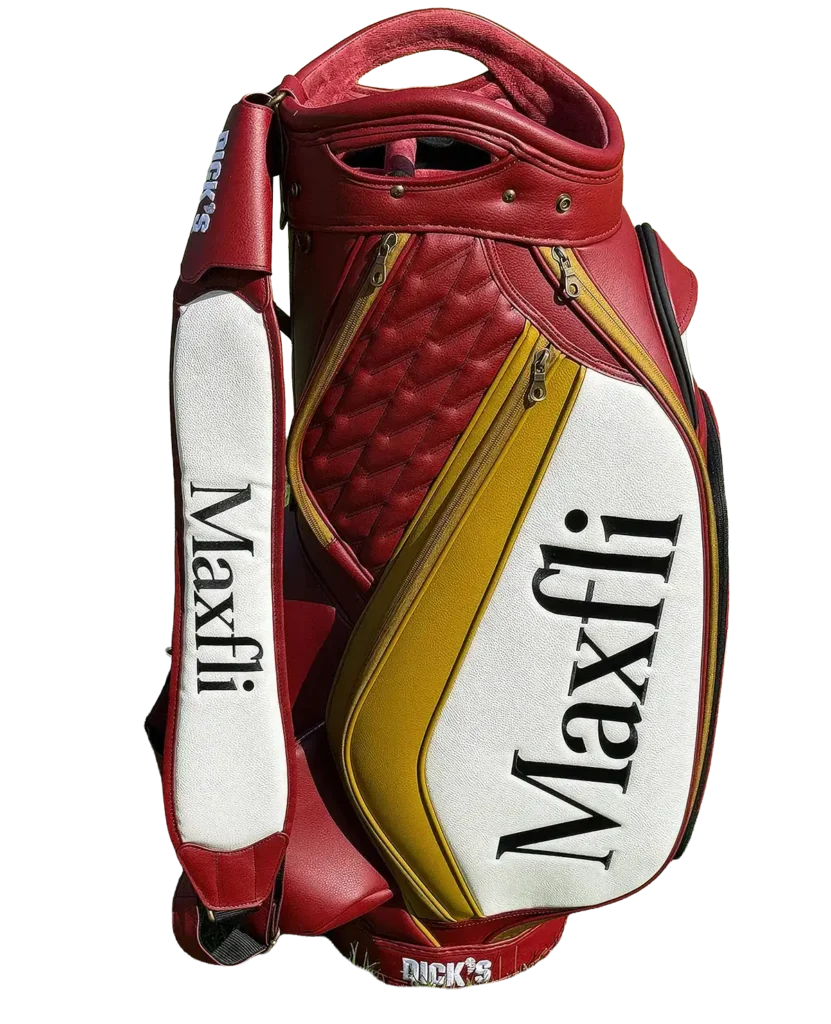
Over the following decades, Dunlop continued to develop the Maxfli name across golf balls and eventually into equipment and accessories. Golf bags arrived in the 1960s, while the famous Australian Blade irons were introduced in 1976 and remained in production in various forms into the 1990s.
For golfers who grew up during that period, Maxfli represented something very different from what younger golfers might associate with the name today. It was premium. A major winner. And it was tour-proven.
THE AUSTRALIAN CONNECTION
Few countries developed a stronger relationship with Maxfli than Australia. Part of that came from the equipment itself, particularly the Australian Blade irons, but much of the connection was created by the players.
Norman was the obvious centrepiece. At the height of his powers, Norman was not merely Australia’s greatest golfer, he was one of the most recognisable sportsmen in the world, spending 331 weeks as the world’s No.1 player and becoming the face of an extraordinary period for Australian golf.
Speaking with Australian Golf Digest, Norman said Maxfli stood apart from its rivals during the height of its popularity, crediting the ball’s combination of performance, consistency and feel as reasons it became a favourite among elite players.
“The Maxfli ball was cutting edge. There wasn’t a technical flaw,” Norman said. “The ball flight in relation to its spin rate was excellent. Its consistency was superior. The feel around the greens, especially hard surfaces/approaches like the Sandbelt and links courses, complemented any elite short game. For its time, it was the superior ball.”
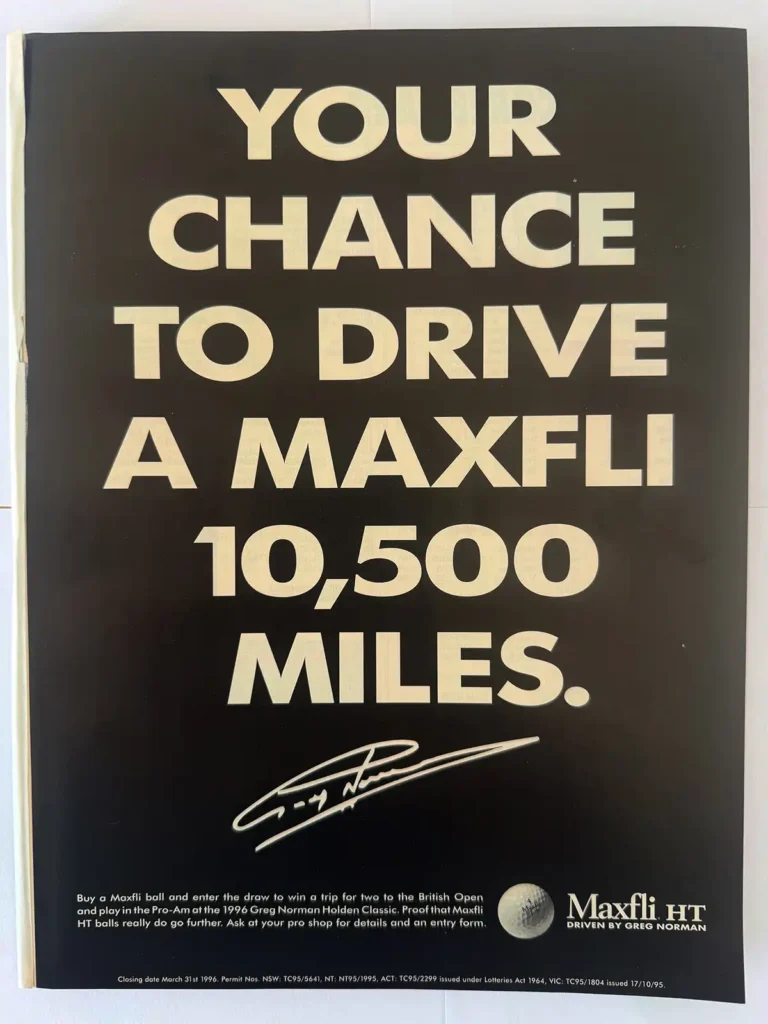
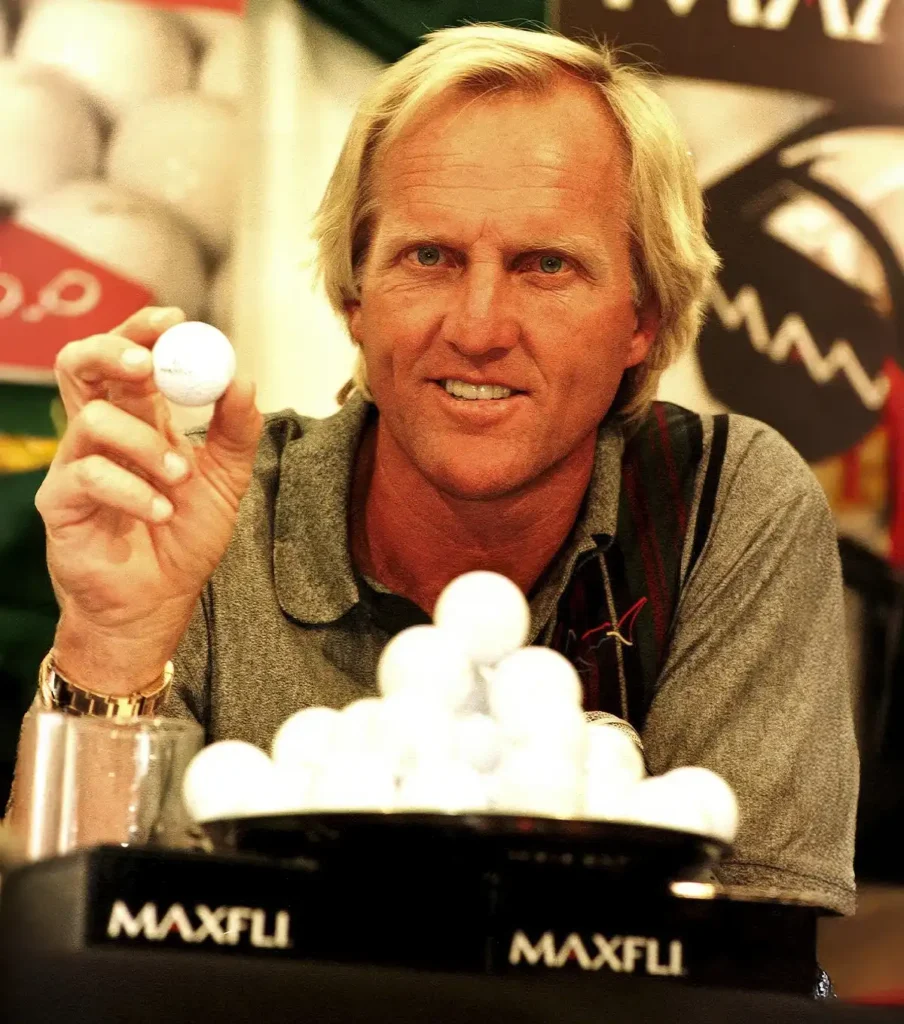
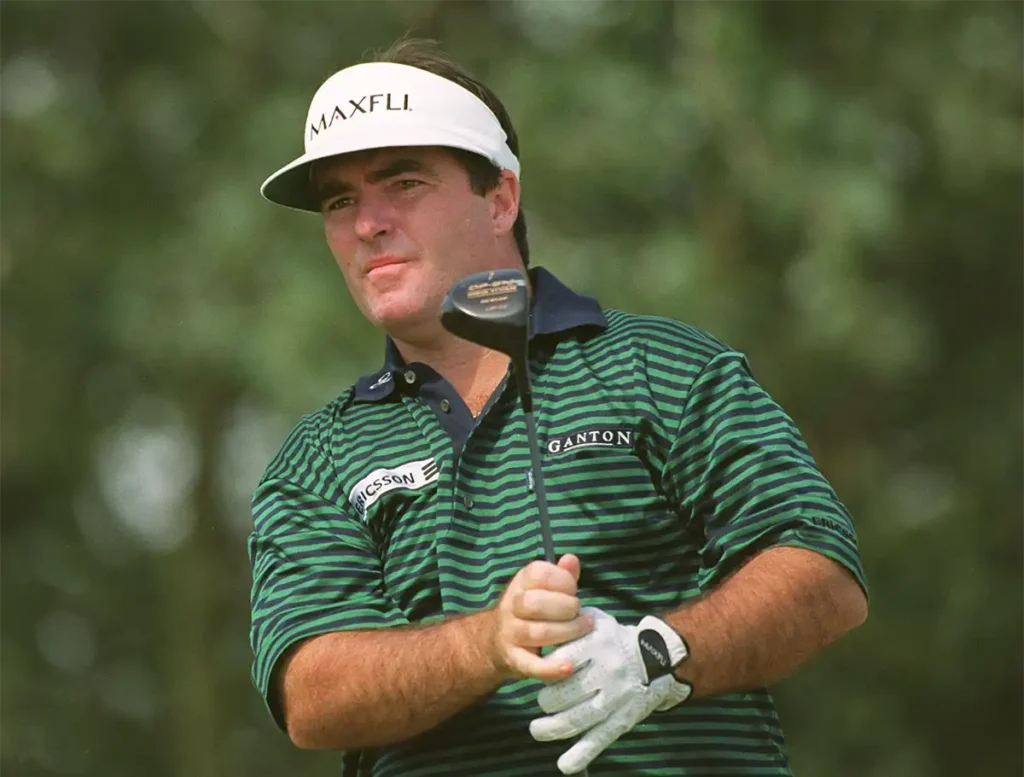
And Maxfli was part of the image. Norman played Maxfli balls during some of the most important years of his career, including his victory at the 1993 Open Championship at Royal St George’s, where his final-round 64 remains one of the defining performances of his career. Historical Maxfli advertising and memorabilia featuring Norman remain highly sought after by collectors today. But the Australian connection ran considerably deeper than Norman.
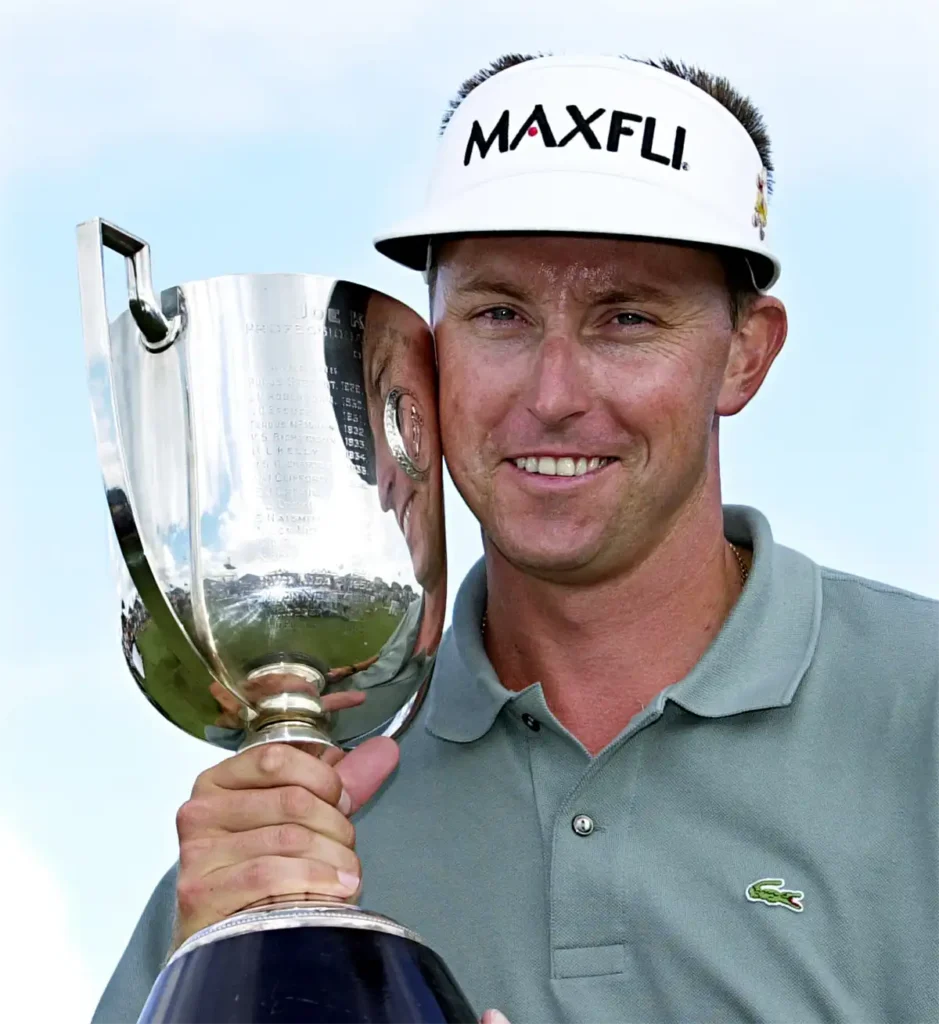
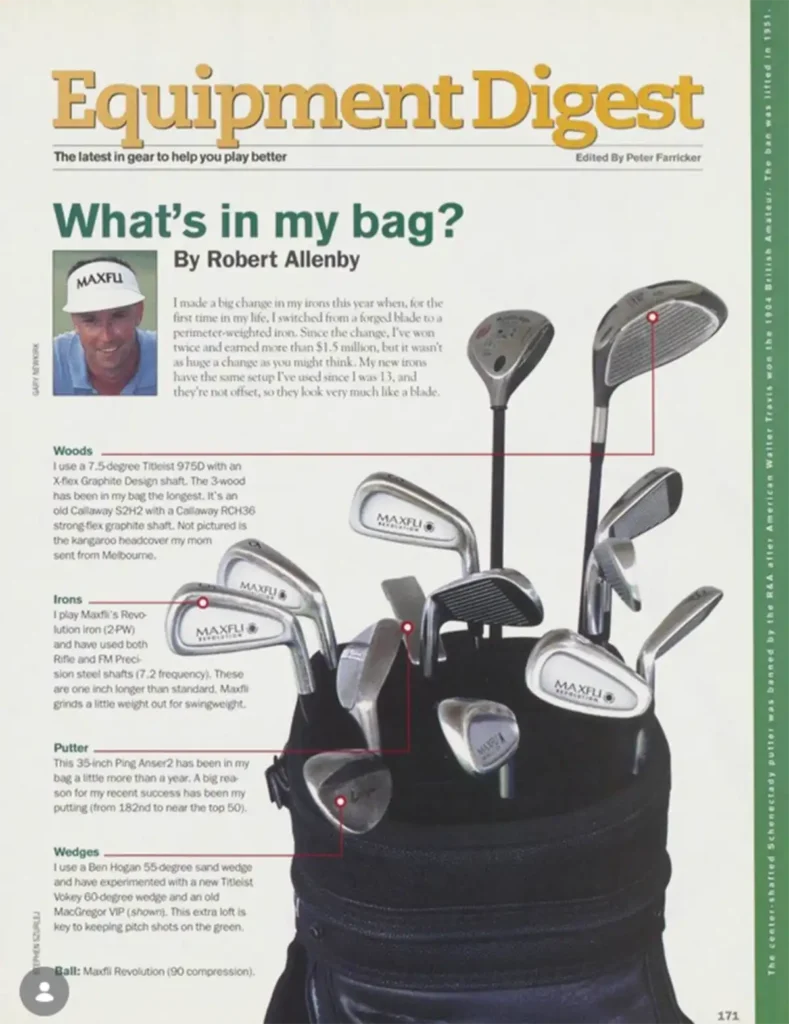
Marsh, Parry and Allenby were among the prominent Australian players associated with Maxfli during eras when Australian golfers were routinely competing and winning around the world. For Allenby, who would become one of Australia’s most successful international players from his generation, the connection with Maxfli remains particularly strong.
“My strongest memory of Maxfli is they had the best product in the world – golf ball and golf clubs. I even named my dog Max after Maxfli,” he says.
It is a small detail that says plenty about the affection many Australian professionals developed for the brand. For Allenby, though, that relationship ultimately came back to the quality of the equipment.
“Maxfli made the best-looking clubs in the world, and the golf ball was the most consistent ever made,” he says. “And that is why Australian players used that product. It was the best.”
Allenby says the influence of Maxfli’s Australian tour presence extended well beyond the professionals contracted to use the equipment. “A lot of famous global Australian players used Maxfli products, and that inspired every aspiring Australian golfer to use what they made.”
Parry remembers Maxfli in much the same way, as one of the defining equipment brands of its era, particularly on the European Tour, where it was trusted by a significant proportion of the game’s leading professionals. When asked why Australian golfers developed such a strong connection with the brand, Parry pointed to both its performance and the champions who helped build its reputation.
“This one is very easy, Royal Maxfli golf ball was ahead of its time,” he said.
Parry believes the brand’s enduring legacy was also shaped by Australian greats who carried Maxfli equipment to success around the world. “This goes back to the days of Peter Thomson, Graham Marsh, Bob Shearer, Terry Gale using the Dunlop Maxfli equipment and performing so well in the tours overseas.”
The equipment itself became equally memorable. For Allenby, two iterations of the Australian Blade remain the benchmark: “The DP30 and DP40 Australian blades stood out as the best-looking irons in the world – the most performing iron.”
The same applied to the golf balls that accompanied them. “And in the golf ball, HT90 and HT100 were the most consistent and best feeling golf ball ever made.”
For Australian golfers walking into a pro shop during those years, Maxfli was a brand they saw in the hands of their golf heroes. Golf equipment has always been emotional. Golfers remember their first serious set of irons. They remember the putter they used to break 80. They remember the golf ball they desperately wanted to play because their favourite professional used it. Maxfli became part of those memories for generations of Australian golfers.
ONE OF THE BIGGEST NAMES IN GOLF
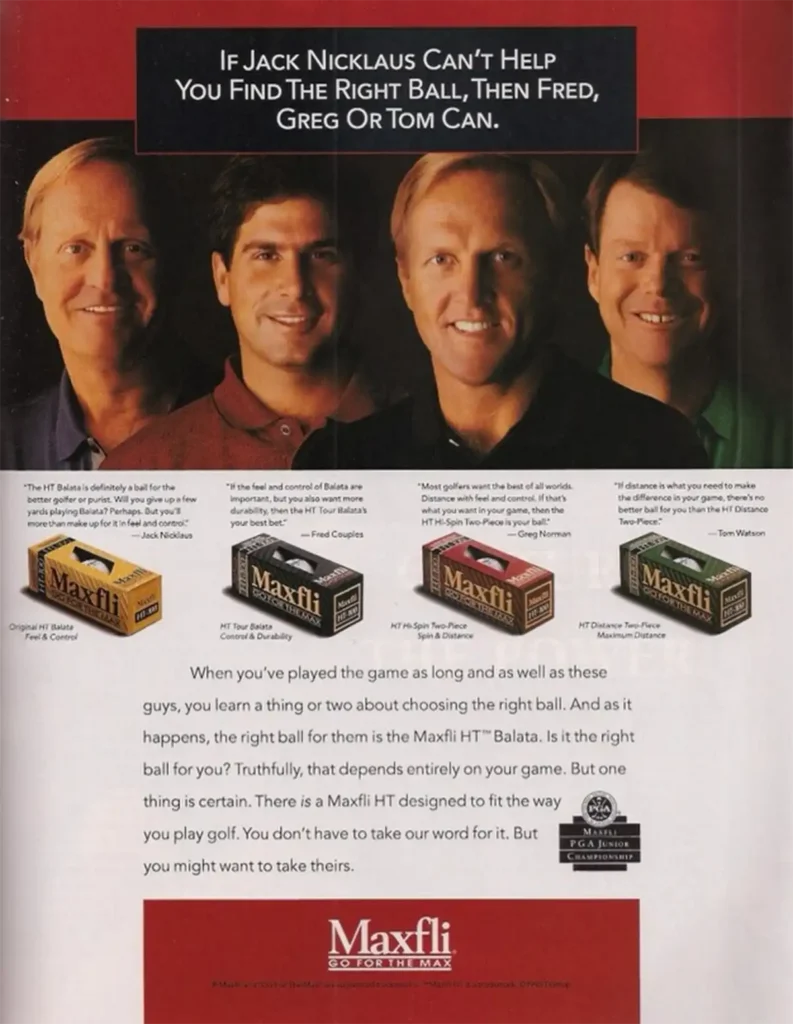
By the early 1990s, Maxfli had reached an extraordinary position. Its HT Balata ball was one of the premier balls in professional golf. Norman used it. So did Fred Couples, Jack Nicklaus and Fuzzy Zoeller while Tom Watson also joined the Maxfli roster.
At the start of 1995, Maxfli trailed only Titleist in tour usage and was reportedly closing the gap. At retail, despite carrying a comparatively smaller product range, Maxfli held the third-largest share behind Titleist and Spalding.
The HT Balata was particularly revered among elite players. It offered the softness, feel and greenside control demanded by the best players in the world. In an era before launch monitors became commonplace and golf-ball fitting developed into a science, feel and shot-making remained central to the equipment conversation. Maxfli had built a ball for shot-makers.
Then, on January 17, 1995, something happened that had nothing to do with golf but would dramatically change the company’s direction.
At 5:46am, the Great Hanshin Earthquake struck the Kobe region of Japan. The earthquake devastated the region, killing more than 6,400 people and destroying enormous amounts of infrastructure. Among the industrial facilities badly damaged was Dunlop’s Kobe factory, home to the production of the Maxfli HT Balata. While thankfully nobody at the factory was killed, the facility and its highly specialised manufacturing equipment suffered significant damage. Production stopped.
Maxfli initially hoped the factory could return to operation within several months. It didn’t. Tour representatives began rationing existing ball supplies to professionals. Retail shortages followed. At precisely the moment Maxfli had established itself as one of the most desirable balls in golf, its ability to manufacture its flagship product had been severely compromised.
The timing could hardly have been worse. Golf-ball technology was also changing. The traditional wound balata ball was approaching the end of its reign as manufacturers began developing solid-core, multilayer golf balls that could provide distance from the tee while maintaining the spin and control demanded by elite players. The golf ball was about to enter a technological revolution.
Maxfli had been near the top of the mountain when the ground, quite literally, moved beneath it.
LOOKING FOR ITS NEXT CHAPTER
What followed was a complicated period. Maxfli remained an important golf name, but ownership changes and the rapid evolution of golf ball technology altered its market position.
The brand moved through Dunlop Slazenger, TaylorMade-adidas and ultimately to leading US-based sports retailer Dick’s Sporting Goods in 2008. For a period, the Maxfli name remained familiar without necessarily occupying the position it once had.
Maxfli never disappeared. The logo remained. Golf balls remained available. Golfers continued using them. What disappeared was the perception of Maxfli as one of golf’s leading performance brands. Over recent years, that has begun to change.
MAXFLI RETURNS TO THE TOUR
Perhaps the most important part of the modern Maxfli story is that the brand has not attempted to rebuild its reputation solely through history. It has done it through performance.
When Lexi Thompson signed to play a Maxfli ball in 2024, it immediately attracted attention. Here was a major champion and one of the most recognisable golfers of her generation choosing a brand many golfers associated more strongly with previous decades.
Then came Ben Griffin. Griffin began playing the Maxfli Tour X in 2024 after Thompson’s move initially encouraged him to investigate the ball. Testing convinced him. Griffin has said preliminary testing produced roughly seven additional metres, with performance around the greens remaining comparable to the alternatives he tested.
Then came the results. Griffin used Maxfli during his breakthrough 2025 season, winning on the PGA Tour and contending in major championships. His victory alongside Andrew Novak at the Zurich Classic represented Maxfli’s first PGA Tour win in more than two decades. By 2026, Griffin’s relationship with the brand had strengthened further, with his Maxfli agreement extended through 2028 and a new ball going into competition.
But the underlying message matters more. Players at that level don’t use a golf ball because it has a great history, they use it because it performs. The current Maxfli Tour family has consequently become one of the more intriguing stories in the golf-ball market, offering Tour, Tour X and Tour S models designed around different launch, spin and feel characteristics. The brand has previously described the range used by Griffin and Thompson as potentially one of golf’s best-kept secrets.
Maxfli has also moved beyond the ball again. In 2025, the company launched the XC2 and XC3 forged irons, its first new iron families in more than 30 years, reconnecting the modern brand with the equipment heritage established by products such as the Australian Blades.
The message is clear. Maxfli isn’t interested in simply being remembered. It wants to compete again.
COMING HOME TO AUSTRALIA
That makes Maxfli’s Australian return particularly interesting. From early October, the brand is set to launch exclusively through The House of Golf stores, reconnecting Maxfli with a market where its history runs especially deep.
For The House of Golf owner Michael Button, the relationship is also personal. Button has been a passionate collector of Maxfli equipment and memorabilia for years and is creating a museum-style collection at The House of Golf headquarters celebrating the brand’s history. But his connection goes back much further.
During Greg Norman’s third round at the 2000 Australian Masters at Huntingdale, Button collected Norman’s statistics as a 12-year-old as he made his way around one of Australia’s most famous tournament venues. At the completion of the round, Button was given a Maxfli ball Norman had used. It became a piece of golf history he never forgot.
“Like most 12-year-old golfers, Greg Norman was my hero,” Button recalls. “Getting to spend four hours inside the ropes was a dream at the time. From that moment I have always had a love and fond affiliation with the brand. The fact that I will now reintroduce Maxfli to the Australian market feels a bit surreal and simply feels right.”
Perhaps that story explains the Maxfli opportunity better than any marketing campaign could. For one generation, Maxfli means Norman at his peak. It means Australian Blades, balata balls, Huntingdale, Marsh, Parry and Allenby.
And in Allenby’s case, the connection was strong enough that Maxfli became more than simply the equipment he played. He named his dog after it. For another generation, perhaps it will mean Thompson and Griffin. And for golfers discovering the brand for the first time in 2026, Maxfli doesn’t necessarily need to be a trip into golf’s past. It can simply be a very good golf product. That may be the most compelling part of the comeback.
The challenge facing any heritage brand is finding a way to celebrate its history without becoming trapped by it. Maxfli has more than enough history to fill a museum, and in Australia, Button is quite literally building one at his head office.
More than a century after Maxfli first established itself among the game’s best players, its name is once again appearing on leaderboards. New equipment is being developed. Tour professionals are choosing the ball on performance. And this October, Australian golfers will once again be able to walk into The House of Golf stores and see one of the game’s great names on the shelves.
Photographs by Getty Images/Fiona Hanson, Neal Simpson, Darren England, Vincent LaForet