
Don’t blow a golden opportunity when you could throw it on.
Any time you’re close enough to the green that you can’t make a full swing without airmailing it, you might not be sure what to do. Do you swing slower? Do you swing shorter? Do you try to fly the ball higher? If you find yourself in this awkward position, you’re in what is commonly called “half-wedge” territory, a general term for any spot that calls for a less-than-full swing. Here’s how to regulate the distance.
STEP ONE: Favour your front side
- Play the ball in the middle of your stance.
- Be sure your nose is in front of the ball (closer to the target).
- As you start back, make sure your head stays in place [above].
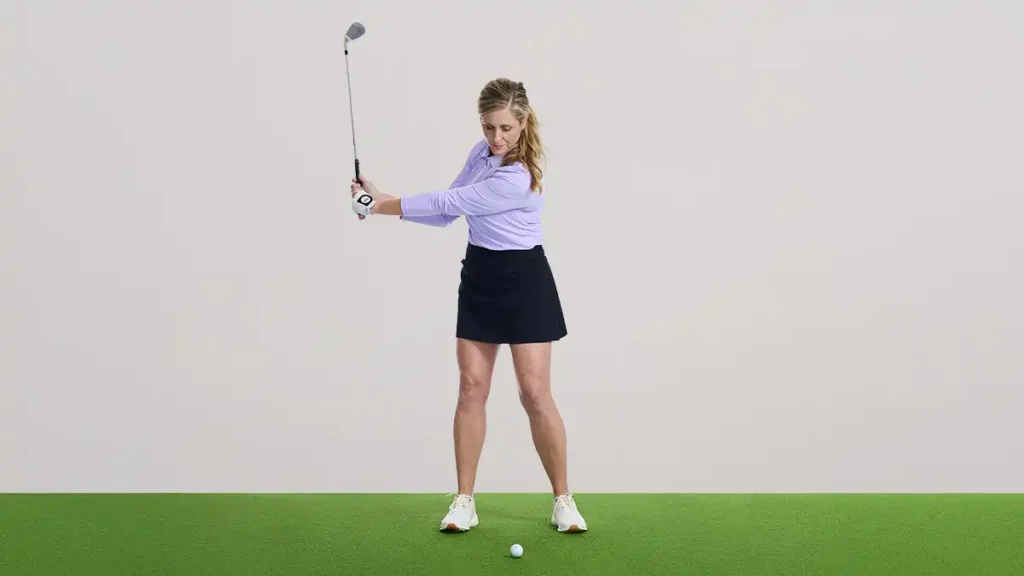
STEP TWO: Keep your backswing compact
- Take the club back with your torso rotation, not your hands.
- Allow your wrists to hinge the club up as you rotate.
- Create an “L” shape with your arms and club as you go back [above].
- Stop the backswing when your lead arm is roughly chest high.
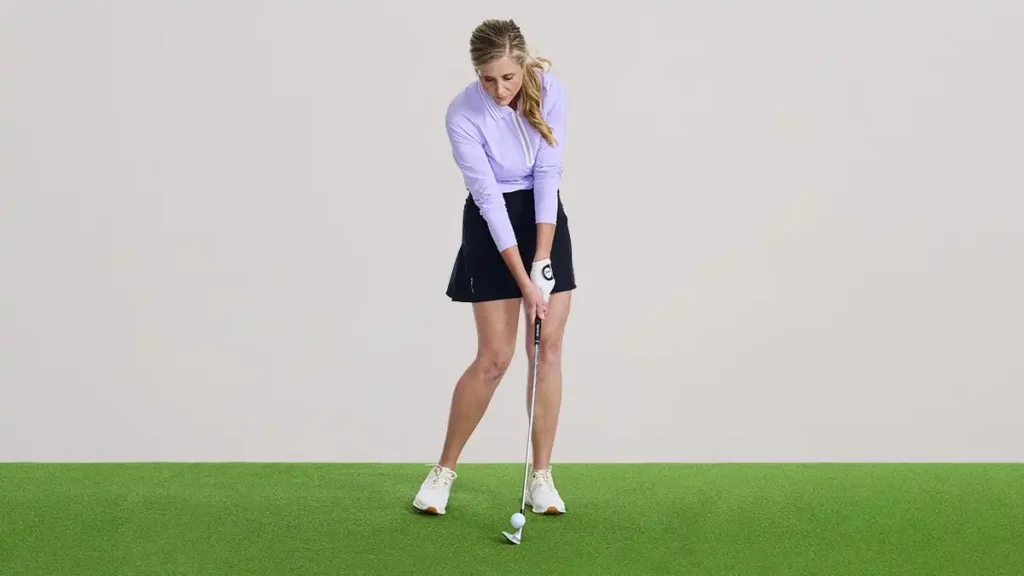
STEP THREE: Use body rotation to hit the shot
- Resist the urge to make an arms-only swing.
- Keep your body turning towards the target.
- Smoothly accelerate the club down into the ball [above].
- Make sure your weight stays forward for crisp contact.

STEP FOUR: Mirror your backswing at the finish
- Let your hands and arms swing past your body.
- Keep turning your hips and shoulders through.
- Allow the club to rehinge into a backward “L” shape at the finish [above].
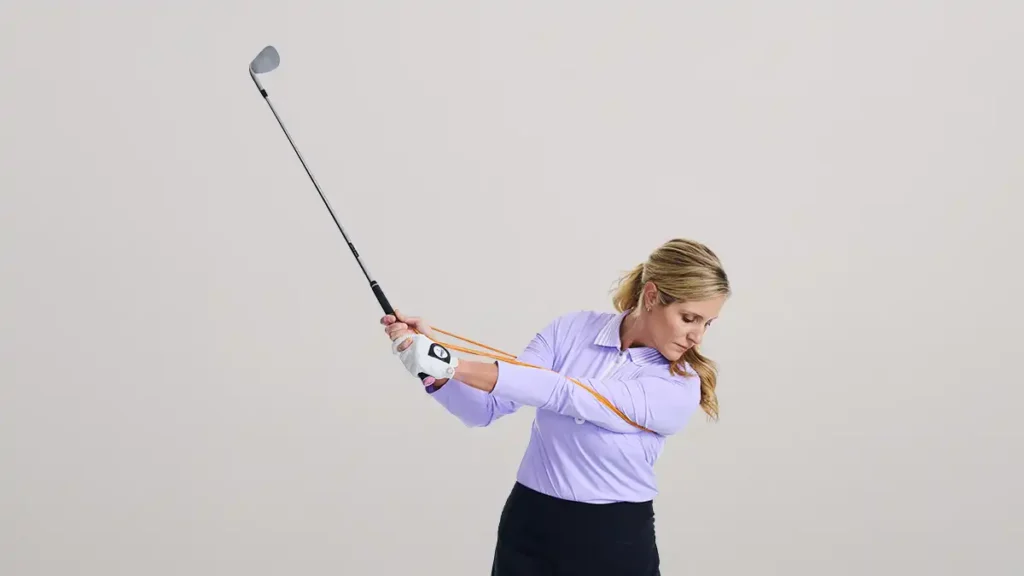
STEP FIVE: Drill – Restrict your backswing
- Wrap a resistance band around your torso and hands.
- Swing back, feeling your arm swing pulling your body.
- Use the tension from the band to make a wide, compact swing [above].
- Notice how the band keeps you from overswinging.
Maureen Farrell is director of instruction at Oakwood Country Club in Kansas City.
Photos by J.D. Cuban