Royal Melbourne’s director of courses Richard Forsyth will leave the club in June after 17 years as just the fifth man to hold the feted role.
My career started with an apprenticeship at Riversdale Golf Club in 1980. It was a great place to learn the business and I spent five years there. Then I moved into an assistant superintendent’s role at Yarrawonga as the Murray course was being constructed. After being heavily involved there for three-and-a-half years, I then got my first superintendent’s position at Murray Downs in Swan Hill, building the course with Ted Parslow.
>>>
I had the construction experience from Yarrawonga, but it was a bit of an initiation because the conditions at Murray Downs during the early construction phase were pretty rudimentary. There was no maintenance facility, a couple of machines under a tree and no green grass anywhere to be seen. I remember it was 40-plus degrees seven days in a row my first week there, so that was a bit of a rude awakening.
>>>
Only five men have held this position at Royal Melbourne, so it feels like a privilege to have been able to steer the ship for 17 years. I feel very proud of what our team’s achieved over that time. When I started in 2009, we resurfaced greens, surrounds, fairways, tees, upgraded the fairway and surround irrigation system and a water treatment system. It was a busy time working towards a deadline for the 2011 Presidents Cup. There was high expectation, but it was also very satisfying.
The redevelopment project at Sandringham, taking over the course there working with OCM and lifting its profile, was another significant and rewarding assignment. It was a government-funded project, so we acted as a contractor, but we were also the client to the project, which was quite an interesting exercise. We did all the finishing, grassing, grow-in, drainage and vegetation works, working closely with Mike Cocking’s team to enhance the quality of the experience at Sandringham and make the most of its location in the heart of the Sandbelt.
The tournaments and people, relationships with the club, council members, greens committees, chairs of greens over the years have been amazing. The staff that have come through in my time and have gone on to do their own thing, and to see young people come in as apprentices and go out as mature, experienced, capable people, that’s very rewarding as well.
>>>
When you’re here in these surroundings every day, you become accepting of it, but when you travel and look at other places, it reminds you that everything else seems a little ‘not up to the same standard’ when you start looking around. You do get used to that spectacular combination of architecture, landform, vegetation and turf, so everything else seems not quite up to the mark after that.
>>>
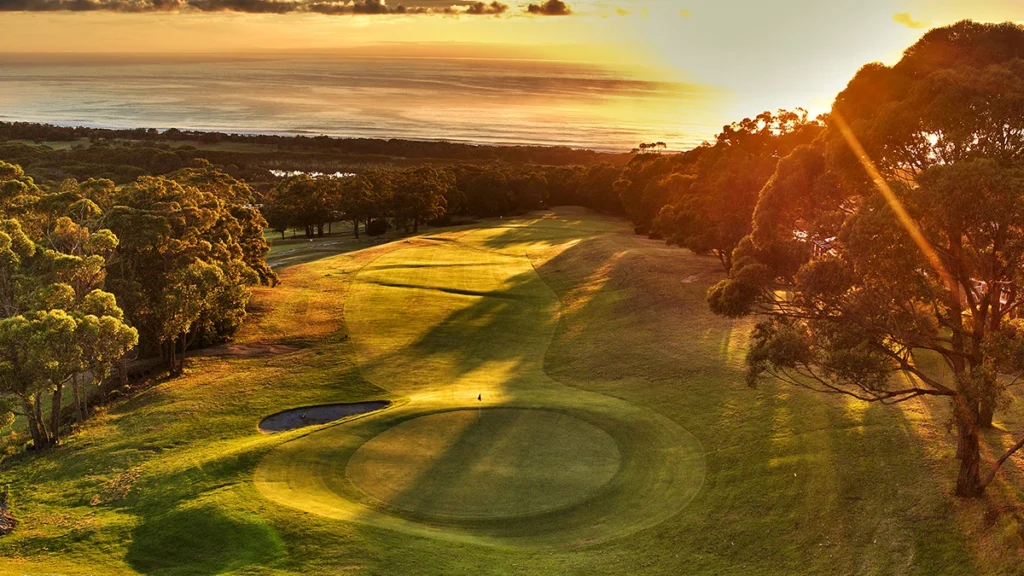
Now vegetation restoration is a big focus – trying to restore the plant community that belongs to the land here is what we want to promote and preserve. The club has done that well over the years, but there are a lot of areas that have been smothered by coastal tea tree that we’re trying to push back and create space and light for the seedbank from that original heathland vegetation that’s still in the ground to shine again.
>>>
Time’s a bit of a battle to playing more golf, but also my lack of ability is a barrier. I’ve always said that any respect I have gained for what I do in my working career will be undone quite quickly if I go and play golf with someone. So I always try to be sparing in terms of when I do play. I actually get more enjoyment watching people who can play well, play on the golf course we prepare for them.
>>>
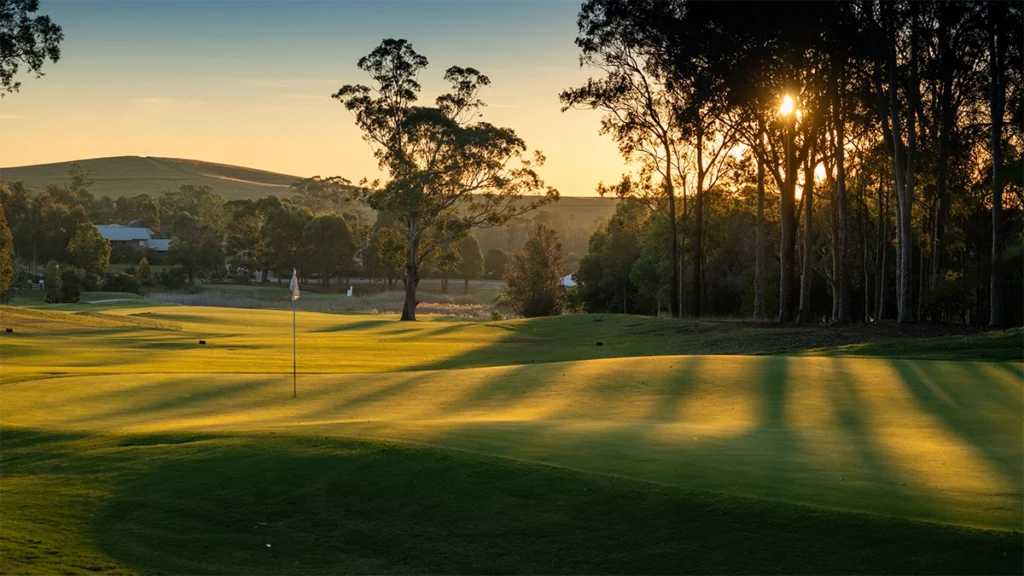
As I live right next to Royal Melbourne, I like being able to go out in the twilight in the evening, have my dog with me and just walk some holes as an opportunity to ‘smell the roses’. You take it all in and think about what you’re going to do the next day and what’s required – as well as admire the various views and aspects as the sun’s going down. That’s spectacular. As for favourite spots, standing at the top of the rise at 17 West, looking at that green site – and now we’ve undertaken some vegetation management there, it’s brought the bunkering to life. The way that whole complex fits together and how it looks, it’s incredible to think it was created with a horse and scoop. But of course you can’t beat standing on the tee of 5 West and looking at the 180-degree view around to 6 West and across 2 East.
>>>
I spent three or four hours with Tiger Woods here in 2018, 12 months before the Presidents Cup. His visit was put forward as ‘he’s coming out to have a look at the golf course and prepare’, but it was really a promotional visit. Part of it was to go around with the superintendent and look at some holes and various things. So I’m in a golf cart with him driving and we’re touring a number of holes and I’m just standing next to him and talking to him about various shots that he played and where his favourite holes were. That was a real career highlight – to have a one-on-one conversation with Tiger Woods, which not too many people get the opportunity to do.
>>>
We had Ernie Els do a similar thing, but I don’t know if he’d been to bed the night before. He was in a different zone, but he was out there enjoying it all. So I enjoyed that morning as well. And then even the Presidents Cup before that, in 2011, we did the same thing with Greg Norman as captain and Fred Couples. Greg was so interested in the agronomy of the golf course.
>>>
Even though there have been challenges along the way – and there always is with growing turf – I believe if you don’t push the boundaries, you’ll end up with a mediocre result. That line between success and failure is a pretty fine line to tread, but sometimes it tips just one way or the other. Yet if you just go for the conservative road, you won’t produce the special conditions we’re all striving for. There will be times when things aren’t as I’d like them to be. And when they’re not, it takes a long time for that to recover sometimes, but I’ve never not enjoyed getting up and coming to work in the early hours of almost every day of the week. It’s never been a chore. I wouldn’t change anything about it, but certainly some days are better than others. I enjoy the challenge if something’s not as it should be, the opportunity to improve that, make it better or get it back to its best.
>>>
I don’t think there’s a great understanding among golfers about what’s required to get a golf course to reach its peak. The conditions that all superintendents are producing these days are the tournament conditions of probably 20 years ago, but we’re producing tournament conditions every day of the year for members and visitors. I don’t think there’s an appreciation that if on a Saturday afternoon you’ve got the greens dried down so that they’re nice and bouncy and firm and playing the way you want to see them play, that if it’s 35 degrees and you don’t get there with a hose to water it, by a certain time you won’t have any grass the next day.
It’s a fine line you tread with the health of the turf by pushing it hard to get what we expect here, and that’s the ball to bounce forward when it comes in contact with the turf. To get that result for as many days of the year as you can, you’re pushing the boundaries of the turf’s survival.
>>>
I don’t think people want to or need to understand that, either. It’s just the nature of the job. You go about your business, and often it’s not an appreciation that a number of people are out there seven days a week doing something to the greens before people play, and if they didn’t, the putting surfaces would be very different.
>>>
When is the best time of year to hold golf tournaments in Melbourne? It’s March. Maybe February, but by March the sting goes out of the heat a little. I think most tournaments that I’ve done have been in November or December, which has been the traditional time for the Australian Open and other events. But if you were choosing, you’d choose February or March.
>>>
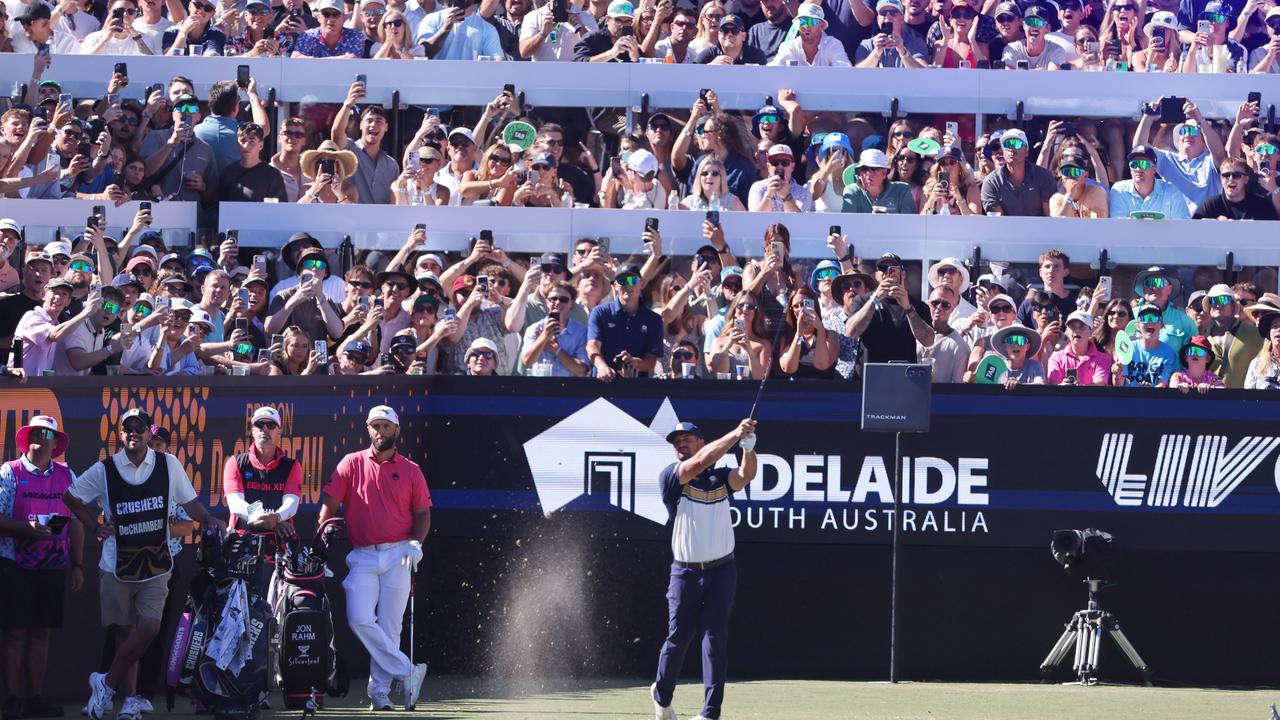
As for preparations for a tournament like last year’s Australian Open, you start thinking about having things peak that week and work back from there. There’s not a lot you can do to your turf during winter when it’s not growing, so most of the intensity starts from September in terms of turf preparation. But in the winter, you’re doing things like tree work, while thinking about crowds and where the galleries are going to move. When you have the ‘Rory factor’ that we had last year, that’s a big thing to think about – how you’re going to move crowds through certain spaces. Often that requires tree trimming and preparation. Ideally, you’d want 12 months to plan all those things. And if you’re doing any cultivation to your turf, you want to do that the season before so that it’s fully knitted and recovered.
>>>
Royal Melbourne has not been immune to golf’s post-COVID boom. When I first started here, there were days when it was definitely quieter and you had more windows to do disruptive things to turf in terms of maintenance. Now with international green-fee players and member’s guests or just member play on its own, there aren’t too many times when there’s not a pretty consistent level of play. That’s become more of a factor for us from a maintenance point of view.
>>>
These days, a lot of superintendents are regularly applying sand to greens, for instance, and it’s not everyone’s favourite thing to see when they play. I particularly think of someone who’s an international guest that’s come here and it might be their one and only opportunity to play the course. I’m very conscious they’ve travelled a long way, sometimes specifically to play here, and I don’t want to underwhelm them by having done something to the turf that’s going to impact them. But at the same time, you’ve got to carry out maintenance tasks. We try to manage around that, and I think we probably do less-intrusive maintenance of our turf – particularly the greens – than some clubs, but we’ll still scarify and aerate our fairways, for instance.
>>>
As an industry we talk about sustainability, but I can’t see that we’re going to backpedal from the standards expected these days. It’s hard to say, “OK, we’re going to input less into our turf because that’s what we should do from a sustainability point of view.” To back off expectations of surface quality is quite hard when you’ve taken it to the level it’s at now.
That’s going to be the challenge in the future. It’ll continue to develop with improved equipment and products, grass types and all the things that will have an impact on being able to produce even better turf quality, but are we going to want to keep adding to our labour and the number of times we mow, for instance? Maintenance costs for clubs are going to be a challenge in the future.
>>>
You can have great turf and not necessarily be lush green. Even in summer in Melbourne now, we’ve become used to this expectation for the course to be green. It didn’t used to be like that. I think we get a little bit over-focused on the colour and the look of courses.
>>>
Royal Melbourne and most of the Sandbelt have the resources to keep adding to their maintenance crew or do more to their greens every day. And you hear some of the US models, like Oakmont and places where they’re mowing and rolling the greens multiple times a day and rolling and prepping every inch of the bunkers every day, and they’ve become accepted standards. The Augusta level is the measurement at the top, and then everything else comes back from there.
When members at smaller clubs see that sort of thing, they say, “We want to have that as well,” but they don’t have the resources to do that. So there’s a lot of pressure coming on superintendents at smaller clubs to produce a great product with little input. When it’s also happening at the top clubs, where do you draw the line and stop putting more staff on and putting more water and fertiliser out? Where is it going to stop in the future? It feels like someone needs to take the lead to just roll it back a little.
If a club on the Sandbelt is employing close to 18 staff for an 18-hole golf course, where’s it going to be in another 10 years? Are we going to be at 22 staff? Have we reached the ceiling? I don’t know what the answer is.
>>>
Now we’re looking further beyond the turf surfaces and thinking more about managing the whole property. The intensity of management in some of these new heathland vegetation areas at some of the Sandbelt clubs requires a team of three or four people to keep that under control. That adds to the inputs and resources required – maybe not in the long term once it’s established and self-managing, but in the initial stages of trying to get that vegetation to what it once was, it requires a lot of resources.
That’s definitely a challenge for the future, and you can’t keep charging people more to be members or to play. There’s going to be a ceiling to it and people have got to understand then how that could mean a rollback of some expectations. I don’t necessarily think it’s about lowering standards, but perhaps having lower expectations for colour and pristine bunkers, for example. A more natural environment where you can do that is what I see as the ultimate goal. Which can be achieved, but it requires a lot of education for the end user to understand.
>>>
I’ve had quite a few conversations with various people connected with the industry; I’ve just not taken anything too much further. I’m still focused here. We’re about to embark on a big irrigation project, so I’m focused on getting that started. That’s been a big project to get to this point – it probably started for me in 2015 – and I feel very attached to it, and I’m committed to get that at least started in the way I envisaged.
It’s probably not until you hand the keys over that you’re going to really think more intensely about what’s next, but I’m definitely not retiring because I feel like I’ve got just as much energy and I’ve got all this knowledge, so to just stop using that on the 30th of June is not what I think should happen. I’d like to use that within the industry to assist in some way. I’m keeping an open mind, but there’s definitely something there for me to get my teeth into. And that’s exciting as much as it is difficult to leave Royal Melbourne. It’s exciting to think about what could come next.
Photo by Brett Robinson/ASTMA