One golfer’s journey through remote Western Australia reveals courses and places seemingly from another world.
My name is Rob Henschke and I’m a member of Australian Golf Digest’s course-rating panel. I’m currently on a seven-month caravanning holiday and the golf clubs are getting a workout along the way.
Even though by the time I get home I will have played golf in five states and played plenty of iconic courses, I am surprised at which courses have already stuck in my mind with fond memories and a laugh or two. They are the remote West Australian courses.
The first taste of this came when crossing the SA/WA border then playing the seventh hole of the iconic Nullarbor Links at Eucla and finished at Kalgoorlie after 1,365 kilometres of golf course. My final WA course was up at Kununurra, before crossing into the Northern Territory. That was 28 new WA courses on this trip; at this point I have played 610 different golf courses.
The Kambalda course allowed tee-ups on fairways but the ground was so hard that the tees wouldn’t penetrate, so I improvised with cut-off drink bottle containers to rest the ball on. It worked a treat.
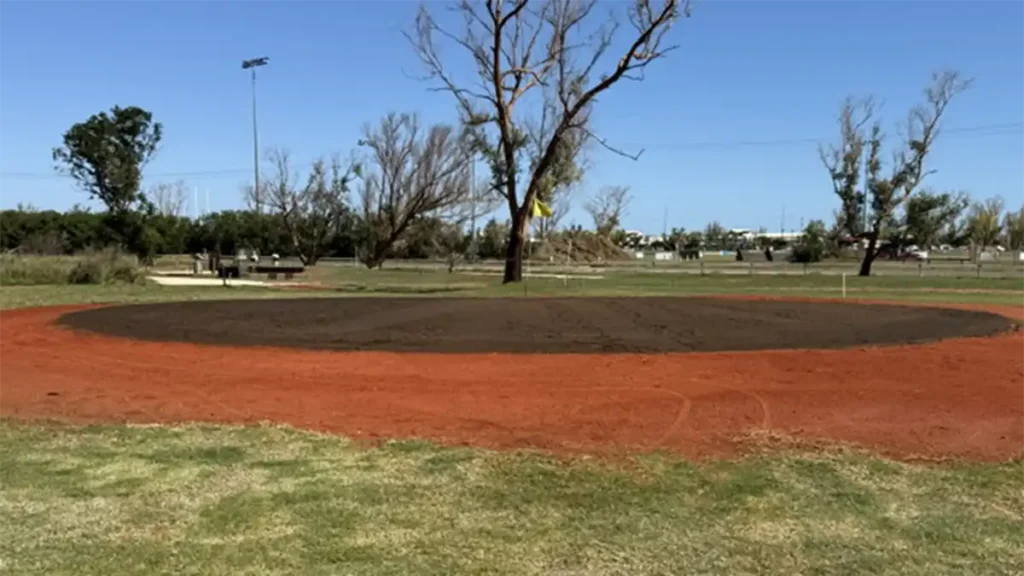
Calling in to the Boolbardie course between Denham and Monkey Mia, I was greeted by lots of friendly people who wanted to tell me all about their course. All the work is done by volunteers, which is the case at every remote location. They all had a story to tell. One looked after the ‘scrapes’ and he was very proud of them, even though they were they slowest I had ever played (I’ve played 105 of them). He said they were consistent, and they were. His mate looked after mowing the fairways and was feeling a bit overworked. He normally mows twice a year, but with all the recent rains he’d mowed four times by June.
Then there was Carnarvon’s handicapper, who waits under the pergola until the next traveller arrives to check out the course. He offered to take me for a hit and show off his course. He carefully explained which saltbush to hit over on every hole to achieve the best run on the bare fairway beyond. He also showed me the skill of balancing your ball on a single blade of dry grass whenever a one-metre preferred lie is allowed.
At Exmouth, I met another volunteer who explained how the recent cyclone had decimated their sand-scrape course, but they had it up and running again just a few months later by rebuilding all the scrapes and surrounds.
Port Hedland owns the lushest fairways in the country thanks to reclaimed water but still has sand-scrape greens. The volunteers don’t need the hassle of maintaining grass greens.
Derby’s course was another oasis in dry country, again due to reclaimed water, but instead of water hazards or bunkers, its defence is giant boab trees that blew my mind. At Derby, you don’t want to suffer an injury that keeps you lying on the ground. The hundreds of raptors that hover above during a round will clean you up in no time. It’s a bit like the thrill of playing near crocodiles at Lake Kununurra – it keeps the round interesting.
How to scrape the sand before and after putts is also hilarious. I have been told by experts along the journey how you must do it, yet I now have five different versions. I found out quickly that everywhere you play at these remote courses, that their method is the best. I’m not going to say otherwise; instead I’ll just join in the fun.
Golf is great, but when you add the elements of remote community and stories of pride and real characters that you meet, they are the memories that last forever.