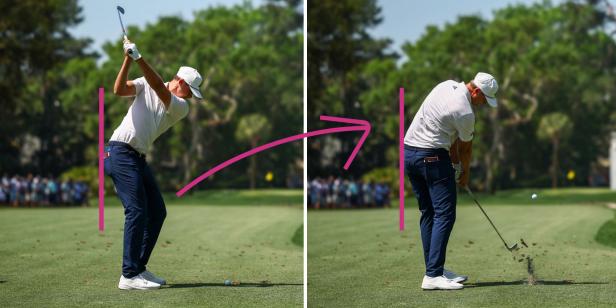
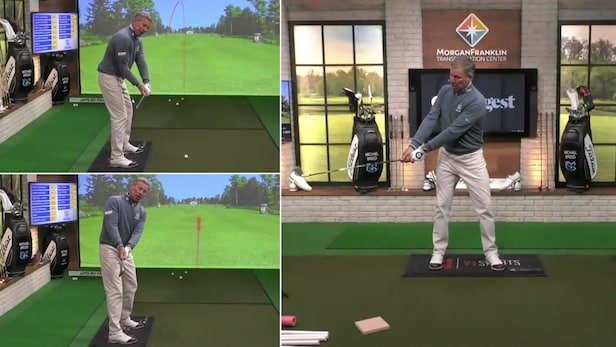
Modern golf instruction, put simply, is a fusion of old, classic fundamentals and technology-driven new ideas. But just as there are timeless tips that still hold up today, there are other old-school ideas that have been largely abandoned by top instructors and players. One of those is the old takeaway, says Michael Breed, one of Read more…
In many ways, we should have seen Justin Rose contending at the British Open coming. The oldest major championship routinely rewards older players, but at 43, Rose has mostly struggled this season on the PGA Tour. So much, in fact, that he had to qualify for The Open at Royal Troon. Regardless, Rose has played Read more…
You know it as the long wispy grass that grabs your club and forces you to thoroughly check for ticks, but fescue grass is much more than agonizing long stuff. Cut at shorter lengths, fine fescue characterizes the rough, fairways and greens of many links courses and helps deliver the bouncy conditions that are deemed Read more…
Last year in the first round at the British Open, Rory McIlroy was greenside in two shots at the par-5 finishing hole, yet five minutes later he fist-pumped a 10-foot par save. Why? McIlroy was nestled under the lip of one of Royal Liverpool’s nasty bunkers. He tried to play out sideways and failed. His Read more…
If you watch enough professional golf, you see it over and over again: the low launching, high-spinning wedge shot that takes a few hops, checks and rolls gently to the hole. It’s a popular shot on tour, especially in links golf, where the firm fairways, high winds and large greens often mean the best play Read more…
One of the most difficult aspects of golf is that the solutions to many of our misses are counterintuitive. Once we understand what causes our worst shots and how to fix them, we realize that the key to fixing our golf swings is in our ball flight. Take the most common problem for everyday golfers: Read more…
There was a time not too long ago when Central Florida was an afterthought for great golf. Too flat, too monotonous, too boring. Streamsong’s success has thoroughly rebuffed that notion, and now an ultra-exclusive private club, High Grove, seeks to further redefine the region’s golf potential. High Grove, located in Venus, Fla., will feature 36 Read more…
As sports psychologist Dr Bhrett McCabe explains, there are numerous landmines, or mental mistakes, that we commonly make on the course that cause our scores to suffer.
Matthieu Pavon made history at Pinehurst during Thursday’s first round of the U.S. Open, when he became the first player ever to make two eagles in a U.S. Open round at Pinehurst No. 2, which fueled his round of three-under 67 to get in early contention. But it was how the Frenchman made the eagles—by Read more…
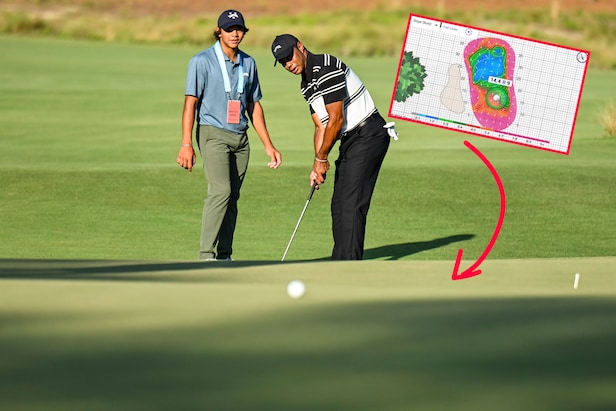
Why are the players so worried about Pinehurst’s greens? It’s a combination of severe slopes and the USGA’s willingness to place hole locations on the edges of those slopes.
I was sick. I had just gotten a lesson. I was busy with college final exams. My girlfriend was caddieing for me. These were just some of the lame excuses that came to mind six years ago when I received a letter from the USGA informing me that because of my poor performance in U.S. Read more…
It is a tired phrase bordering on cliché to reference competitive golf as the “ultimate meritocracy,” yet the USGA’s 15 national championships so thoroughly deliver on this ideal that its truth is inescapable. Lower your Handicap Index under the required threshold, sign up for a qualifier and be among the top finishers, and you’ll secure Read more…
One Golf Digest+ member who reluctantly moved up a tee box during a recent round was 84-year-old Curt McClure (above, second from the right), who typically plays from 6,000 yards but appeased his buddies and joined them at 5,200 yards at his home course of Lubbock Country Club in Texas. The move sparked a special Read more…
To help the rest of us determine what our target scores would be on various championship layouts, we’ve used the USGA’s new tool to plug in a variety of handicaps for the setups at the US Open, US Women’s Open and US Senior Open.
As golfers, we often let the colors we see on a course dictate whether we think it’s in good shape or not. Green, good. Brown, bad. It’s not that simple, though. Aside from a compelling argument that browner, firmer turf is ideal for playability, courses in certain climates may turn almost completely brown for several Read more…
At the intersection of the argument about the golf-ball rollback and the game’s slow-play epidemic is the debate over what course yardage we should play. Move up a set of tees and we might play faster and shoot lower scores, but at what point do we sacrifice the integrity and challenge of the game? To Read more…
You have a 10-foot putt. Sensing it will break a little right-to-left, you aim just outside the hole, and it misses on the right. Did you push it, misread it, or simply have too much speed? Or was it all three? Without understanding why we’re missing putts, we often misdiagnose our putting struggles as technical Read more…
Golf course superintendents have perhaps the most thankless job in golf. Early wake-up calls, 16-hour days and should their course not meet a high standard, they are Golf Club Enemy No. 1. The stressors of the job have become so intense that a few years ago, Golf Digest’s Ron Whitten wrote about the mental-health crisis Read more…

 Australian Golf Digest