
How the club uses this pitch-mark trick to maintain perfect greens.
How does Augusta National maintain spotless greens with no imperfections? Money and manpower, for one, but the club also uses a unique method of repairing pitch marks. In a social media video, PGA Tour winner Ben Crane explained how he learned this “Augusta method” from members at the club, so we caught up with Steven Aspinall, head superintendent at Watchung Valley Golf Club in New Jersey, who discussed how everyday golfers can use the method.
Golf Digest: Steve, could you explain how this method of repairing pitch marks works and why it’s important?
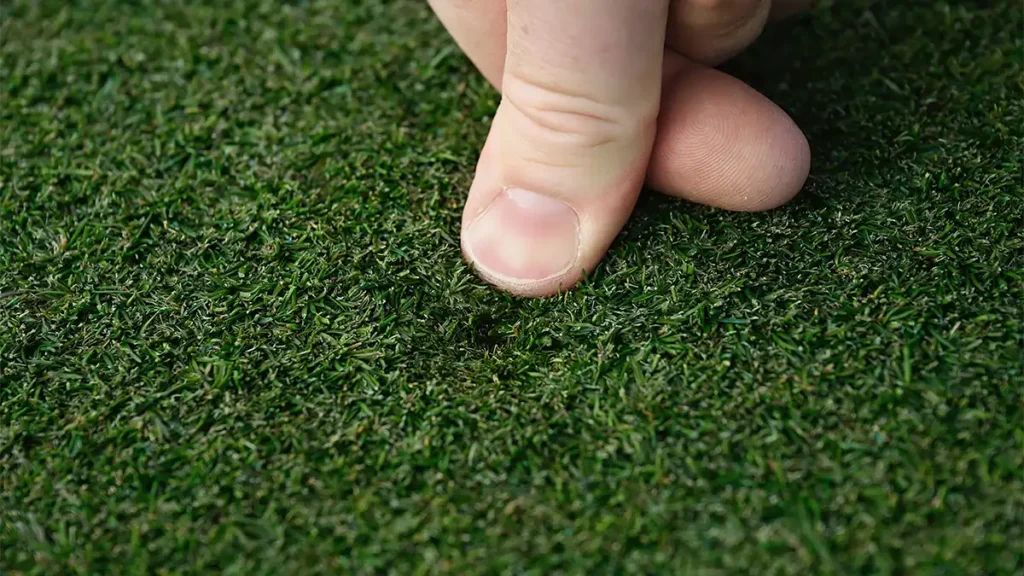
Steve Aspinall: One of the most important things is you need to be using either a tee or a single-pronged pitch-mark repair tool to do it properly. You go vertically down into the middle of the deepest part of the pitch mark, and you do a circular motion. As you’re doing that circular motion, you’re trying to push the grass up and out towards the edge of the mark.
When your ball hits the green, the impact creates a wedge of grass on the backside of the pitch mark. Once you have that hole in there, you pat that grass back into the middle of the pitch mark to fill it in and get it back to the same level. You’re pushing that back in, trying to repair whatever grass you can.
I’ve found that it eliminates the entire pitch mark. If you do it right, there’s no pitch mark left. There’s no ripping the roots. You’re just trying to put it back the way it was.
From an agronomic standpoint, what makes the method work so well?
It’s because you’re putting the grass back exactly as it was before, or as close as possible to that. The more grass that’s there, the more healing and photosynthesis can occur. When you have dirt pitch marks, you won’t be able to grow grass back through that.
When you stick your tee in the middle of the pitch mark and push towards the outside, you’re creating a hole with a level surface around it. Then, when you push the grass back in from the sides, you’re filling in that hole.
That’s so interesting. So how does this method compare to other ways you’ve seen golfers repair pitch marks, and what are the things we’re doing wrong?
The biggest issue with how many people repair pitch marks is that they twist with a two-pronged tool. That rips the roots and damages the grass, creating those brown spots you see on some greens. With this method, you’re not disrupting the root zone at all. You’re almost making an aeration hole, but the roots are still intact. There’s no twisting motion, which is the worst thing. As soon as you rip the roots, you’re damaging the grass.
Why isn’t this method used more?
It’s a great question, and I’m not sure. Until a couple of years ago, I’d never seen it, but when someone showed me, I’ve done it ever since. I’ll never fix a pitch mark a different way again. There’s no better way to repair one.