After a wild final round at PGA National’s Cognizant Classic, the Florida Swing continues at Bay Hill Club & Lodge for the 2026 Arnold Palmer Invitational. Bay Hill has signature event status once again, whittling the API field down to just 72 golfers, with the Friday cut set at the low 50 and ties, or, as we saw during the Genesis Invitational, anyone within 10 shots of the lead.
Success at Bay Hill largely depends on leaving the ball in the right spots, playing the correct angles and maintaining patience. This is why course history is significant here. The best way to understand where to place the ball in the fairway and on the greens is to have prior experience in these conditions at Bay Hill. In fact, 17 of the past 20 winners had participated in at least three Arnold Palmer Invitationals.
RELATED: Arnold Palmer Invitational picks 2026: The longshot that has huge betting upside
Bay Hill is known for having some of the longest rough on the tour each season, and the fairways often play firm and fast. The overseeded ryegrass rough is penal, meaning that golfers who miss the fairways and greens will frequently find themselves scrambling to make pars or avoid bogeys. It’s common for excellent tee shots to roll into the rough or, even worse, into the water.
Despite being a healthy 7,466 yards from the tips, Bay Hill plays even longer than the scorecard would indicate. Despite that, distance advantages off the tee are mitigated because of the multitude of forced layups and doglegs throughout. Forced layups off the tee create a ton of long approach shots, and, combined with four long par 3s, this week’s field will face a higher rate of 200-plus yard approach shots than nearly any other week this season.
Sign up for the industry’s leading data tool to make golf stats easy to decipher—head to BetspertsGolf.com now and get access to The Rabbit Hole for only $10 for your first month. Use promo code GD10 at sign up for this amazing deal!
$9,000+ range Play: Rory McIlroy, $11,600 
Jed Jacobsohn
Rory McIlroy will be making his 12th career start at Bay Hill this week, tied for the most of anyone in this week’s field. His average finish at Bay Hill is 10.5, which laps the non-Scottie Scheffler part of the field. McIlroy has gained three or more strokes in 36.4 percent of his rounds at Bay Hill, and while he hasn’t won here since 2018, he almost always has a late Sunday tee time. Outside of a few bad putting performances out west, McIlroy’s been excellent to start the 2026 season. He’s gained an average of 1.86 strokes per round ball-striking in his past two starts, and his experience and success at Bay Hill will show up this week.
RELATED: 7 surprising names who have not qualified for the 2026 Masters yet
Play: Matt Fitzpatrick, $9,800 
Ben Jared
It’s unusual to see Matt Fitzpatrick struggle so much with the putter to start the season, but he’s been bleeding strokes on the greens of late. The good news this week is that Fitzpatrick seems to love these fast Bermuda greens at Bay Hill. Overall, Bermuda is Fitzpatrick’s best putting surface. He’s gained an average of 0.66 strokes per round on Bermuda over the past two years, and he’s yet to lose strokes putting in his previous 10 career starts at Bay Hill. If he can maintain his strong ball-striking form and marry it with field-average or better putting numbers this week, he’ll be near the top of the leader board on Sunday.
Watch the full Preferred Lines betting show powered by Read The Line.
Fade: Cameron Young, $9,100
Growth isn’t linear. That’s an important lesson for those who were chomping at the bit to blindly back Cameron Young to start the 2026 season. He’s coming off his best 2026 result to date, a T-7 at Riviera, but I don’t love this setup for him. His putting numbers are still very hot and cold, and he’s historically been below average on fast greens, which we have this week, where the Stimpmeter typically hovers around 13-13.5. He also models poorly for me when deep-diving his long iron play, which is a non-starter for me at Bay Hill.
$8,000+ range Play: Ludvig Aberg, $8,400 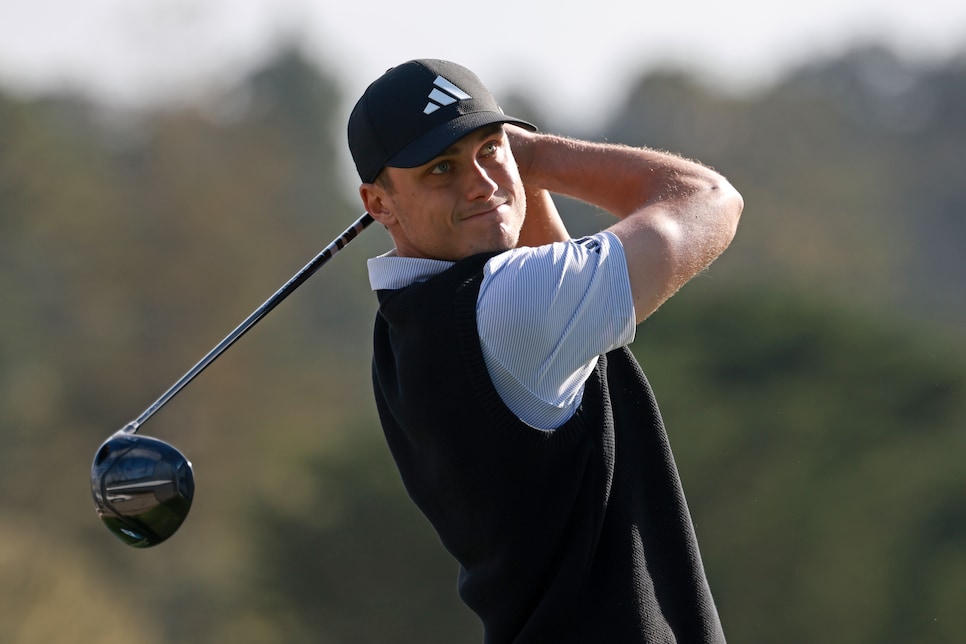
Jed Jacobsohn
Finding the right balance of long-term and short-term form is tricky, and there’s no right answer to blindly apply to all golfers. If we bank on the long-term form, which tends to lean more on a player’s baseline skill set, then Ludvig Aberg should always be in consideration when we’re teeing it up at Bay Hill. Now, the 2026 season has been uneven at best, but it was encouraging to see him gain 2.81 strokes on approach the last time out in the final three rounds at Riviera. Aberg is routinely one of the tour’s best long iron players, and his high apex height and ability to putt above his baseline on fast Bermuda greens all work in his favor this week.
Fade: Shane Lowry, $8,100
You know what you can’t model at Betsperts Golf? Strokes Gained/post-Sunday Meltdown. This is a gut thing more than anything else, because there are a few data points that work in Shane Lowry’s favor this week. First, his ball-striking was magnificent over four days and 69 holes at PGA National. Then it wasn’t. He’s also coming off back-to-back top-10 finishes at this event, and he was the 36-hole leader last year. He’s clearly comfortable here, but I’m going to sit this one out, considering the depth of options surrounding him at $8,100.
RELATED: Golf ball rollback still contentious, but the USGA says prototype collaboration has been helpful
$7,000+ range Play: Jordan Spieth, $7,400 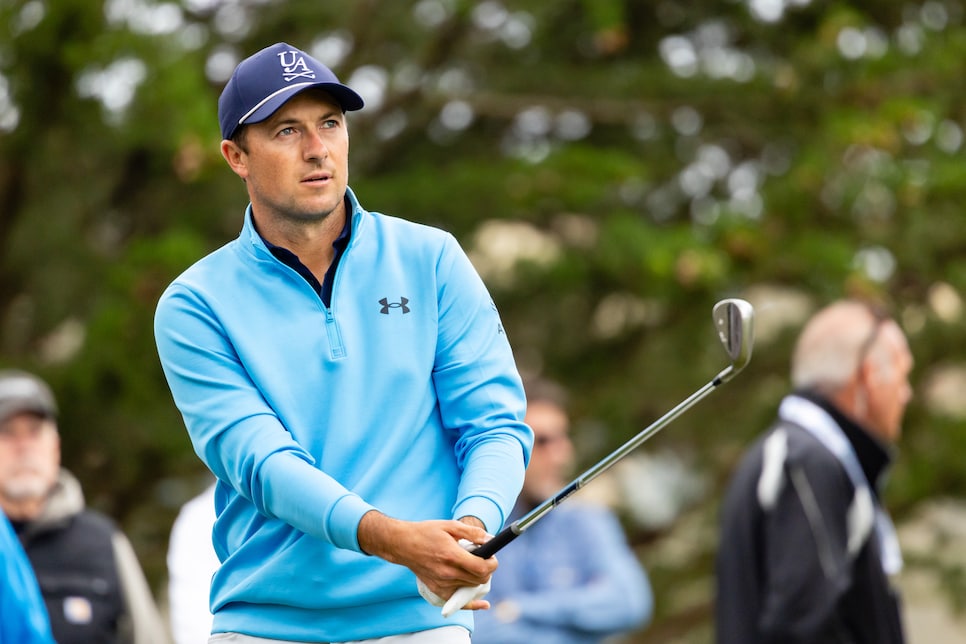
Icon Sportswire
One of the key metrics I’m leaning on this week is how players fare on long and very long courses when it’s difficult to gain strokes with ball-striking. At Bay Hill, it’s difficult to gain off the tee and on approach, and over the past two years, only Scottie Scheffler, Russell Henley and Rory McIlroy have gained more average strokes per round ball-striking in this sample than Jordan Spieth. It’s noteworthy to me that the other three are all past champions here. Spieth also has excellent course history here, finishing T-4, T-4 and T30 in his three career starts. He’s gained more than two (58.3 percent of the time) and more than three (41.77 percent of the time) strokes at a higher rate than anyone else in the field.
$6,000+ range Play: Corey Conners, $6,900 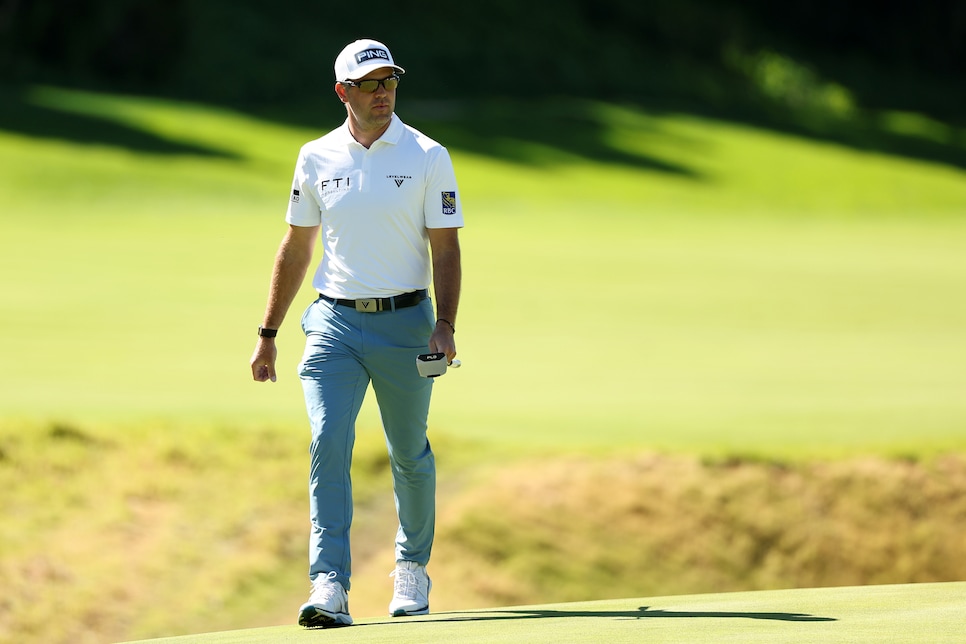
Mike Mulholland
This is another bet on long-term form. Corey Conners has lost strokes on approach in three straight starts. The last time I can find an example of that is before he even had a PGA Tour card in 2015-2017. The risk here is baked into his price, because an in-form Corey Conners at Bay Hill should cost us around $8,500-$9,000. Conners’ worst finish in the past five Arnold Palmer Invitational’s is T-21, with two of the five being solo third-place finishes, including 2025. If he can find his form, we’re getting a ton of upside at just $6,900.
Sign up for the industry’s leading data tool to make golf stats easy to decipher—head to BetspertsGolf.com now and get access to The Rabbit Hole for only $10 per month (typically $29.99). Use promo code GD10 at sign up for this amazing deal!
Ryan Noonan is the Betting Content Manager for 4for4 and Betsperts Golf, writing articles and hosting multiple shows under the Betsperts Group umbrella, including Move The Line and our Betsperts Golf Betting Show. Find him on Twitter: @RyNoonan.
This article was originally published on golfdigest.com