The PGA Tour just re-invented itself. It was long overdue.
Those seeking specificity from the PGA Tour’s seismic announcement in late June may have left wanting more. Those who can see what this is designed to become are looking at something the tour hasn’t offered in a very long time. Not a framework under siege, or under negotiation, or being quietly dismantled by competing interests while leadership assured everyone the plane was landing. No more promises that dissolve into new promises. After five years of asking where it was going, golf can see where it’s heading.
The changes revealed in Connecticut will be cited as a response to the existential crisis LIV Golf created, and as PGA Tour chief executive (and incoming commissioner) Brian Rolapp acknowledged, LIV exposed wounds the tour had inflicted on itself. Rogue leagues were fun thought-exercises in the years before Saudi money arrived precisely because the tour had calcified. Too many events, too little imagination, a product that seemed allergic to the kind of disruption that might actually help it. Golf will have to reckon with five years of damage. This was a step towards that retribution.
It begins with how the season ends. The FedEx Cup has existed for nearly 20 years and has cycled through roughly as many incarnations; points resets, staggered starts, adjusted formulas, each tweak treating the symptom while leaving the disease alone. The postseason was hard to follow, harder to care about and almost impossible to build any genuine relationship with. The stakes never felt commensurate with the occasion. It mostly felt like administrative exercise with prizemoney attached.
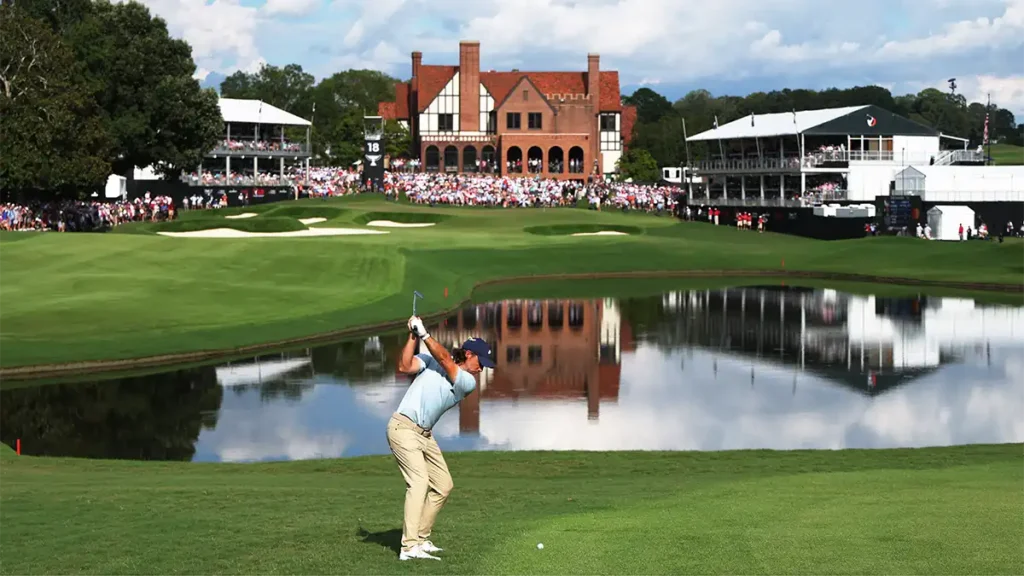
Matchplay changes that. It gives the finale a texture no other week on tour possesses. Elimination, survival, the pressure of one player standing across from another with nowhere to hide. Whether the format reliably crowns the season’s best player is almost beside the point. The tour needs its postseason to feel like an event. Matchplay does that in a way strokeplay at East Lake Golf Club never has and never will.
East Lake deserves its due: strip away the Bobby Jones associations and what remains is a fine course that has hosted a fine event. But a sport’s championship finish should do more than satisfy. The majors do that. The Players Championship does that. East Lake is serviceable… which, for a closer, is its own kind of verdict. The tour now plans to rotate the finale through prestigious venues, many of which have never hosted the tour. Place carries weight. If the Tour Championship is supposed to register as a cultural moment, where it’s played is part of the argument.
What came in June was more than cosmetic. Sponsor exemptions were a persistent insult to the meritocracy the tour spent years claiming to uphold. Rolapp put it plainly after his press conference: sponsors don’t get to decide who’s in the NBA playoffs. The framing is exactly right, and the fact that it took this long to act on it says something about how deeply the old accommodation model was embedded in the tour’s operating culture. Sponsors paid for access, and access included the ability to place players in fields regardless of whether those players had earned the right to be there. That ends now. The Championship Series field will be determined entirely by performance. Finish outside the top 90 on the Championship Series points list and you are relegated.
The competition is continuous. The consequences are real. Every week of the season carries genuine stakes, which is something the tour has been promising and failing to deliver for years.

Instead of Florida, Texas and California cannibalising the schedule in perpetuity, the tour will spread its footprint, including into the major markets it has spent years flying over. That is overdue. Then there is the international component, which deserves more attention that it received in the initial coverage cycle. Golf diehards have wanted a genuine European swing for years, a links season built around the Open Championship, the Irish Open, the Scottish Open – events that reflect the game’s oldest and most elemental traditions. The international series each northern autumn won’t orbit The Open, but it should include the Dunhill Links, the BMW PGA Championship at Wentworth, the Irish Open and events in areas where the game commands the kind of reverence American audiences have largely had to imagine. The tour’s best players will be expected to participate in a structured international slate rather than treating overseas play as an optional detour, a long flight undertaken only when the appearance fee was right or the calendar was thin. The game is genuinely global. The tour has said so for years. This was the first time that claim came with an itinerary attached.
It’s hard to overstate what a political miracle this is. Professional golf is a sprawling, decentralised organism resistant to being commanded from any single head. That complexity is occasionally the game’s greatest asset, a reflection of its character, its independent spirit, its resistance to being owned by any one vision. But its diversity is also – as the past five years made brutally clear – its most exploitable vulnerability. When LIV arrived, every constituent retreated to its corner. Players calculated their own futures. Sponsors protected their own exposure. Governing bodies guarded their own territory. Nobody was steering. Nobody thought they had to.
What Rolapp understood when he arrived, and what Jay Monahan’s tenure demonstrated in the negative, is that you cannot manage this sport by trying to satisfy everyone simultaneously. Monahan’s paralysis came from treating every constituency as a veto holder. Rolapp internalised a different lesson. He doesn’t need every corner of the game rowing in perfect unison. He just cannot afford any of them actively pulling against the current. It is not a coincidence that during the US Open at Shinnecock Hills, USGA chief executive Mike Whan noted that PGA Tour players now have a larger seat at the equipment-rollback table. Rolapp has spent his tenure ensuring that whatever decisions come, the players are participants in them rather than spectators to them. That buy-in is what made the overnight announcement possible. It is also what makes it mean something beyond the announcement itself.
Landing this plane was not inevitable. That it landed at all is the product of deliberate, patient, often thankless work.
There is legitimate room to look at the announcement and see incremental change dressed in new nomenclature. That was Rory McIlroy’s read when he dismissed the Challenger Series as a glorified Korn Ferry Tour. In the weeks ahead, players and sponsors who feel excluded will say so – some with genuine grievance, others in bad faith. An enormous number of details remain unresolved. The announcement was a direction, not a blueprint, and the difference between those two things is where execution lives.
But perhaps the most important question raised is who any of this is actually for. What the previous regime never fully grasped, and what drove fans to sustained distraction, is that the tour’s endless negotiation with its own constituencies left its actual audience somewhere near the bottom of the list. Fans were the assumed audience, never the considered one. Present in the ratings, absent from the thinking. These changes are specifically designed with them in mind. That is not altruism. What’s good for fans is good for business, and the tour knows it. But the recognition that everything else – the television contracts, the sponsorships, the prizemoney, the whole apparatus – flows from the time and passion of people who simply love the game is something this sport has been conspicuously missing for a long time.
There is a plan now. A real one, pointed in the right direction, built with the right people in mind. After years of managed stasis, there is movement. That it took this long is the indictment. That it’s finally here is the story.

15 things to know about the PGA Tour’s new world order
The PGA Tour, through the work of the Future Competition Committee, spent roughly nine months studying the sport’s structural problems, and in late June introduced its solution. Starting in 2028, the tour will look fundamentally different with two co-existing series, real promotion and relegation, a re-imagined postseason and a schedule built around markets the tour has mostly ignored. A number of details remain unresolved – most notably a specific schedule and which tournaments are part of which series – but the broad architecture is set.
Here are 15 things you need to know about the tour’s new future.
Two tours, one ecosystem
The tour isn’t splitting so much as stratifying. The PGA Tour Championship Series will replace the elevated/signature events model, while the Challenger Series runs concurrently as its feeder. They share a calendar but nothing else, with separate fields, separate purses, separate points systems. The old world had one tour with varying tiers of consequence depending on the week. The new world draws a hard line: elite competition on one side, the path to it on the other. The intent is clarity, for fans, partners and players alike. Everyone should know which tier they’re watching and exactly what’s at stake.
The best players will only play each other
Championship Series members are ineligible to enter Challenger Series events. This is the central premise of the entire restructure. No more stars cherry-picking schedules, no more diluted fields at marquee events, no more weeks when the best player in the field is ranked 40th in the world. The tour has tried to solve the problem of elite-field consistency for years through elevated events, designated events and signature events, each iteration a variation on the same incomplete answer. There could still be issues: does this prevent a star from playing a hometown event, or a countryman playing his national open? Still, it is the first structural solution; membership itself determines your schedule.
Roughly 23-24 events per season, running from February to August. Fields capped at 120 players with 36-hole cuts and no alternate list. Purse floor of $US20 million per event. The schedule includes the majors, Players Championship, Ryder Cup and Presidents Cup. Everything else gets negotiated fresh as the tour is openly shopping markets it hasn’t prioritised, optimising the schedule around major championships and building in off-weeks at regular intervals. The Championship Series is designed to feel like a season-long championship, not a collection of disconnected tournaments.
Sponsor exemptions are finished
The exemption economy that allowed title sponsors to place preferred players in fields regardless of merit is over. This is a significant cultural shift for a tour that has long operated on relationships and accommodation. The field will be determined entirely by performance. Whether that removes a meaningful revenue lever from sponsor negotiations is a question the tour will have to answer.
The postseason is being re-invented
The Tour Championship will feature matchplay, rotate across prestigious venues – many of which the tour has never visited – and carry formal retention and relegation implications. The season-long points leader will receive specific recognition. Format details are still forthcoming, but the direction is a deliberate departure from the strokeplay, same-venue model at East Lake Golf Club that has defined the postseason for years. Matchplay at the tour’s season finale is a significant swing – the format is inherently unpredictable, which cuts both ways. The best player in the world might lose on a Wednesday. That’s a feature to some, a flaw to others. What’s not in dispute is that the current postseason model has failed to generate the cultural moment the tour needs to close its season.
The tour is going after new cities
Boston. Denver. New York. Philadelphia. San Francisco. Seattle. Washington, DC. The tour listed those markets explicitly as Championship Series targets. The message is that the sport’s premier series belongs in America’s biggest rooms, a departure from decades of schedule inertia built around sponsor relationships and geographic convenience. For years the tour’s calendar reflected the history of who wrote the biggest cheque. The new model reflects where the audience actually lives.
The autumn goes international
Once the Championship Series wraps, a limited series of elevated international events will feature top-tier players in partnership with the DP World Tour under the existing Strategic Alliance. The intent is a genuine global footprint for the sport’s best – not the informal “fall” schedule that has functioned as an afterthought for a decade. The DP World Tour partnership is doing real structural work here, providing infrastructure and markets for events the PGA Tour couldn’t easily stage on its own. Whether top players participate voluntarily or whether participation becomes an expectation is a detail the tour hasn’t fully resolved.
The 90/20 rule is the engine
Each season, 90 players are retained on the Championship Series based on their points finish. Twenty players are promoted from the Challenger Series. Finish 91st or worse and you’re relegated. The maths is clean and the consequences are real. For the generation of players who have known only a league that protects its members through a web of exemptions and pathways, this is a different kind of pressure entirely.
There’s a safety net, but it’s narrow
Relegated players aren’t sent straight to the Challenger Series. They get one shot at a “last chance” domestic series of four to six events during the northern autumn, with a limited number of Championship Series spots available for top finishers. Miss it and you’re in the Challenger Series the next year. The mechanism exists to soften the blow of a bad season without eliminating the consequences of one.
What to make of the Challenger Series?
Rory McIlroy called it a “glorified Korn Ferry Tour” at the US Open, and the tour will have to prove him wrong. The structure: minimum 20 events, 144-player fields, purse floor of $US4 million, played largely at venues that previously hosted tour events. Approximately seven Challenger Series events will be scheduled during Championship Series off-weeks and elevated in terms of consequence, exposure and benefits. The tour is investing real money in making the second tier worth watching as the purse floor is higher than the current Korn Ferry Tour purse structure, and the venue quality is a deliberate signal. But McIlroy’s scepticism reflects a real concern: a series is only as compelling as the players in it, and the players in it will be defined largely by who failed to stay in the series above it.
The Challenger Series has a fast track
Win twice on the Challenger Series in a single season and you earn immediate promotion to the Championship Series with status for the next year. It’s one of the few explicitly defined escalators in the new structure – a clear incentive that rewards performance over seniority and gives the lower tier genuine stakes beyond mere survival. The two-win threshold is deliberately high, designed to identify breakout talent rather than reward steady accumulation. A player who wins twice in a Challenger Series season has announced himself. The tour wants that announcement to mean something immediate.
Tiger Woods built this
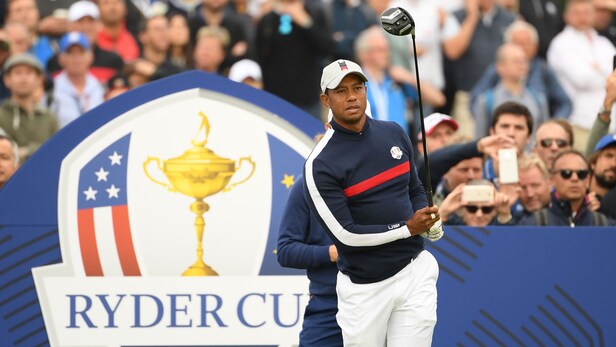
Woods chaired the nine-member Future Competition Committee, formed in August 2025, which included Adam Scott, Patrick Cantlay, Maverick McNealy, Keith Mitchell and Camilo Villegas as player representatives, plus business advisers Joe Gorder, John Henry and Theo Epstein. Despite taking a step back after a car crash and subsequent DUI arrest, Woods was heavily involved in the process. Rolapp drove the process operationally, but Woods’ name and credibility were central to its legitimacy.
The developmental pyramid remains
The Korn Ferry Tour, PGA Tour Americas and PGA Tour University will remain in place in some fashion, all explicitly acknowledged as critical to the system’s long-term function. The tour envisions a fully integrated competitive ladder with formal votes on the developmental tier coming later this year.
Q-School survives
An annual Qualifying Tournament will continue feeding access across the ecosystem – into the Challenger Series, the “last chance” series and the developmental pathways. Eligibility and benefits details will follow later this year after board approval. Q-School’s survival signals the tour’s intent to keep traditional entry points intact even as the upper structure is rebuilt around them. For players outside the system entirely, the path still exists.
A lot of this is still being written
The boards approved a framework. The details are still being finalised ahead of a 2027 deadline. Complete eligibility criteria, including access for the DP World Tour as part of the Strategic Alliance and PGA Tour University, must be resolved before the 2027 season begins. The tour has committed to a direction. The distance between a compelling structural vision and a functioning competitive ecosystem is where most ambitious sports reforms go to die. Whether the execution matches the ambition is a question that won’t be answered for some time.
5 key questions that still need answers as the PGA Tour makeover continues
There was a metaphor popular for a time with business schools that tried explaining the most logical approach to finding tangible solutions to an oversized problem: “How do you eat an elephant? One bite at a time.”
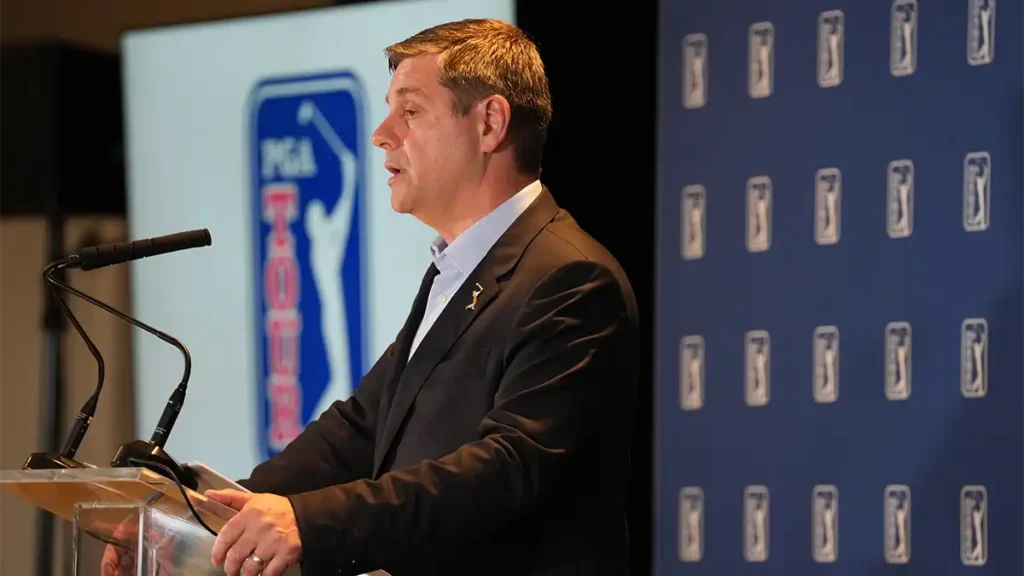
That metaphor has been useful for PGA Tour chief executive Brian Rolapp and the Future Competition Committee since it was created last August with the mission of overhauling the competitive ecosystem of the PGA Tour. During the past year, the group has wrestled with trying to improve a product that has an endless number of moving parts and many constituents to appease – top players, middle-level players, tournaments, sponsors, media and, perhaps most importantly, fans.
“We started with all sorts of ideas, some good, a lot bad,” Rolapp said. “We went in with a blank sheet of paper… no dumb ideas, but then that was a really healthy part of the process, but I think we landed where we were.”
The early result of that work was revealed in late June at TPC River Highlands, site of the annual Travelers Championship. In a clubhouse ballroom, Rolapp announced that PGA Tour Boards had approved the creation of a system with two co-existing series – Championship and Challenge – that offer defined promotion and relegation, a re-imagined postseason and a schedule built around markets that the tour has previously ignored.
“This structure creates more compelling competition for fans and greater opportunity for players, bringing stronger value to our partners and the ability to further our philanthropic mission,” Rolapp said.
While pleased with what he was able to present now, Rolapp noted: “We have made meaningful progress, but our work is far from finished.”
Indeed, taking the above metaphor further, how much of the elephant has the tour eaten so far and how much is still on the plate? There would appear to be many details still to be finalised, including schedules, determining eligibility criteria for the two series and how to integrate pathways from the DP World Tour, Korn Ferry Tour, PGA Tour Americas and PGA Tour University.
Here then are five critical questions that still need answers:
Which events will be on the Championship Series and which ones will be Challenge Series events?
Rolapp announced that the Championship Series will consist of 23 to 24 tournaments “opening big” in February and running until August. That will include majors, postseason events, team competitions and 15 regular-season tournaments with 120-man fields, a 36-hole cut and a minimum purse of $US20 million.
In contrast, the Challenge Series will feature at least 20 events with 144-player fields and cuts, with minimum purses of $US4 million.
As for which current events would be part of the Championship Series, Rolapp said that those decisions are still being made. He did reveal that 10 of 15 regular-season events have been lined up for 2028. “The remaining five spots will either be filled by existing events or new markets,” Rolapp said.
What Rolapp didn’t offer were any hints about current events and where they might land in the new structure. For instance, does Colonial become part of the Championship Series while the CJ Cup Byron Nelson is a Challenge Series stop? Yeah, he wasn’t going there.
Even when discussing the event at which he made the announcement, the Travelers, which has been a signature event for the past few seasons, Rolapp was cautious in describing its status. “I will say this has been an extremely successful tournament by every metric,” he said. “Our members love it. The Travelers is an amazing partner. We obviously have an affinity for this course. This is a market that doesn’t get many professional sports. It’s an opportunity for us. They do a wonderful job. So I think they do a lot of things that we’re looking for in a Championship Series event.”
Sources say negotiations with current PGA Tour events will now begin in earnest with the two-series structure formally approved. And that’s when some hard conversations with long-time events will start to transpire. But don’t expect a full schedule to be revealed until the first quarter of 2027.
What does going to new markets really mean?
Throughout the process, Rolapp has mentioned that the PGA Tour needs to make sure it has a regular presence in America’s biggest metropolitan areas. Specifically, he has singled out places like New York, Boston, Denver, Philadelphia, San Francisco, Seattle and Washington, DC.
Again, with the foundation now in place, Rolapp says he and the tour can begin to put out to market with the idea of new venues coming on board to host tour events. But how do they not only go to a big city but make sure they play at courses in those areas that provide the best tests for the game’s elite?
“I think the goal is to go to prestigious courses that we’re not there a lot, that fans will recognise as prestigious,” Rolapp said.
What the tour has going for it is that it can offer the idea of hosting an event annually or every few years as part of the rotating venues that will be used to hold the Tour Championship. The hope is that those options make holding a tour event more appealing.
Rolapp also offered up another way for the tour to move to new markets… one that involves taking advantage of the $US1.5 billion that Strategic Sports Group has invested in PGA Tour Enterprises.
“We’re also not above building things on our own [venue],” he said. “I think one of the most successful tournaments in the world, you can’t argue it, is the Players Championship. That was a course that was built for that event. That’s certainly on the table.”
What will the schedule look like in terms of pacing?
The introduction of signature events the past couple of years on the PGA Tour created a series of issues for the top players trying to play in these events while also not playing too much golf. This year’s schedule had seven signature events or majors played in a 11-week span. In 2027, there will be a similar five signature events in seven-week run.
Several PGA Tour players have mentioned the hope that there would be weeks off around the majors to help either in their preparation or in their decompression from these events.
Rolapp said the discussion on pacing continues to be ongoing and that possible off weeks around majors are still being debated. “I think it might vary,” he said. “I think you talk to the members, they all have their preference… You can’t design a schedule for 200-plus guys, but I think there’ll be a balance.”
Rolapp acknowledged that players cannot play every week and that as the schedule becomes clearer, they will not be required to play every event. “So we aren’t changing the model. They’re not under contract,” he said. “We’re not going to force them to play anything. But we do think we’ve designed a model that will allow them to take some tournaments off and still compete for the regular season title and other things.”
How will the international-event schedule really work and how will players be compelled to play?
Separate from the two series that will be played from February to August, Rolapp said the PGA Tour will work to develop a calendar that includes a limited series of elevated international events that top players from the Championship Series will be eligible for during the northern autumn. The tour will work with the DP World Tour as part of the strategic alliance, which expires in 2027, with the tours hoping to extend that.
Sources say the international events could include the BMW PGA Championship, the Dunhill Links at St Andrews and a handful of national opens that would be moved to this period.
While the idea of extending the PGA Tour brand oversees sounds appealing, much of the details need to be worked out. Including what incentive players might have to actually compete in these events. Rolapp, however, sounded optimistic that top players aren’t going to want to shut down for four months.
“We’ve talked a lot to our members about this. They clearly want to play outside of the dates that I’ve outlined here. Different members have different motivations for where they play, when they play, why they play. I think in the [northern autumn] it’s our responsibility to create compelling opportunities for them to do just that.”
What’s the fate of the LIV players?
With the future of the LIV Golf League still unclear, the question of how the PGA Tour might integrate LIV players back if the league folded is still a
critical one.
Rolapp wouldn’t comment in Connecticut whether he’s had discussions with Bryson DeChambeau and Jon Rahm about a possible return, and he continued to state that it wasn’t a priority at this point with LIV players still under contract to the league.
“I will say our concentration honestly has been on this. This is what we’ve been concentrating on is how to make the PGA Tour better.
“I read what you read on LIV. I’m not sure what the future of that is or those players. They’re under contract, and until that’s no longer the case, I don’t think we need to overly worry about it. We’re focused on the PGA Tour.”
And there is plenty to focus on there. – Ryan Herrington