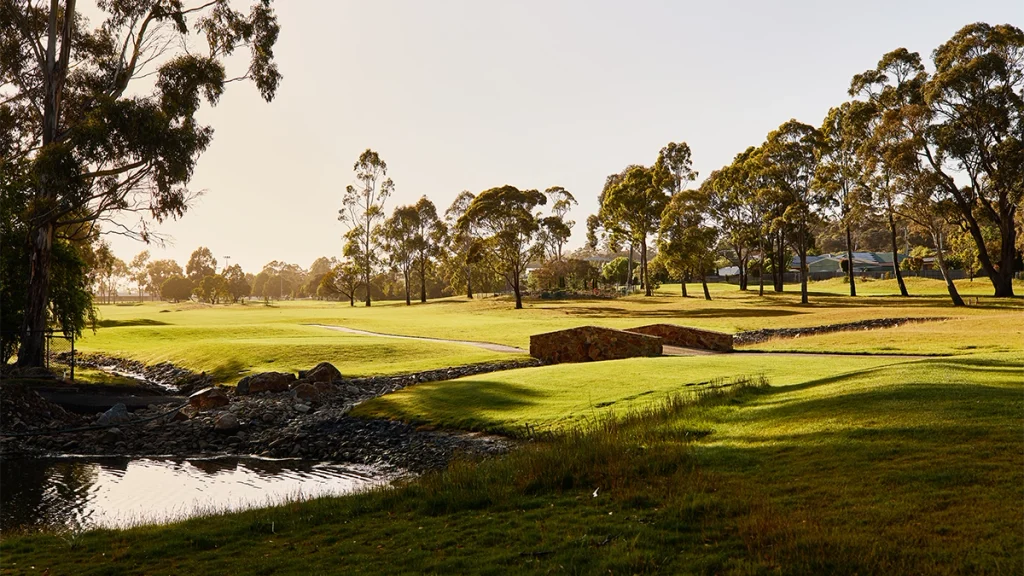
The Queenslander won back-to-back Australian PGA Championships, including in 1972 at The Lakes Golf Club. But that was far from being his lone contribution to the professional game.
Randall Vines
1972 and 1973 Australian PGA champion
Age: 81
Hometown: Brisbane
The weather was really lousy, especially on the second and third days of the ’72 PGA. I was leading after the first day. I shot 68 and I think Billy Dunk was one behind and Ted Ball was another shot behind him. Then the next two days it was really bad weather – windy and wet – and we were all tied for the lead after three rounds. The lead changed quite a few times in the last round, and I can remember I holed good putts for par on the 15th and for birdie at the 17th. I was two in front playing the last hole.
▶ ▶ ▶
I had a very good caddie that week – Norm Kerr, a friend of mine from Wynnum in Brisbane, where I was born and where I come from. He was in the Air Force and he rang me and asked if he could caddie for me for the week, and I said yes. He was fantastic at reading the wind. Being such a windy week, he was a real help to me.
▶ ▶ ▶
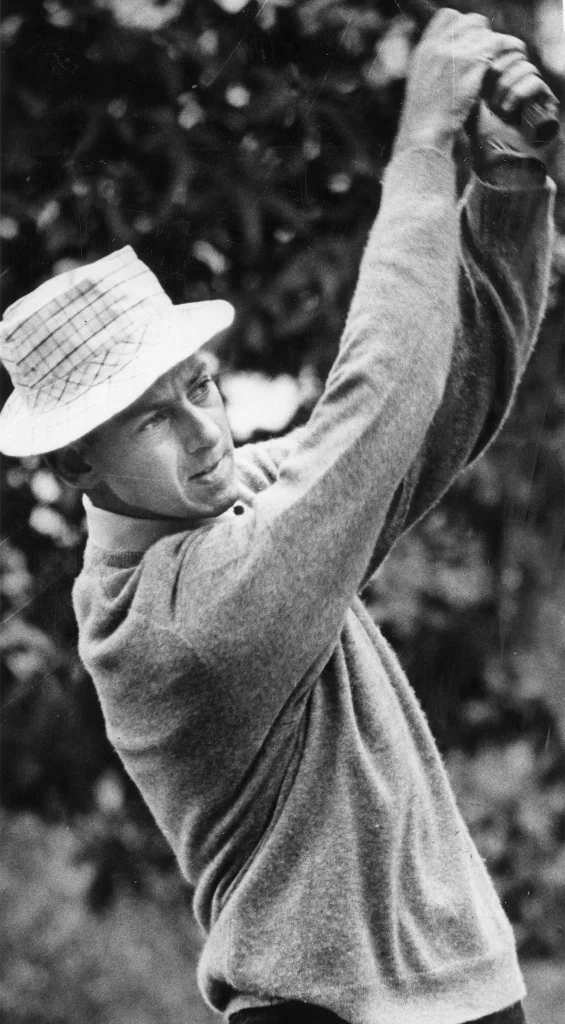
I had a bit of a slump from 1968 to ’72 after I’d had a purple patch there for a while in ’67 and ’68. It was funny, I swapped drivers with a pro in England, Patrick Lee. He had a MacGregor driver and I had a Slazenger driver and I wasn’t driving very well and he wasn’t driving very well, so we swapped drivers. And after that, I went on a purple patch. I won about five tournaments in the next 12 months.
▶ ▶ ▶
I changed the grip on the driver in, it might’ve been ’69. After I changed the grip, it was never the same club. It’s not like today when you can just walk into a pro shop and get exactly the same grip and put it on. It was a MacGregor special grip. I tried a leather grip and that didn’t work. I tried some other grips and in the end, I gave it away and got a new Slazenger driver. They made me up a driver and that was the one that I used when I won the ’72 PGA.
▶ ▶ ▶
I won the PGA again a year later at Bonnie Doon, but that was at matchplay. They were short of sponsors and decided they didn’t want the entire field to be there for the whole week, so they decided to make it matchplay as a one-off. Half the field went out the first day, so they could go home.
▶ ▶ ▶
It was the opening of the Sydney Opera House that week and we had tickets for the Dusty Springfield show on the Sunday night. One of the other pros said, “If you get knocked out, can we have your tickets?” Because we lived in Queensland, so we would’ve gone home had I been knocked out early. But I kept winning my matches, and so we ended up going to the opening of the Opera House on the Sunday night.
▶ ▶ ▶
I said at the time in ’73, “I feel like I’ve won six tournaments. Every match was a hard one.” I had some close games, but that week I putted really well. I didn’t have one three-putt for the whole week, so that helped.
▶ ▶ ▶
Being a club and teaching professional, winning the association’s national championship twice meant everything to me. It’s something you can’t take away from me. I’m very proud of that achievement, and I think that’s something I’ll never forget – those two years winning those two tournaments.
▶ ▶ ▶
In truth, I’d already peaked a few years earlier. I used to practise fairly hard. Robyn and I got married in January ’68, and that was the start of me winning a lot of tournaments. I’d won the Swiss Open in ’67 before we got married, but I was just playing good golf and I was a bit of a freak putter in those days.
▶ ▶ ▶
I won the 1968 Tasmanian Open by 17 shots, which at the time was well and truly a record margin of victory anywhere. It was in the Guinness World Records for a few years, that winning margin. That was a good week at Royal Hobart. On the first day, I was playing well. I was only even-par after about 12 or 13 holes when a big storm rolled in, and I dropped five shots in the last five holes. I think 72 was leading, and I shot 77. Then the next day, I shot 65. And then there were two rounds on the last day, and I shot 65-67. I bogeyed the last two holes for that as well.
▶ ▶ ▶
My wife Robyn was caddieing for me, and I promised her I’d buy her an opal ring if I won. And she thought that I’d lost when I bogeyed the last two holes. She got the ring.
▶ ▶ ▶
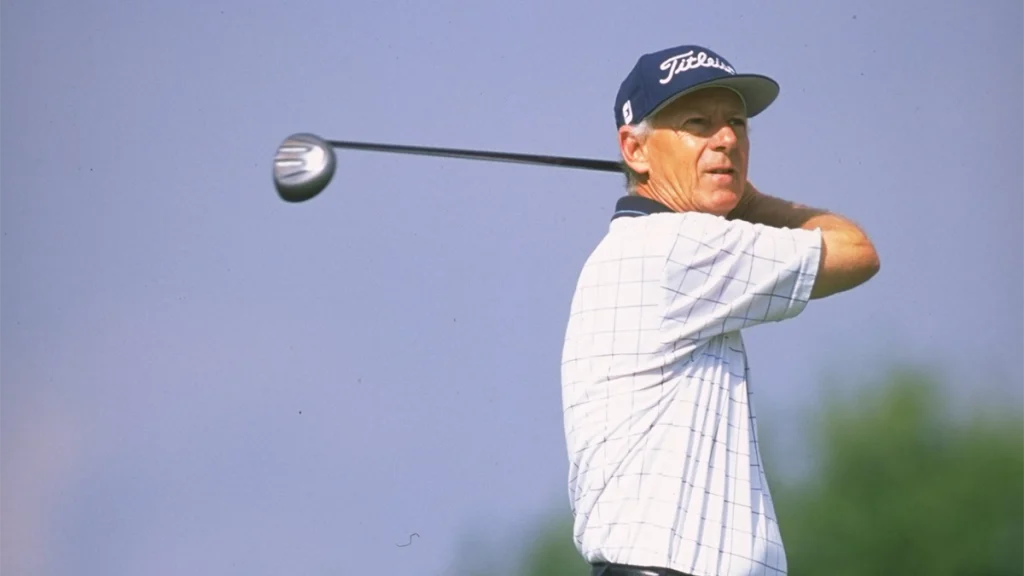
My game went cold during the late ’70s. You have your ups and downs in this game. I just lost a bit of confidence in putting and driving more than anything. I was always a really good iron player but I used to hit a few stray drives occasionally, and that cost me. But I think moving to the big ball was also a bit of a change. Most of my wins were with the small ball, and I don’t know whether that was anything to do with it.
▶ ▶ ▶
I started getting keen again towards when I turned 50. I was lucky to be the pro at Kooralbyn – it was such a great golf course to play all the time. If you could play well around here, you could play anywhere, really. That was a help. By comparison, at Helensvale, it was a very short course. It was an executive-style course. I was the pro there for six years and that really didn’t help my game, I don’t think. I also had a great sponsor in Mick and Denise Power of BMD Constructions who helped me get back out on the Legends tour. That helped me win the New Zealand PGA Seniors at age 62.
▶ ▶ ▶
I played in the Open Championship four times in the late ’60s and early ’70s. I had a practice round with Gary Player the year he won at Carnoustie, 1968. That was one highlight. I finished 25th one year, which in those days got you back the next year. That was in ’71 at Birkdale and I eagled the last hole to run 25th. That was a 3 – it’s now a par 4, but it was a slightly different hole in those days. So I got back to play the next year at Muirfield, and I had a practice round there with Kel Nagle, Peter Thomson and Jack Nicklaus. Everybody asks you what your dream four is. Well, I’ve actually played it.
▶ ▶ ▶
I think back to the equipment we used to play, with wooden heads for drivers and fairway woods – and the ball didn’t go as far. Nowadays, I think the advances in equipment suits ladies or young girls the most because the clubs are so light now and they can really swing them. That’s why a lot of girls are doing well at a young age.
▶ ▶ ▶
Amateur golfers still mostly slice. They tend to swing outside-in instead of inside-out. That’s the biggest fault I noticed in nearly everybody I taught. I had to teach a lot of people at Kooralbyn when I was there. And with chipping, I think too many try to lift the ball instead of letting the club do the work.
▶ ▶ ▶
Golf is all about the people you meet and the places you go. Normally on the golf course, everybody’s in a good mood. They’re happy to be there and it’s a good environment. I found from a young age it was beneficial to mix with elder people too. I think you learn from them – how to handle yourself, how to be respectful of others.
Photographs by getty images/south china morning post, paul severn