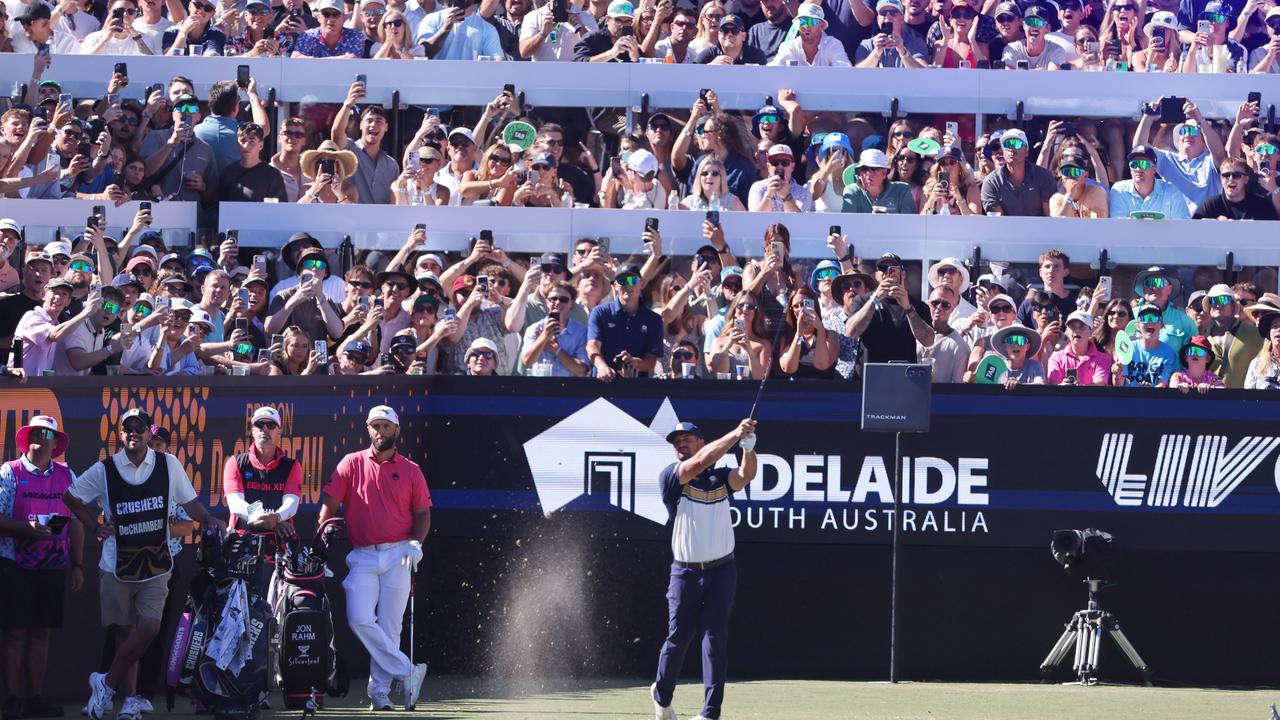
In my five years as a professional golfer, I’ve seen some of the highest-ranked players in the world up close and personal. One of the things I’m always intrigued by is the way that different pros approach practice. You won’t find a player on tour who doesn’t put in serious mileage on the practice tee each week. Between the gym, sports massage, practice rounds, short game work, dialling in green speed, pro-ams and keeping your swing in check, most pros I’ve observed average four to six hours per day at the course, and that’s not including actual tournament rounds.
RELATED: Two exercises that target better driver swings – and two more that improve iron play
For the average golfer, dedicating that amount of time to working on their game is impossible. And probably pretty daunting. But luckily, in my opinion, the average golfer doesn’t need nearly that much time to see big improvements in their game. Here’s how I would recommend practising if you can only squeeze in 20 minutes’ worth of grind time.
Putting-focused practice session
Start-line work (20 minutes)
Find a straight putt around three to five feet long. Lay down a putting mat, putting mirror, a ruler, or if you don’t have any of those, make a gate (it should be the width of a golf ball plus about a quarter of an inch on each side) with some tees. Spend five minutes rolling putts through your golf ball-sized gate into the hole. This drill trains your ability to control the putterface. The initial direction of a putt is 85 percent determined by where the putterface points at impact. So, if you can’t start the ball on your intended line, you won’t be making many putts!
Speed control (15 minutes)
A scratch golfer hitting her approach from 125-150 yards will, on average, find herself 35 feet from the hole. For a 10-handicapper, that proximity climbs to 46 feet. With that in mind, a majority of putting practice should be from those distances.
Start by placing an alignment stick two feet behind the hole. Then pace off six, eight, and 10 steps from that hole in a straight line. Place a tee at each distance and place three balls at the shortest tee. The goal is to hit three consecutive putts within two feet, long or short of the hole. Then advance to the next tee distance. The drill is complete when you’ve hit three consecutive putts within the zone from all three tee distances.
Developing “touch” (5 minutes)
There are two things every good putter can do: read greens and match the correct speed with their chosen line. This drill helps with both of those skills.
Find a hole that sits on a moderate slope. Place two tees on opposite sides of the hole, five feet from the hole, creating putts that break as much as possible. (One putt should break right-to-left, the opposite side breaking left-to-right.) Go through your full routine, and roll one putt from the first tee trying to make it. If you miss it, move on to the opposite tee. If you make it, move that tee one foot further back, and advance to the opposite tee. Alternate until both tees are eight feet from the hole, or you run out of time.
Range-focused practice session
Stretch and activate (20 minutes)
This step is a non-negotiable. Whatever time you think you save by not warming up will be quickly negated by the poor quality of swings you put on the first 20-30 balls.
Finding the face (15 minutes)
The first swings of any range session should never be full swings. You’d be hard-pressed to find a pro who steps onto the tee and starts by hitting full 7-irons. And yet, I see it every day from the amateurs at my home club. Start with a lob wedge or sand wedge, and hit 10 balls with good practice swings at a chosen target between 30 and 50 yards. This is going to warm up your wrists (preventing injury), help calibrate your pitch distances, and help you find the sweet spot of the clubface more easily.
9 to 5 (10 minutes)
According to Annika Sorenstam, after those small wedge shots it’s time to work through the bag. She would hit 9, 7, and 5-iron with her full routine and a chosen target, being sure to alternate to pitching wedge, 8 and 6-iron the next day. This prevents half the bag from getting worn out faster than the other half, and ensures that she’s equally acquainted with each club in the bag. The pattern continues up until driver. Choose a new target with each shot, go through the full pre-shot routine, and watch the ball until it lands.
Whatever time you have left:
When it comes to ending a range session, there are a few things I’d reccommend. And all are things I’ve seen elite players do at various times.
Option 1: Swing summary
Grab a notepad, a scorecard, or your phone and record something from the day’s practice. If it went well, take a swing video for future reference, or jot down a positive swing thought that stuck. If it didn’t go well, take note of that too, and write down the common miss. All of these help you process your practice and will come in handy if you find yourself searching for something down the line.
Option 2: Play a round
Play a hole on the range. Some players like to simulate the opening hole they’re about to face, while others prefer to hit the par-3 distances for the front and back nine. Be sure to go through your whole routine and visualise in detail. This drill helps calm first-tee nerves and sharpen the skill of visualisation. It also breaks up technique-focused time on the range and adds a nice variance to your practice.
If all you can find is 20 minutes to practise, don’t be disheartened. A player who spends 20 minutes of highly focused, efficient practice will almost always be more effective than one who spends two hours mindlessly banging balls.