Dr Alister MacKenzie and the 10 weeks that changed golf in Australia.
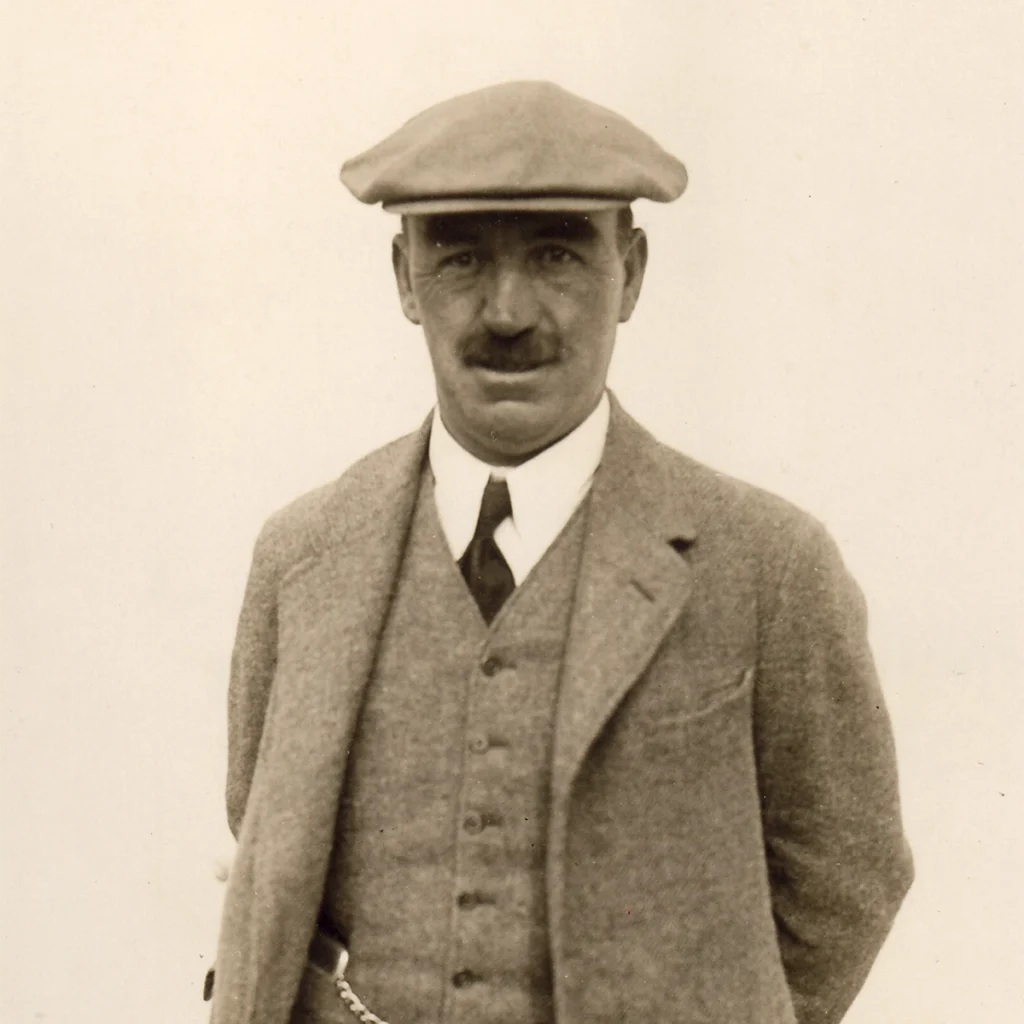
The 10 weeks that British golf course architect Dr Alister MacKenzie spent in Australia, from his arrival at the port of Adelaide on October 23, 1926, until his departure for New Zealand from Sydney on New Year’s Day 1927, proved a watershed moment for the development of the golf courses in this country, and by extension, for the overall game of
golf here.
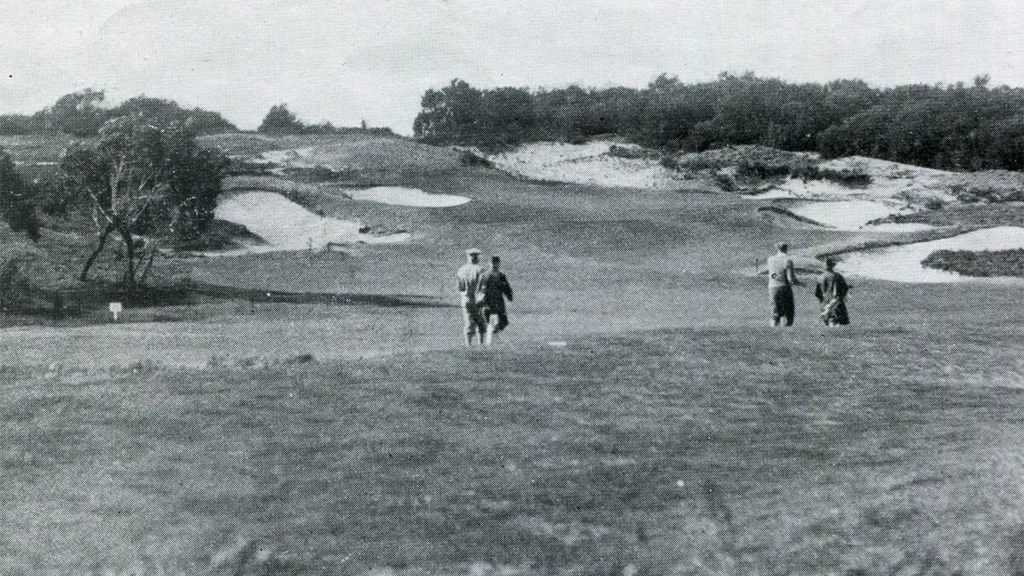
Australian golf courses in the “BM” period – “Before MacKenzie” – were typically of the penal school whereby myriad bunkers were installed to catch golfers’ mis-hits on the theme of: the more the merrier. Generally they were very difficult for the average golfer but insufficiently challenging for the country’s better players. The roughs were often long and unkempt, which slowed down play and encouraged the ‘steering’ of shots onto the narrow fairways. However, in the “PM” period – “Post MacKenzie” – courses were re-imagined along the lines of providing options for golfers as to how to play the course and its individual holes. Fairways were widened and in some cases joined together, roughs diminished and better golfers were encouraged to open their shoulders and take on the challenge of a difficult carry with the promise of a reward for success – and a penalty of a least half a shot or a shot for failure. One of the Melbourne golf writers during MacKenzie’s visit wrote that his design philosophy could be simply distilled down to, “Place your shot.” Average golfers were provided with an alternate route whereby they could safely navigate around the hazards by plotting a longer but safer path to the hole.
MacKenzie subscribed to the strategic school of design that called for golfers to think their way around a golf course that had its hazards, few in number, cleverly positioned close to the golfer’s desired line of play. No bunker was unfair wherever it was placed according to MacKenzie’s philosophy, and it was the golfer’s job to avoid them.
Up until 1926, very few golf courses in Australia had been designed with these options in mind. Our championship courses of the day, like The Australian, Royal Sydney and Royal Adelaide, to name a few, were considered by MacKenzie to be drastically over-bunkered and he recommended the filling in of the majority of these and turning them instead into grassy hollows. At The Australian, MacKenzie had noted a total of 11 bunkers around the last hole and commented to a local reporter that, “One would have been ample, at most two. This would make a much finer test of golf. The player would have to place his second shot to gain the advantage of the entrance, but as the green was constructed at the moment the player just hit and hoped.”
Australia, though, was not a complete wasteland, one bereft of good golf design ideas. Men like transplanted Scot Dan Soutar of Sydney, and Adelaide’s Herbert “Cargie” Rymill of Kooyonga fame were espousing and implementing similar ideas. MacKenzie was full of praise for the course that Soutar had designed and Royal Melbourne curator Mick Morcom had built for Kingston Heath, describing the bunkering and redesign task there as a simple problem for him to solve due to “the excellence of the design and construction work”, with Morcom’s construction work “better than I have seen on any other golf course in Britain or Australia”.
MACKINNON’S STAKE
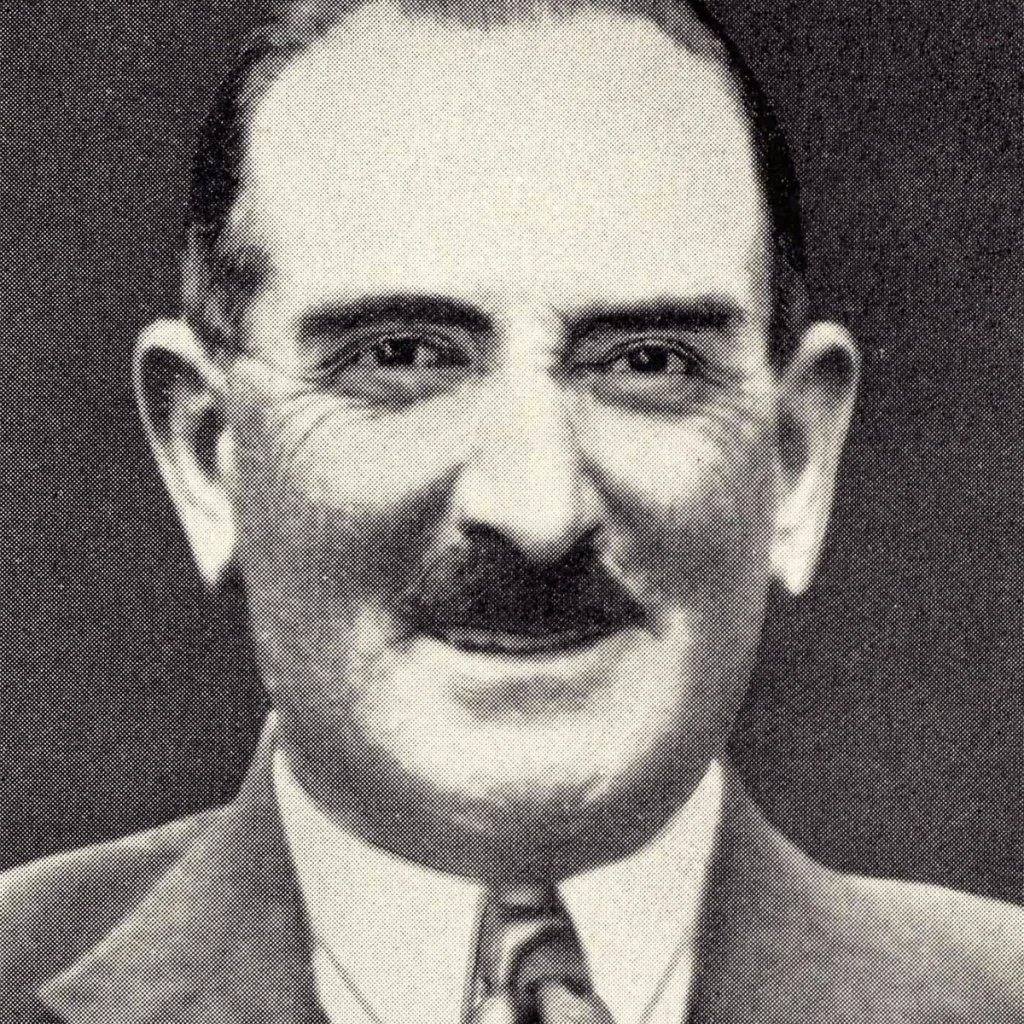
The impetus for Alister MacKenzie’s visit to Australia came from Royal Melbourne Golf Club, the pre-eminent Victorian club and arguably the best course in Australia in those “BM” times. After acquisition of three new parcels of land adjoining the far end of its Sandringham course, the club saw the opportunity to redesign the course by adding new holes into this land, thus allowing the future sale for residential development of the three blocks that held the first and last three holes, along with their clubhouse. The club sought counsel from the Royal & Ancient committee as to the most prominent golf architects in Britain, and Royal Melbourne president, L.K.S. Mackinnon of racing fame and who was in Britain at the time, got in touch with Dr MacKenzie and their architect was secured. Whether contact was made by Mackinnon with other architects such as Harry Colt or Herbert Fowler was not recorded, but it was likely that he did. Colt, a notoriously poor traveller, probably declined on the basis of the commission requiring such a long trip to Australia and back.
MacKenzie agreed a handsome remuneration package with the club, £1,000 plus free accommodation at the club and 10 guineas per day travelling expenses. He and the club agreed to equally split the proceeds from a further series of consultations to other Australian clubs that Royal Melbourne had facilitated. Upon leaving Australia, it was reported in Smith’s Weekly in Sydney that MacKenzie, “in less than two months has earned a sum of well over £2,000…”
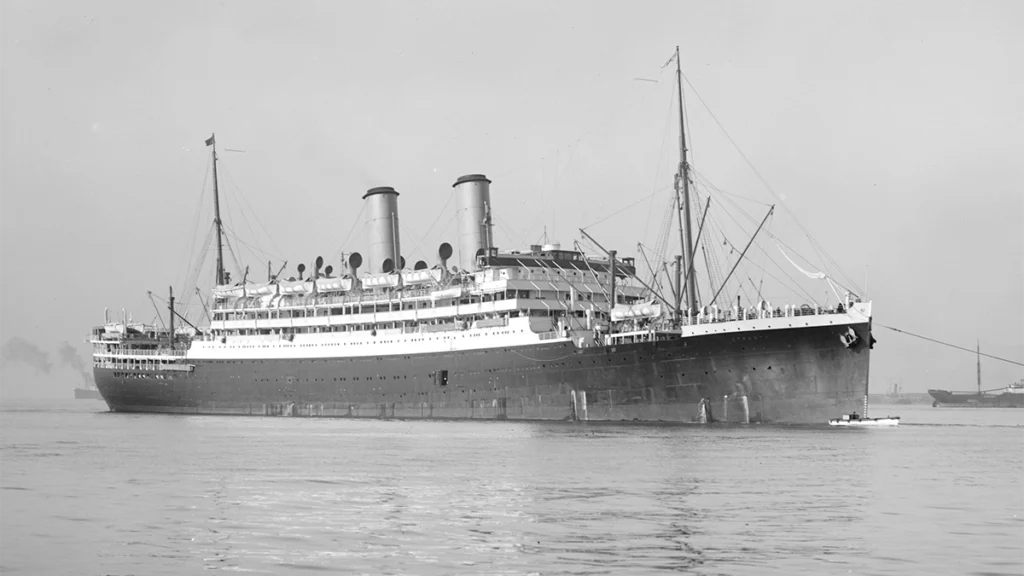
MacKenzie departed for Australia on September 19, 1926, on the Orient Line’s S.S. Otranto with a projected sailing time of 35 days, and in his absence he arranged for his brother Charles to handle his British work. The ship berthed in Colombo, Ceylon (today’s Sri Lanka), en route and while there he received a cable from the Royal Adelaide club asking him if he could stop over and see their course when the Otranto docked in Adelaide, to which he agreed. He arrived in Perth, at the port of Fremantle, on October 19 and took the opportunity to leave the ship and visited both the Perth and Fremantle courses, but he was less than impressed with them, later writing of the courses he had seen in Australia that, “with the exception of those at Fremantle and Perth, all are very good courses.”
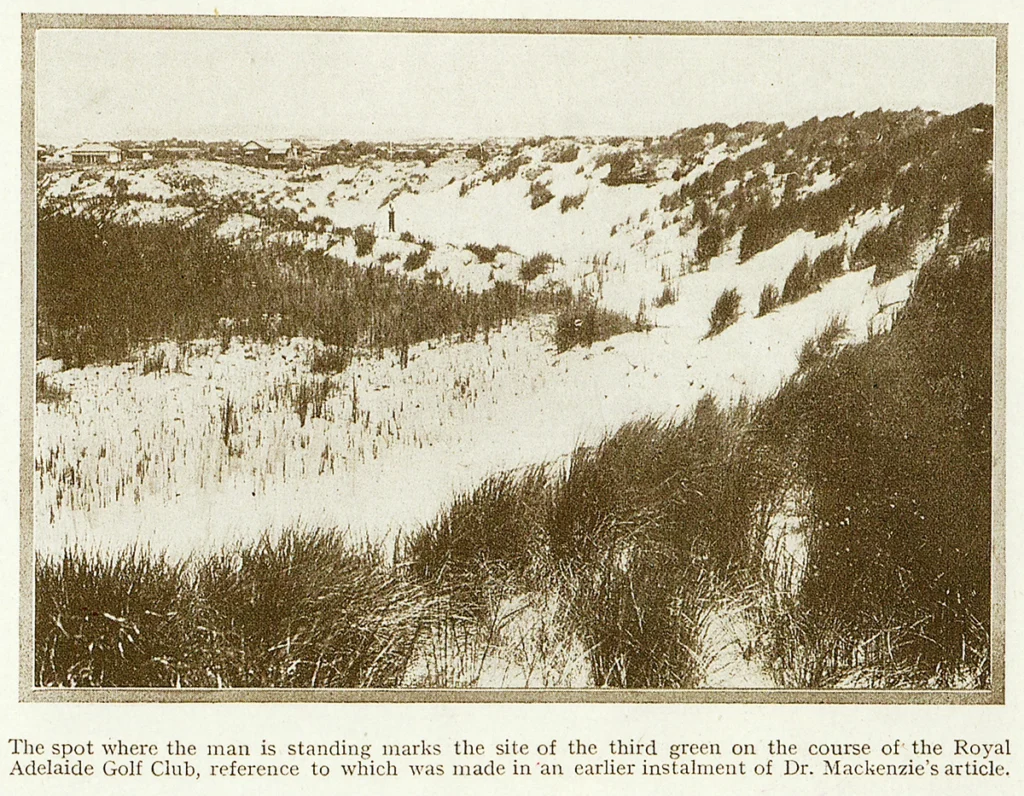
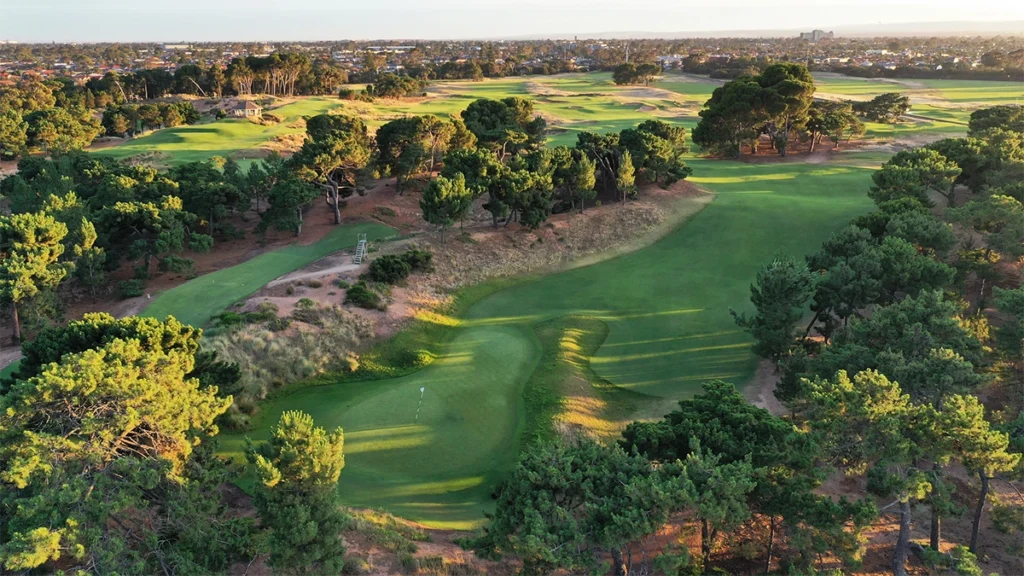
The Otranto docked in Adelaide on October 23. MacKenzie was met at Outer Harbour by a party of Royal Adelaide officials who drove him to their course at Seaton where he was shown around and his £250 fee agreed to. After the disappointment of Perth, he must have wondered what the Australian courses had in store for him, but he was not let down by the Royal Adelaide course and its sand dune property, later writing that, “this course consists of real links land. One finds a most delightful combination of sand dunes and fir trees, a most unusual combination, even at the best seaside courses.”
MacKenzie returned to the ship after promising to return to Adelaide in a week or so for a longer examination of the course, and he soon disembarked in Melbourne in the early hours of October 25 when he was met by “Scobie” MacKinnon who drove him to the links at Sandringham to meet the secretary and inspect the course and new land with their most able curator, Mick Morcom. He also met their champion golfer Alex Russell, like MacKenzie a Cambridge man who had also served in the Great War, Russell as a battery commander in the Royal Garrison Artillery. However, the two men had a greater common interest in golf course architecture, and as Russell lived just across the road from the Royal Melbourne clubhouse where MacKenzie stayed, many amiable discussions would have ensued, no doubt over dinners and drinks. Russell accompanied him on a number of his inspections and drew up some of his plans, a skill he had learned as a civil engineering student at Cambridge and as an artillery battery commander. MacKenzie later appointed Russell as his Australian partner before leaving Victoria.
MacKenzie had also gained commissions at the Kingston Heath and Metropolitan golf clubs and he inspected these courses in his first week in Melbourne before returning to Adelaide on November 3 on the overnight train. He spent four days examining the Royal Adelaide course and developing his remodelling scheme that would better incorporate the magnificent sand craters that dotted the property. On November 7, MacKenzie arrived back in Melbourne and made inspections of the Kingston Heath and Victoria clubs, also travelling south to the Bellarine Peninsula to take in the links at Barwon Heads. By the middle of November, he had submitted his report and redevelopment plan to Royal Melbourne and followed over the next few days with his submissions to Kingston Heath and Metropolitan. The week of November 21-27 was spent on the Mornington Peninsula at the coastal town of Flinders where the club had engaged MacKenzie to look at revamping their course on the foreshore. MacKenzie knew the club captain, Scot David Maxwell, a cousin of golf’s Maxwell brothers Robert and Francis, and stayed at Maxwell’s St Andrews Guest House during his visit to Flinders, giving the club a 50 percent discounted rate for his services. During this time, Victoria Golf Club confirmed his appointment to bunker their new course at Cheltenham and shortly after he submitted his report and bunkering plan to that club.
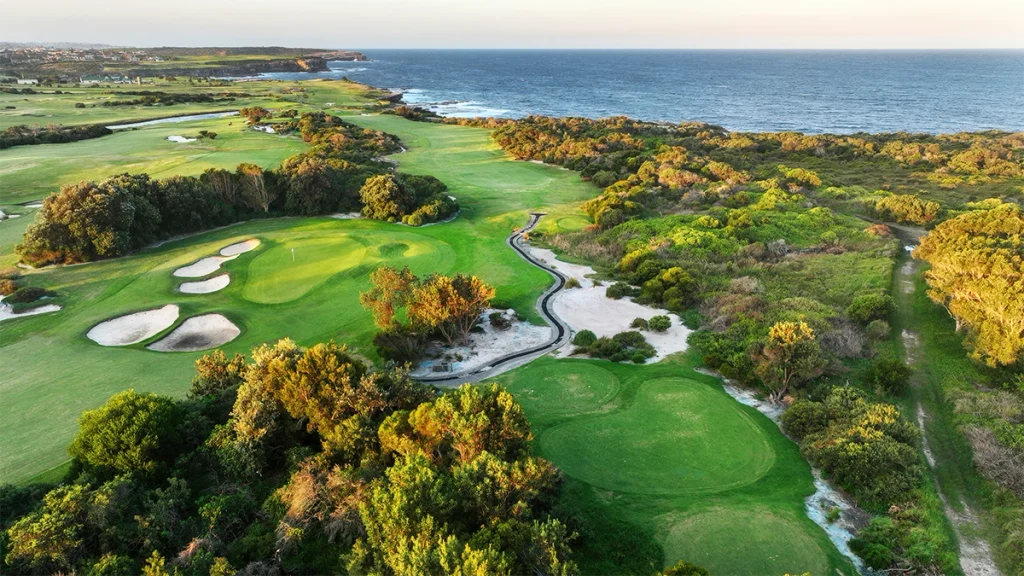
On December 2, MacKenzie had completed all his Victorian work and left Melbourne on the R.M.S. Mooltan bound for New South Wales. Upon his arrival at Woolloomooloo, he was met by officials from Royal Sydney who had arranged for him to stay in their residential clubhouse at Rose Bay. Inspections at Royal Sydney and The Australian courses followed in the next week, including initial visits to the greenfields site for a new course for the fledgling New South Wales club on a spectacular oceanfront site at La Perouse. MacKenzie hit it off with Colonel Bertram, the recently appointed Royal Sydney secretary and a transplanted Scot from Edinburgh who had learned his golf at St Andrews, served in the Canadian forces in the Great War and subsequently had a career as a civil engineer in Canada, prior to his emigration to Australia. With a shared interest in golf design, MacKenzie had found another kindred spirit in the Antipodes. He recommended to the Royal Sydney committee in his report that the interpretation of his plans and ideas be left in the hands of Colonel Bertram, stating that, “I do not know anyone who is more capable of carrying out my suggestions than he.”
Bertram drove the doctor across Sydney to visit his other projects and proved a valuable sounding board during these inspections, so much so that after MacKenzie’s recommendation, the NSW club engaged Colonel Bertram as a consultant to keep an eye over the formation of the course for a nominal fee. During this time MacKenzie also looked over Moore Park, Sydney’s municipal course, and was impressed by what he saw, as he was a strong advocate of publicly accessible courses and lamented the lack of a similar facility in Melbourne.
MacKenzie had by this time arranged three consultations for course-improvement schemes at clubs in Queensland and he left for Brisbane on the mail train, arriving there on December 11. He was met by representatives of the Royal Queensland, Brisbane and Indooroopilly clubs and settled in at the well-known Lennons Hotel for a week of course visits and planning. After the week was up, MacKenzie returned to Sydney, but not before attending a farewell drinks function held in his honour at Lennons, where he was quoted as saying that he was “very pleased at having visited Queensland, and, although the work had been strenuous and left little time to see anything but golf courses”, he had “thoroughly enjoyed his stay”.
Back in Sydney, MacKenzie visited the three clubs that had engaged his services that he didn’t get the chance to see prior to his trip to Brisbane, the Bonnie Doon, Manly and Killara clubs, and prepared his schemes for their remodelling. He completed his Australian sojourn by giving a luncheon address at the Millions Club – the forerunner to the Sydney Club – speaking on the topics of Australia’s passion for golf and his admiration for some of the Sydney courses. The Table Talk newspaper in Melbourne suggested that he would take away with him concrete evidence of that passion for golf in the form of £2,400 worth of fees.
Royal Melbourne did very well out of the initial deal the club made with MacKenzie, effectively getting his services free of charge. Table Talk noted that, “He was further inundated with requests from other clubs for reports, but time did not permit him to make them.” The names of those courses were unfortunately not reported. Commenting on his fees at a public address was probably not the wisest move as this brought about a visit from the taxman just before his planned departure for New Zealand. MacKenzie’s sister Marion, a doctor just like her brother, related the story in an obituary she penned in 1934 after Alister’s untimely death:
“In Australia my brother’s work was so popular that he boasted at his farewell dinner the night before he left that it had actually paid them to have him out there as the club he designed the course for (Royal Melbourne) paid fifty-fifty on any advice he gave to other courses. The result was the income-tax officials arrived next morning before he was out of bed almost, and demanded their quota, which seemed to him a large one. ‘What will you do if I don’t pay you?’ he asked, ‘The last Englishman who refused had a police boat sent after him to fetch him off the ship,’ was the answer.”
AN ENDURING LEGACY
MacKenzie left Australia in the early hours of New Year’s Day 1927, never to return, after the sailing of his ship, the S.S. Marama, bound for Auckland, was delayed due to late cargo additions. After a month in New Zealand he sailed on to San Francisco to continue work on his Cypress Point project and other Californian commissions, not returning to England until April 1, 1927, after a trip lasting six-and-a-half months. What, then, was the legacy of the Australian leg of his 1926-1927 world tour?
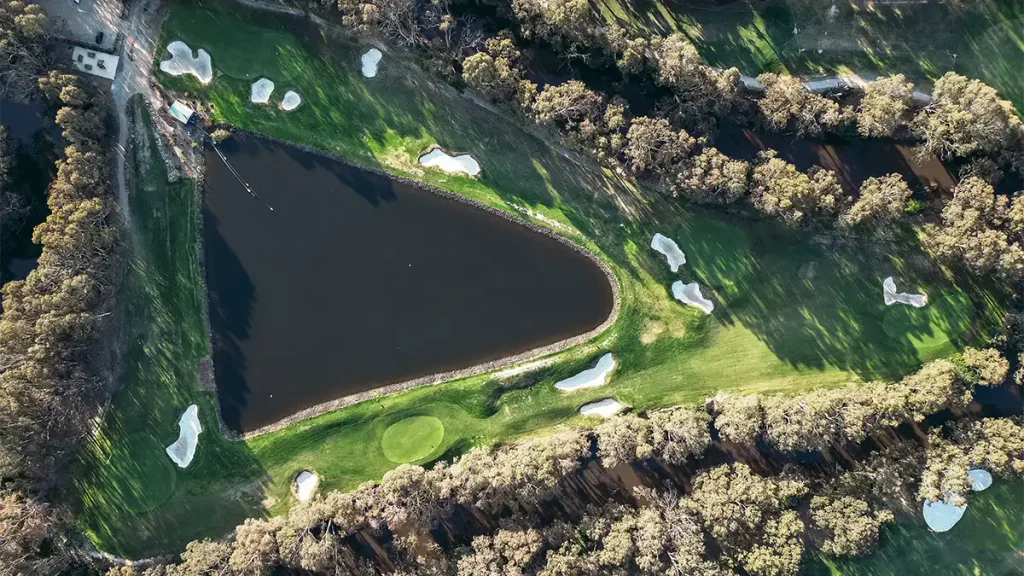
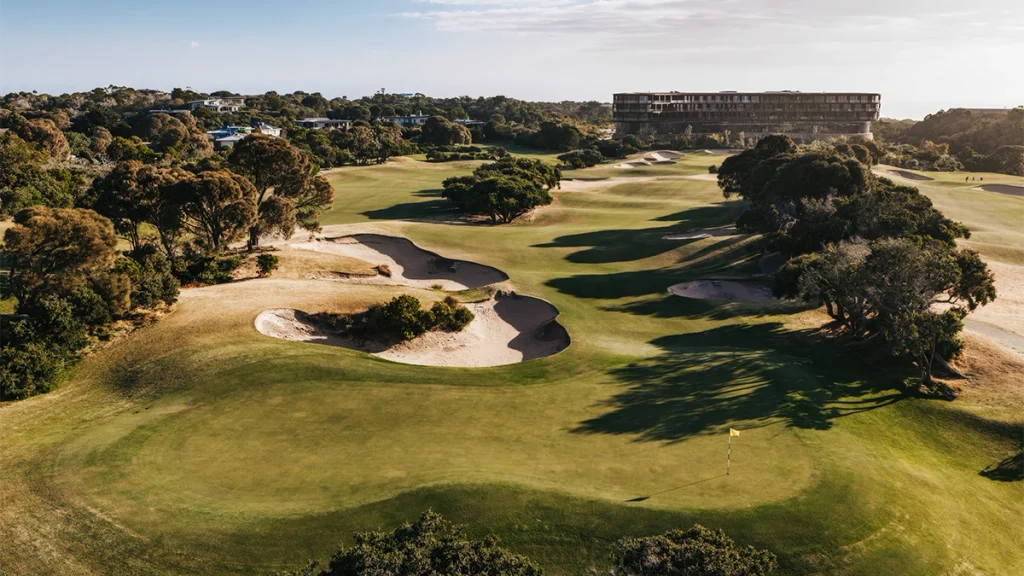
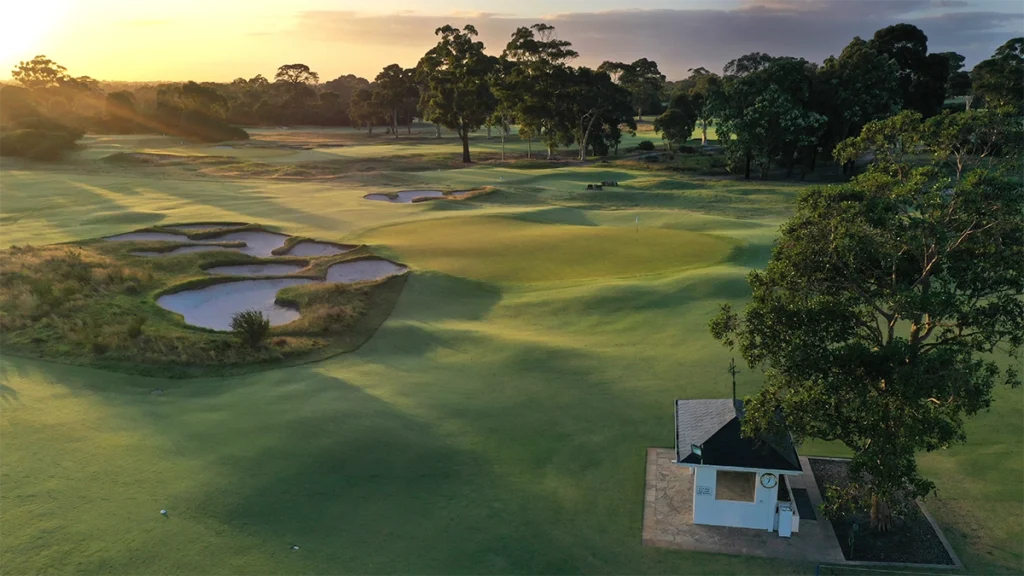
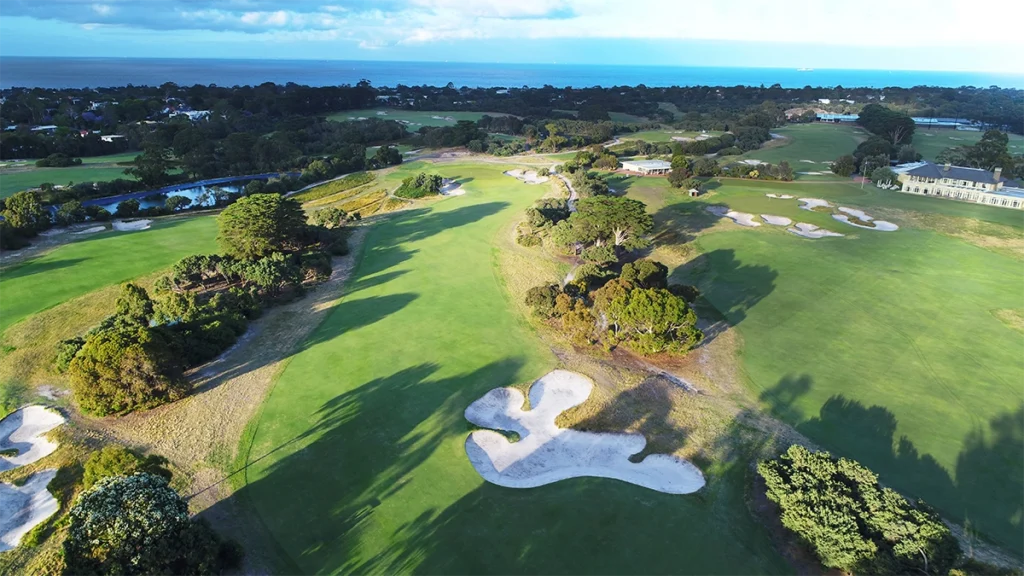
The impact of it was significant and perhaps most importantly, long lasting. Today his primary legacy, the West Course at Royal Melbourne, is still rated Australia’s best course, while a hole like the par-3 fifth on the West, which MacKenzie oversaw Mick Morcom’s construction of while he was still in Melbourne, is widely recognised as the greatest short hole in the country, and likely the Southern Hemisphere. Writing about it upon his return to England in 1927, MacKenzie presciently suggested that the hole, which he had designed along the lines of the Eden hole at St Andrews, was “the best example of artificial work I have ever seen on any golf course, and will certainly be better than any short hole south of the equator.” His legacy is also brilliantly reflected throughout the top 10 Australian golf courses from the 2026-2027 Australian Golf Digest Top 100 Golf Courses list, with the courses he influenced directly holding down the following positions:
No.1 – Royal Melbourne West
No.2 – Kingston Heath
No.4 – New South Wales
No.7 – Victoria
No.10 – Royal Adelaide
Royal Melbourne’s East Course, sitting ninth, was designed by MacKenzie’s Australian partner Alex Russell, and was most certainly heavily influenced by his senior partner, while the architects for the remaining courses in the top 10, such as Tom Doak, Mike Clayton, Coore and Crenshaw, Ogilvy Cocking Mead and Mike DeVries, would all note the MacKenzie influence on their design philosophy. I have been similarly influenced by MacKenzie’s philosophies over the course of my design career as well.
Today, Australian golf courses and the game in this country owe a great deal to MacKenzie’s 1926 trip. Clayton sums it up rather nicely in the foreword he has written for the Australian volume of my upcoming book series on the courses of Dr MacKenzie when he concluded:
“This book is a fascinating documentation of, and insight into, an era which changed the game and in Australia, at least, we are left to wonder at the state of the game had Royal Melbourne not had the foresight to entice MacKenzie so far from home. He clearly loved golf as much as the members and if you doubt the incredible legacy he left just look at the state of the game in places he didn’t visit.”
• Neil Crafter’s book series entitled Pleasurable Excitement – The Golf Courses of Dr Alister MacKenzie is a five-volume series that examines in detail the golf courses designed by MacKenzie over the course of his illustrious design career. The books are profusely illustrated with period photographs, original MacKenzie design plans and reports and other unique illustrations, with the individual course entries including courses that remained unconstructed for various reasons, along with constructed new and remodelled courses. The books, published by Ryan Publishing in Melbourne, will be launched this month to coincide with the centenary of Dr MacKenzie’s visit to Australia. Ordering details are available at ryanpub.com
Photographs by getty images/bettmann and Gary Lisbon