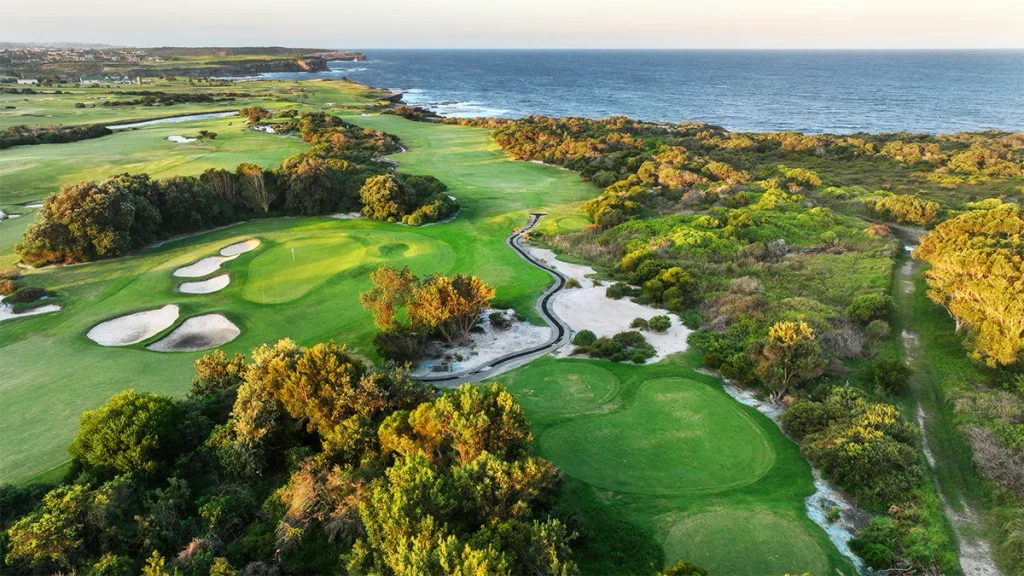
Boutique communities for over-55s are driving the next generation of residential-golf developments across Australia.
Chatswood Golf Club stood at a crossroads a decade ago. The future looked rather bleak for the ailing club on Sydney’s Lower North Shore that faced declining membership, increasing costs and the need to replace ageing infrastructure. Its golf course was modest to say the least – a short, 18-hole layout squeezed into a valley with four crossover holes.
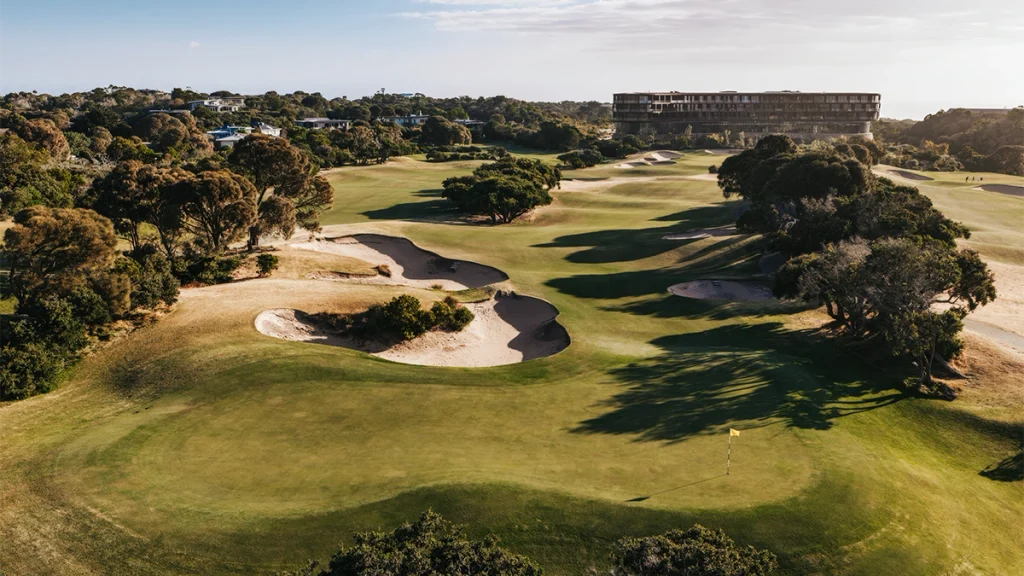
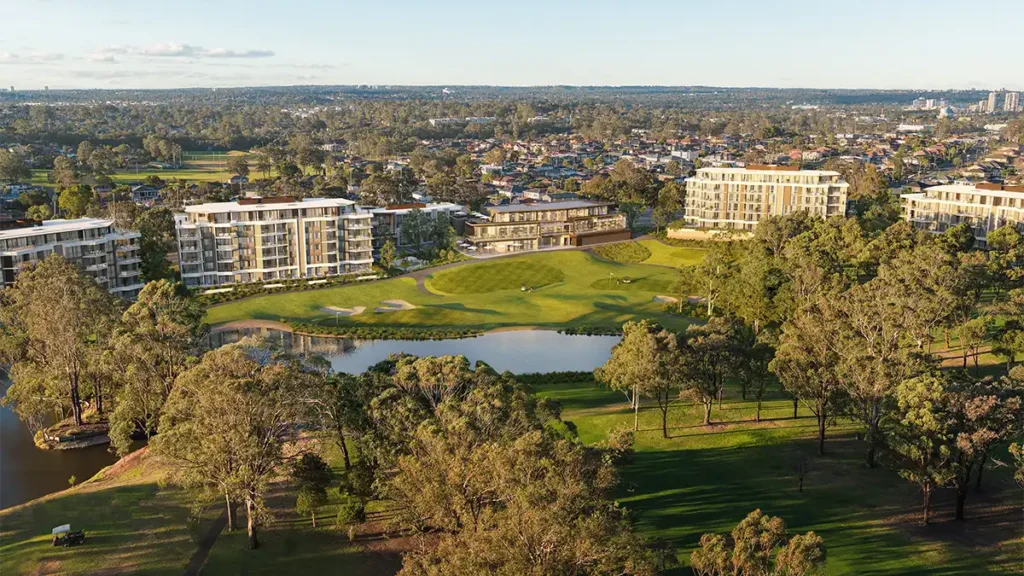
However the reopening of Chatswood’s course in late May marked the culmination of 10 years of careful planning and execution that’s given this aspirational club a new lease of life. Newgreens Chatswood is the name of a contemporary precinct that features a new clubhouse bookended by two multi-storey apartment buildings that form Watermark Residences.
Chatswood Golf Club partnered with property developers Pariter and Watermark Living to create the new precinct and reconfigure its course in exchange for an opportunity to build 106 luxurious apartments as part of a seniors-living community. The objective was also to include facilities in a clubhouse that residents would enjoy in a retirement village. Golfers and residents have access to a café/bistro, rooftop Italian restaurant, wellness centre with gymnasium and hydrotherapy pool, as well as a three levels of car parking.
The golf course has been reimagined by the architectural team of Crafter + Mogford, reconfiguring a lacklustre, 18-hole, par-65 layout of 4,372 metres into a vibrant 12-hole, par-44 course that measures 2,871 metres. It’s been hailed as a resounding success – more challenging with larger, nuanced greens while retaining much of the same playing corridors with enhanced turf quality.
Chatswood Golf Club president Alan Hall-Watson has been involved in the project since discussions first took place about how to future-proof the beloved golf facility. Convincing the membership about the need for change was met with resistance to a proposal that meant sacrificing six of the 18 holes while adding a new clubhouse and retirement village. (For the record, golf-course architects wouldn’t even consider a redesign with crossover holes due to safety issues.)
After initial scepticism, members are returning to Chatswood after four years in the wilderness after having joined other clubs. Hall-Watson drew upon his expertise as a consultant in management information systems to drive the project forward.
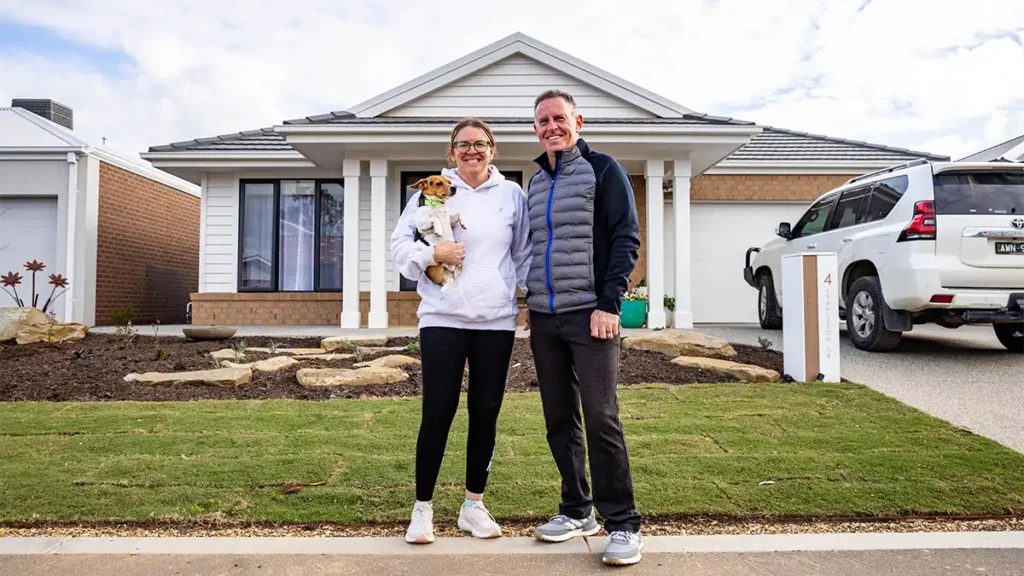
“I discovered that I really enjoyed helping people adopt change. And I think going down this project was a reflection of that,” he says. “Once our members heard that it was a 12-hole golf course, they said, ‘Forget it. We’re out of here. Golf’s 18 holes.’ But we’ve got so many people now supporting it.”
Now 84, Hall-Watson was so enamoured by the project that he and wife Yvonne sold their home of 47 years and moved into a three-bedroom apartment at Watermark Residences.
“This is our first downsizing process, so it was something new,” he says. “We had a tennis court and it suddenly dawned on me that it was getting hard to do all the gardening. I realised that we needed to make a change. The one thing that appealed to my wife and I in that regard was being able to stay in the same suburb. We go to the same shops. We see people we’ve known for a long time.
“The aspect that I hadn’t anticipated… is the socialising [with] another similar age group, who are retired and very interesting people. When we were living in our place for over 40 years, it was the children in the neighbourhood that brought us together. Once they’d grown up and left, the connection with neighbours was nowhere near as good as it used to be. The social interaction that you get when you’re in an environment like this… struck me as really very good. I’m just delighted with it.”
NSW GOLF CLUBS AT THE FOREFRONT
New South Wales appears to be the focal point for an increasing number of ‘Retirement Living’ developments at golf courses across Australia. Merewether (140 apartments), Newcastle (172), Cumberland (226), Oatlands (127 apartments plus 13 townhouses) and Muirfield (212) golf clubs have all pursued partnerships to build seniors-living villages on their courses under legislation that’s called Housing SEPP (previously SEPP55).
Effectively, the starting point for NSW clubs is a little more advanced than for Victoria and other states, according to Jeff Blunden, managing director of Golf Business Advisory Services (GBAS). NSW tends to promote ‘Retirement Living’ (independent units, serviced-senior apartments, aged-care facilities and retirement villages) on land that meets certain criteria. Whereas in Victoria there is no allowance for that at all. For most, dispensation is required through a Special Use Zone amendment.
Not every NSW golf course can be developed for over-55s living, but it’s an easier pathway for some clubs subject to the zoning criteria of the land. Under public recreation zoning, for instance, you can’t build seniors housing.
“There are some inbuilt provisions within the NSW planning scheme that allow for retirement living on the basis of meeting certain criteria without having to get rezoning [approval],” says Blunden, who has built a consultancy business around helping golf clubs negotiate
with developers.
“Now they’ve still got to prove that it meets criteria. There’s criteria around proximity to services, minimum site areas, the [local] council needs to support the development and [ensure] what’s called the Local Environment Plan doesn’t prohibit it. So there are certain hurdles they still have to clear. But if they do clear those criteria then approved support should follow.”
Victoria’s planning system, with no built-in provisions, reduces the more immediately available development options, leading some to completely relocate. Instead of seeking to improve existing facilities, several Melbourne golf clubs have chosen to ‘take the money and run’ – using funds from a land sale to relocate and build a modern facility in another location. Examples include the Eastern (formerly located in Doncaster), Yering Meadows (formerly Croydon) and Sunshine golf clubs.
The Victoria Government has focused intently on golf-club redevelopment after the closure of Kingswood Golf Club, which was sold to a property developer. It amalgamated to form Peninsula Kingswood Country Golf Club at Frankston while proceeds from the land sale have been invested into that 36-hole facility, which will play host to the Australian Open for the first time in 2027.
But that action prompted the Victoria State Government to create ‘golf course redevelopment guidelines’, says Blunden. Now the Victorian Government puts golf courses through a specific process – because the term ‘redevelopment’ implies no longer used for golf. “It’s going to take someone a longer period now to get government approval than it would have pre-Kingswood,” Blunden says.
PARITER A LEADING RETIREMENT PLAYER
Property developer Pariter is also involved with the seniors-living project at Cumberland Country Golf Club at Greystanes in Sydney’s western suburbs. It’s a completely different product and market compared to Pariter’s development at Chatswood on Sydney’s affluent North Shore where remaining apartments in Watermark Residences are selling for upwards of $3 million.
The prospectus for Salus Cumberland was launched in October 2025. Pariter will deliver approximately 226 apartments, a new clubhouse plus a ‘care hub’ for elderly residents who can no longer live independently. The development will take place across eight buildings where the existing clubhouse and what used to be the first hole and practice greens were located. Golf-course architect Bob Harrison has tweaked the Cumberland layout, converting it to a par 70 (from par 72). The new holes opened for play in July.
Pariter is about to appoint a builder and will start construction in September on the first of the multi-stage project. Stage 1 includes Cumberland’s new clubhouse and three medium-rise apartment blocks, which are due for completion in mid-2028. Stage 2 will
be the next apartment buildings with
an expected completion date of 2030.
Sales to date have been remarkably strong for ‘off the plan’ contracts. Two-bedroom apartments are priced from $850,000 to $1,210,000 while three-bedroom apartments range from $1,165,000 to $1,480,000. Penthouses with large verandahs (48 square metres) are priced from $1,725,000. Many people who have made deposits have lived in the area for 40 to 50 years or more.
The Cumberland and Chatswood projects have attracted further interest from golf clubs on Australia’s eastern seaboard, according to Simon Adams, Pariter’s general manager of development.
“We would have spoken to 20-plus golf courses in the past 12 months. And it can be just a simple introductory chat,” Adams says. “A lot of it is done through referrals. We obviously have a really good relationship with the guys at Cumberland Country Golf Club and they’re very happy with what we’re doing. They connect us to their peers.”
Pariter is a subsidiary of Plenary Group, an Australian infrastructure developer, investor and manager specialising in public-private partnerships and precinct developments with more than 300 employees worldwide. Plenary has delivered and now manages public infrastructure such as Sydney Metro, Gold Coast’s light rail system, Victorian Comprehensive Cancer Centre and other hospitals and schools in partnership with governments around the world. Plenary founded Pariter by building upon that model. But instead of partnering with governments, Pariter partners with community organisations like golf clubs.
“It’s been our business mandate since we started about six years ago. Partnering with golf clubs, bowling clubs, RSLs and other community organisations,” Adams says. “Out of all the opportunities… golf courses are probably the most predominant land use that we’re looking at – and have looked at over the past few years.
“We’re always keen to look at new opportunities but we’re not really the ones picking up the phone and reaching out, we get a lot of reverse enquiry. Its often an informal approach – a short email, phone call or meeting and we can give them some initial feedback. We often give advice on what is likely to be required to ensure the development is viable and if they like us we get an opportunity to pitch for the work.
“We have been more focused on our existing projects this year as they are in various stages of launching but we are now keen to expand. We’ve got pretty aggressive growth aspirations and so we definitely want more opportunities and new partnerships.”
HOMEBUYERS DRAWN TO BOUTIQUE GOLF COMMUNITIES
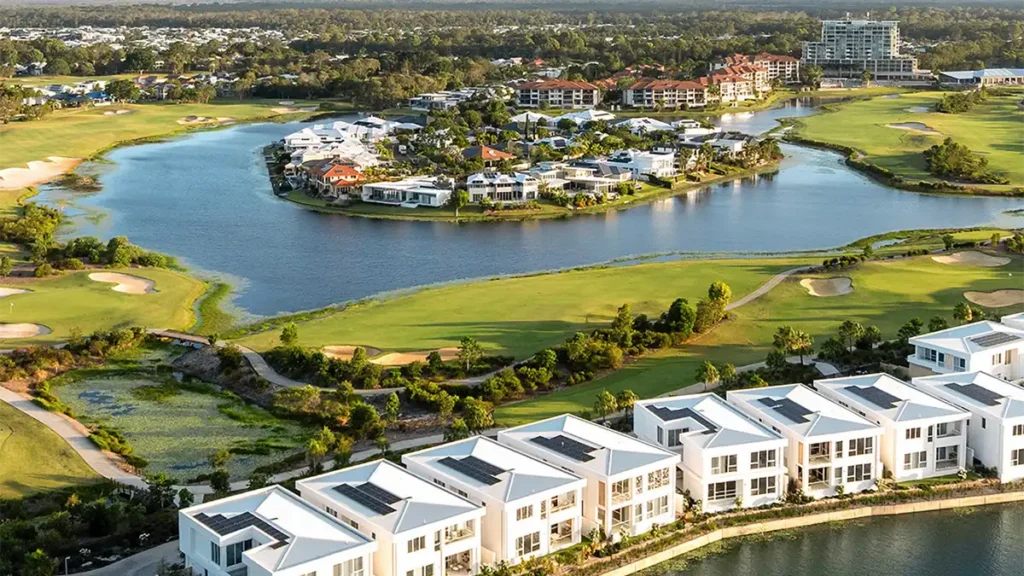
The latest residential-golf developments offer an elevated lifestyle that blends luxury, privacy and a true sense of community. On Queensland’s Sunshine Coast, Palm Lake Resort Pelican Waters is inspired by the timeless elegance of Palm Springs in California. Marketed as ‘Australia’s most exclusive over-50s lifestyle resort’, Palm Lake Resort is a prestigious, six-star gated community alongside the Pelican Waters course designed by Greg Norman/Bob Harrison (ranked 77th on Australia’s Top 100 Golf Courses).
Palm Lake Group has a reputation for creating premium seniors-living estates on Australia’s east coast where it has built 27 communities during the past five decades. At Pelican Waters it has partially reconfigured the golf course to accommodate a luxurious estate where new homes are selling from $2,009,000 (palmlakeresort.com.au).
What distinguishes Palm Lakes Resort Pelican Waters are the exclusive resident facilities. At its epicentre is The Springs Country Club, a $55 million recreational hub with five precincts spread across 15,670 square metres. Mirador is a stunning health and wellness retreat with waterside views. Mirage has an expansive swimming area with outdoor spa, poolside cabanas and sunken firepit. Sonora features a piano bar and cocktail lounge along with a rooftop bar and terrace. El Dorado has an undercover bowling green, pickleball courts, tenpin bowling alley, table tennis, billiards, card room, plus a sports bar, whisky lounge and cellar. Cerante has an intimate cinema, an art/craft studio plus a library.
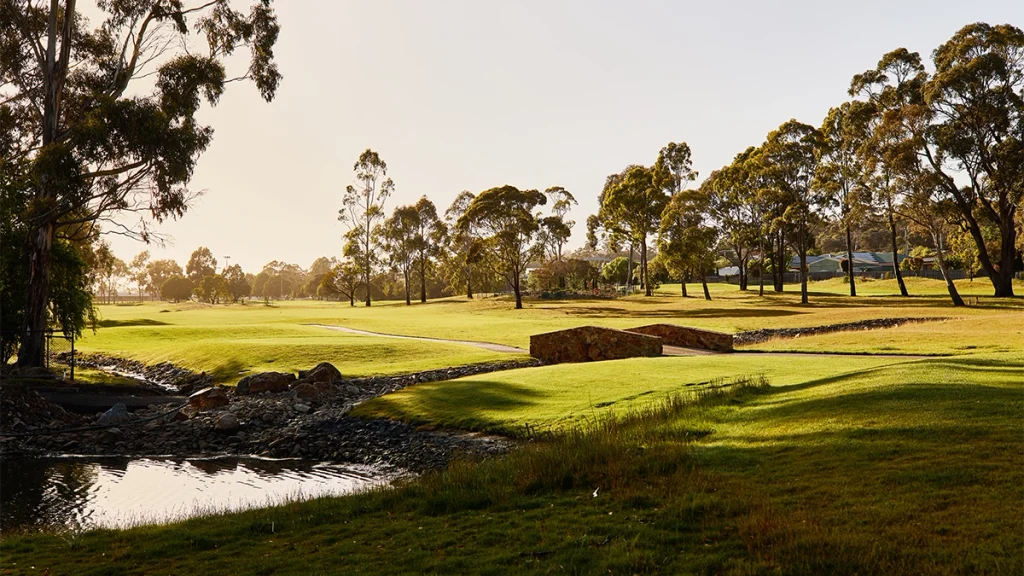
On the western stretch of the Murray River, homebuyers and retirees have been drawn to the beautifully maintained surroundings at The Golf Club Estate at Rich River in the twin towns of Echuca (Victoria) and Moama (NSW). The 51-lot community is located within the grounds of the 36-hole Rich River complex that hosted the 2023 NSW Open.
Steve and Sophie Loader are delighted with their decision to move into Rich River where 16 lots remain at the boutique estate two-and-a-half hours north of Melbourne. Available blocks range in size from 415 to 610 square metres and are priced from $255,000 to $270,000.
“Living in the golf-club estate is about so much more than golf,” Steve says. “We love the welcoming community, the sense of security and the friendships we’ve made. Having the clubhouse and golf course just a short walk away makes everyday life incredibly convenient. It really is a wonderful place to call home.”
WHERE ALPINE DRAMA MEETS REFINED DESIGN
Across the Tasman on New Zealand’s South Island, Jack’s Point in Queenstown has set a benchmark for residential-golf developments. Jack’s Point has been acclaimed as one of the world’s finest lifestyle communities
that will comprise some 2,600 homes and 8,000 residents once complete.
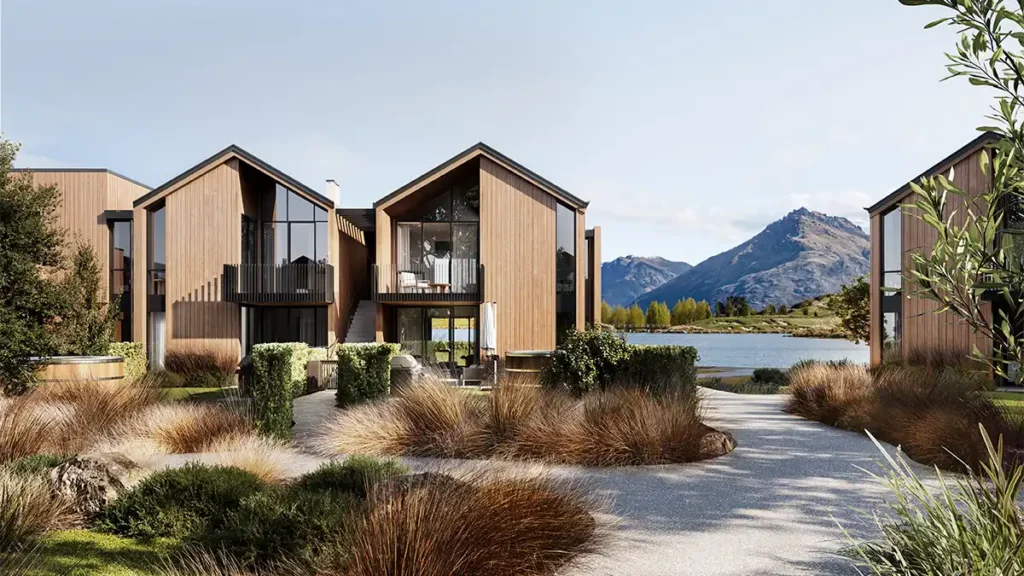
Lake Tewa Alpine Residences is a boutique precinct of Jack’s Point by Falconer, which has established a reputation for bespoke architecture. Lake Tewa Alpine Residences feature sumptuous three-to-four-bedroom, two-bathroom apartments with unique lofts. An on-site property management also makes for effortless ownership if looking for high rental returns. Remaining apartments start from $NZ2,295,000.
For world-class elegance, Lake Tewa Lakehouses is an ultra-exclusive waterfront enclave of Jack’s Point. Eight lakeside villas wrap around Lake Tewa’s immediate shoreline, providing private water access to the five-bedroom dwellings configured for luxurious practicality and privacy. Each features open-plan living, premium curated finishes and large gabled windows to capture the light and optimise views from their prime location at the foot of the Remarkables. Designed for indoor/outdoor entertaining, these turnkey villas are priced from $NZ8,495,000.
Lake Tewa at Jack’s Point is AIP (Active Investor Plus) approved, offering a streamlined pathway for overseas ownership. For Australian citizens, New Zealand offers a favourable investment environment: no stamp duty is payable on purchase, while no capital gains tax applies if the property is held for more than two years.
NSW Hunter Valley a hub of activity
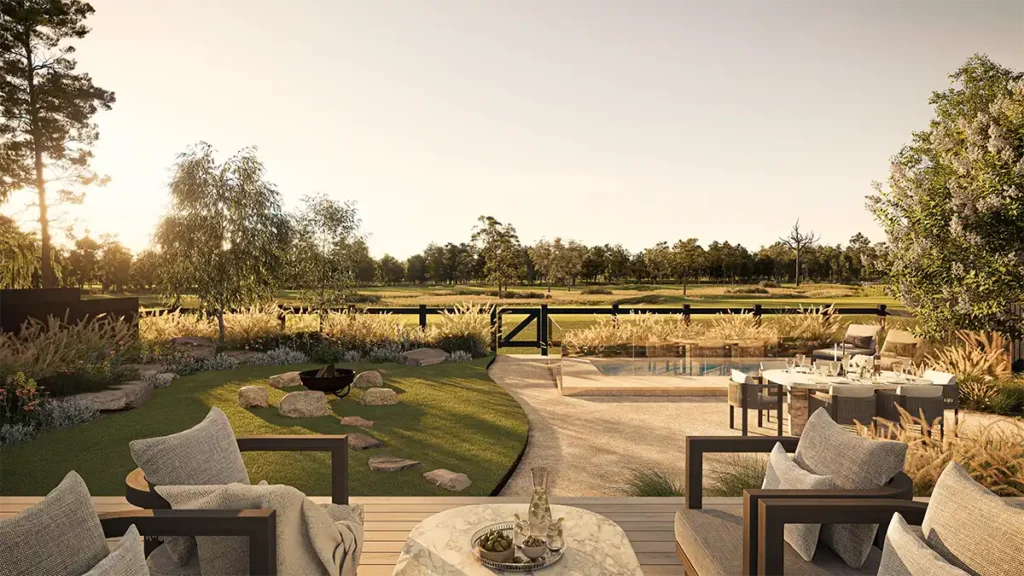
Lovedale Farm is the largest residential-golf development currently under construction in Australia. Capital Corporation has been granted approval to build 500 homes and 140 apartments on a former dairy farm in the New South Wales Lower Hunter Valley. Two hours’ drive from Sydney and less than an hour from Newcastle, Lovedale Farm will also feature a vibrant clubhouse, wellness centre plus a 300-room resort. More than half of the development is devoted to green space and recreational activities.
Homebuyers have two options: designer homes and lifestyle land. House-and-land packages at Lovedale Farm start from $1,179,000. The first release of land is now selling. ‘The Paddocks’ feature generous allotments between 1,100 and 3,000 square metres. The ‘Coopers’ has land from 504 to 767 square metres. The $1 billion development is anticipated to deliver 1,250 construction jobs and inject $300 million into the local economy.
Lovedale Farm has seen a mix of buyers, both owner-occupiers and investors from Sydney, Newcastle and the wider Hunter region. Capital Corporation managing director Jim Hunter has been buoyed by the initial response of $21.4 million in sales in the first three weeks since the opening of a display home.
“Lovedale Farm is two decades in the making and the market’s response is everything we hoped for. We’re excited to see these first buyers become part of the Lovedale Farm story from the very beginning,” Hunter said.
The first 200 homes and the 18-hole golf course are anticipated for completion in late 2027. Capital Corporation is about to break ground on the golf course. The development team needed to overcome complex engineering and flood-modelling requirements in order to get course plans approved. Darius Oliver is credited with the routing and vision for the Lovedale Farm layout – heathland in style and inspired by the character of old school, inland British courses. Capital Corporation has recently appointed Justin Trott as the golf-course architect and Programmed Turnpoint to be the construction contractor.
Lovedale Farm will share a roundabout with The Vintage residential-golf estate on Wine Country Drive. The final remaining golf-course frontage at The Vintage is now selling in The Cedars precinct. Situated alongside the 10th green and 11th fairway of the Greg Norman/Bob Harrison layout, blocks range in size from 607 to 980 square metres. The Cedars has access to all the recreational facilities at The Vintage, including Nineteen Bar + Bistro, Chateau Elan day spa, a 25-metre heated swimming pool, gymnasium and floodlit tennis courts.
Elsewhere, momentum is building once again at Bingara Gorge near Wilton south-west of Sydney. Golf NSW recently acquired the championship-length golf course designed by Graham Marsh as well as the associated golf infrastructure from Metro Property Development. Golf NSW has a strategic objective to establish Bingara Gorge as the flagship ‘Home of Golf’ in NSW. The governing body will have an administrative office, high-performance training facility and event operations within the clubhouse precinct of the 450-hectare master-planned community that will eventually comprise 1,800 homes. Lots are now selling from $695,000.