[Photo: Megan Briggs/TGL]
Pros generally win or lose in the margins. Being a tiny bit worse in one or two areas is the difference between an elite golfer and one struggling to keep their tour card.
For amateur golfers, it’s the opposite. It’s the big mistakes that separate lower handicaps from higher ones. Moments where it takes two shots to do the work of one.
Three instances where this happens the most:
- It takes two chips to get onto the green, instead of one, because you flubbed your first.
- You hit a ball into a penalty area off the tee, so you have to drop or re-tee with your third shot.
- You miss a short putt or blast your first attempt way past, turning a two-putt opportunity into a three-putt.
The latter is something we can all relate to; in particular, three-putts are such an unforced error that it often feels like a particularly bad gut punch. So I went looking to see who was the best on tour at avoiding three-putts last season.
The answer? Rickie Fowler.
What he’s good at: Avoiding three-putts
Fowler, this year’s winner of The Arnie Award presented by Golf Digest, three-putted just 1.4 per cent of the time in 2025, tops on the PGA Tour, with an approach putt proximity of just two feet.
It shouldn’t come as a huge surprise—he’s been an elite putter for most of his career. I went into the Golf Digest archive to look for clues why, and here’s what came back.
Fowler has always done something interesting throughout his career: Moments before he starts his stroke, Fowler hovers the putter head a few millimetres above the ground.
This, explains the six-time PGA Tour winner, relieves tension in his fingers and forearms by forcing him to hold the putter lightly in place, and prevents the putterhead from sticking into the grass as you try to take it back.
2. Two different grips
Fowler also experimented with using two different grips across various ranges throughout his career—something Scottie Scheffler does himself. He uses the claw from short range and the conventional from longer range.
Fowler’s approach is somewhat similar.
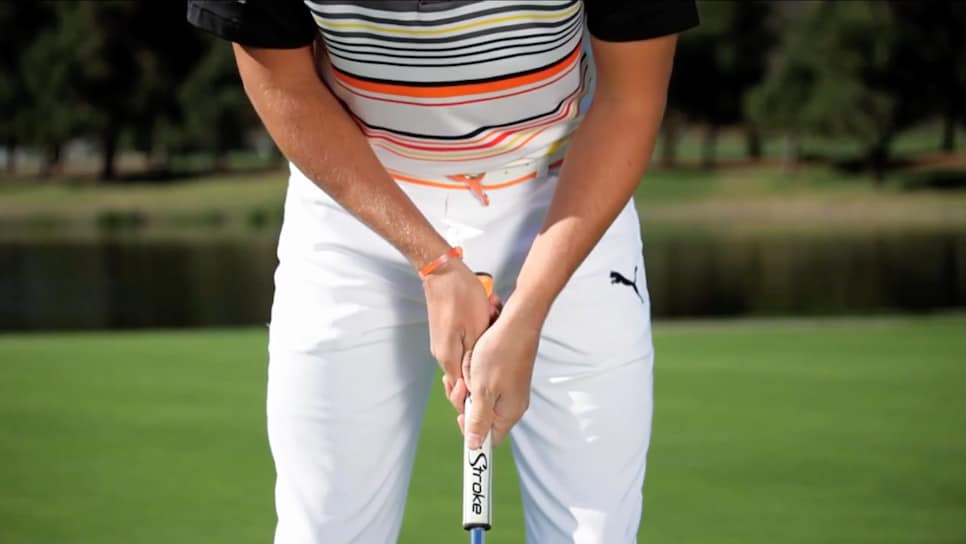
- From a longer range, he used a conventional grip to encourage some subtle wrist hinge in his putting stroke.
- From a shorter range, Fowler switched to a left-hand low grip, which he says aligns his forearms and reduces that wrist hinge, making the clubface more stable.
The takeaway here is that long and short putts require different things. Longer putts are about speed; shorter putts are about keeping the clubface square. Different tasks sometimes require different grips.
3. 24-inch rule
Waffling over how hard you want to hit a putt won’t do you any good.
Fowler says he tries to take the confusion out of the equation by picking one speed in advance and not second-guessing it. Fowler’s goal, he says, is to pick a speed that will end the putt two feet past the hole. He works backwards from there.
4. Focus on a spot behind the ball
Finally, Fowler keeps his eyes quiet and head still on his putts—but not in the way you think. He doesn’t lock his eyes onto the ball. Instead, he locks into a spot behind the golf ball, on the ground. It makes sense: That spot, unlike the ball, isn’t going to move, so that’s where he looks.