One of my favourite sayings is that not everything that counts in life can actually be counted. It’s a stop-and-smell-the-flowers phrase to remind us that numbers don’t always reveal the full story, even where they dominate.
In golf, where numbers rule throughout, it’s even more pertinent to remember that there’s nuance and intangibles at play that always add a layer of context. For example, we’ve all shot rounds that are lower on the scorecard than an earlier 18 that felt far superior from a performance perspective. Your 78 on a day when you scraped and scrapped for pars is lower than the 81 when you found a dozen greens in regulation, but upon reflection we seem to feel more satisfied by the latter.
RELATED: Jon Rahm is frustrated by OWGR’s LIV decision
Which is a roundabout way of getting to the big topic of the week: LIV Golf and Official World Golf Ranking (OWGR) points.
In case you missed the latest news yesterday, the board of the OWGR declared that from this week’s season-opener in Saudi Arabia, LIV Golf events will be ranked based on OWGR’s standard classification of ‘Small Field Tournaments’ with a ‘Ranking points distribution cutoff’ applied to award points to players who finish in the top 10 and ties.
As Golf Digest’s Joel Beall noted, winners will receive the projected equivalent of an alternate-event champion on the PGA Tour.
This is an issue that’s been percolating in the game like a pungent espresso, and one feted as a sign of validation for the fledgling league. With ranking points comes legitimacy – at least in the eyes of some.
However, the OWGR board’s judgement this week is a foot-in-both-camps outcome, lacking in decisiveness and longevity (because you’d imagine it will change in time). Chairman Trevor Immelman and the board should have either denied the application once and for all or welcomed LIV tournaments entirely.
In response, LIV Golf justifiably echoed this sentiment.
“This outcome is unprecedented,” the league said in a statement. “Under these rules, a player finishing 11th in a LIV Golf event is treated the same as a player finishing 57th. Limiting points to only the top 10 finishers disproportionately harms players who consistently perform at a high level but finish just outside that threshold, as well as emerging talent working to establish themselves on the world stage – precisely the players a fair and meritocratic ranking system is designed to recognise.
“No other competitive tour or league in OWGR history has been subjected to such a restriction. We expect this is merely a first step toward a structure that fully and fairly serves the players, the fans and the future of the sport.”
Meanwhile, there are eye-catching precedents elsewhere.
Yes, the PGA Tour has gravitated to a decidedly LIV-style model with its signature events (the irony of that evolution is particularly delicious), but there’s a shining example of this hypocrisy that belongs on a pedestal all of its own within this debate: the Hero World Challenge.
Tiger Woods’ annual gathering of friends in the Bahamas each December has long been the posterchild for unfairness when it comes to OWGR points. The hand-selected, 20-man field is typically strong, generating a high field rating. Two months ago, 17 of its 20 players received OWGR points.
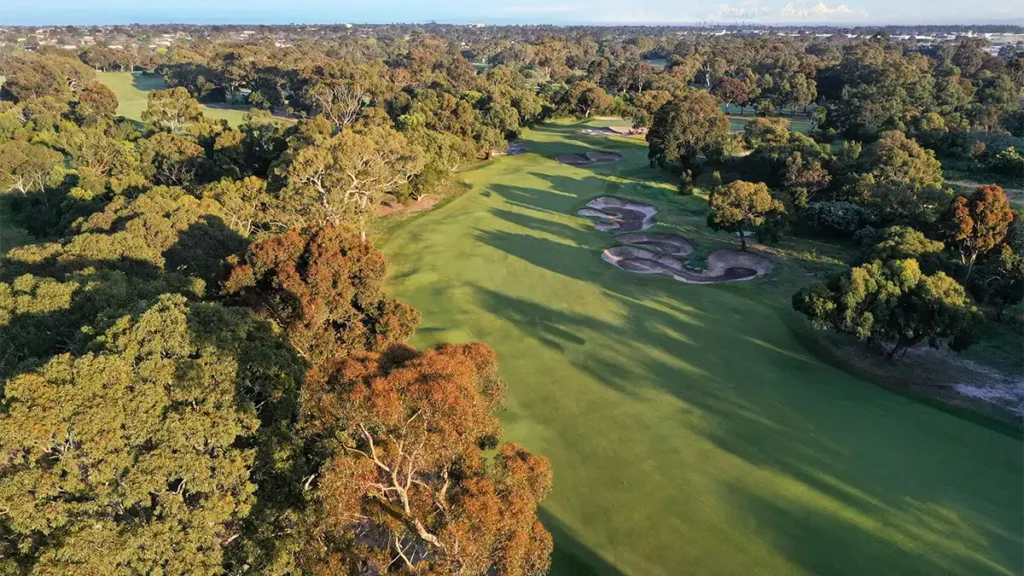
As is often the case, that tournament was held at the same time as the Australian Open. In order to match the OWGR points that the player who finished fourth-last at the Hero (Andrew Novak) received for the week, you needed to finish 13th in a full field at Royal Melbourne.
The respective field ratings? It was 114.86 for the Hero and 120.36 for the Australian Open.
The OWGR’s reasoning behind awarding points to only the top 10 finishers at LIV events was based on what it calls ‘Small Field Tournaments’. If only the top 10 are worthy of points in LIV fields of 50-plus, why do 17 out of 20 receive points at the Hero?
RELATED: Elvis Smylie turns heads with a sparkling LIV Golf debut in Riyadh
Such a discrepancy was not missed by those at LIV, who noted in an e-mail to Australian Golf Digest that there have been 323 OWGR-eligible tournaments with a field of fewer than 75 players and no cut since 2006, 92 of which have taken place since the inception of the new OWGR methodology in August 2022. Thirty-twoof those tournaments (since August 2022) have been sanctioned by either the PGAT or DP World Tour, with fields ranging in size from 20 (the Hero) to 72.
Have we heard the end of this debate? No chance. Instead, the OWGR has merely started the conversation, as LIV Golf executives will be knocking on Immelman’s door.
You can count on that.