[Photo: Sam Navarro]
Matt Fitzpatrick is in a groove right now.
A strong end to last season was followed by a fantastic performance at the Ryder Cup. Now he’s collected a victory at the Valspar Championship after a tough 72nd hole loss at the 2026 Players Championship.
It’s a return to form for the 2022 U.S. Open champion. The improvement is in part due to joining forces with No. 1-ranked coach Mark Blackburn. The pair linked up last season and set about making some clever changes to the Englishman’s swing. You can spot the signs of these changes before he even hits the ball.
The Fix
As Blackburn explained here and more recently on Smylie Kaufman’s show: Fitzpatrick has a really big wingspan for his height. His longer arms mean he has a tendency to stand too far away from the ball. This means he can swing too far around his body. That’s good for drives but less so for irons.
So Blackburn and Fitzpatrick worked on pulling his arms closer to his body at setup to steepen his iron swing. This helps his swing move more up and down, less side to side.
“We retracted his arms at address to manage his swing radius more effectively as his arms are so long.”
“Yeah, we’ve just been working on the same stuff I’ve been working on all year really,” Fitzpatrick said at Valspar. “Just more retraction in my approach play in my shoulders.”
Related: The clubs Matt Fitzpatrick used to win the 2026 Valspar Championship
The Takeaway for you:
Of course, knowing what you want to do is one thing; understanding how to actually do it is another.
Which brings us to the point of this article. Notice how as Fitzpatrick walks into the ball he rolls his shoulders back. This keeps his shoulders back with his arms closer to his body.
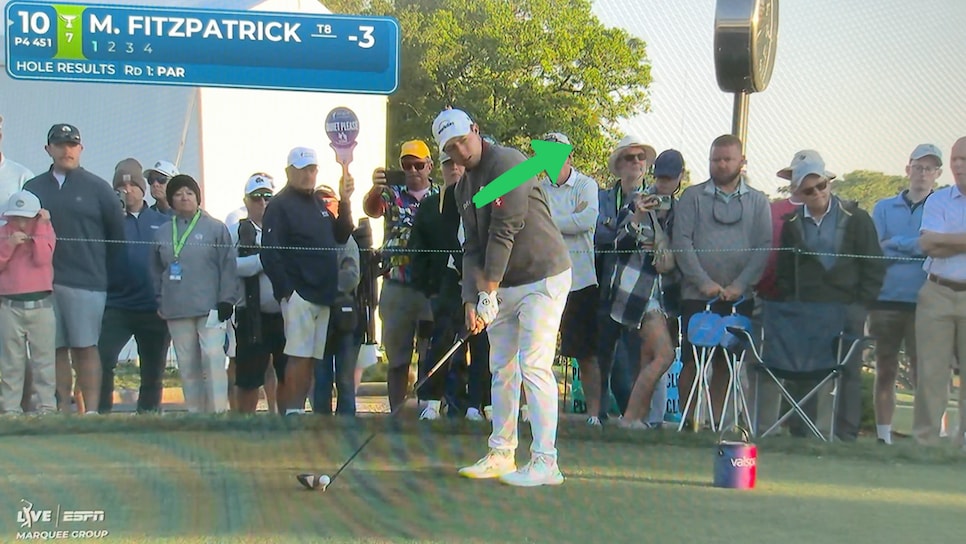
The takeaway for the rest of us isn’t to copy Fitzpatrick exactly. It’s learning the lesson: implementing the stuff you’re working on into your pre-shot routine. Åberg does it, too. Little cues that reinforce what you’re trying to do, right before you want to do it most.