
It took just over a year, but what began as a definition of terms and followed with further input from the PGA of America, readers like you and lots of shoe-leather reporting from our editors, we’ve now picked four communities that we think represent the ideal of what golf should be.
We dispatched Golf Digest writers Mike Stachura, Joel Beall, Drew Powell and Tod Leonard to spend meaningful time in these towns to get to know the local leaders, the courses, the shops, the schools and driving ranges, and try to understand how they all fit together.
May these four towns serve as models for others. Because golf is best when it embraces its egalitarian side.
BEST LITTLE GOLF TOWNS: Aiken, S.C. / Sioux Center, Iowa / Dupont, Wash. / Cortland, N.Y.
A quarter century ago, DuPont, Washington, was a place of little distinction beyond its ties to a nearby military base and history as a company town whose primary product was dynamite. It had fewer than 1,000 residents, and other than a small village area, there was little to see or do in DuPont. Longtime locals in the region zipped past its exit on Interstate 5 toward Tacoma/Seattle without a second thought.
1 / 1 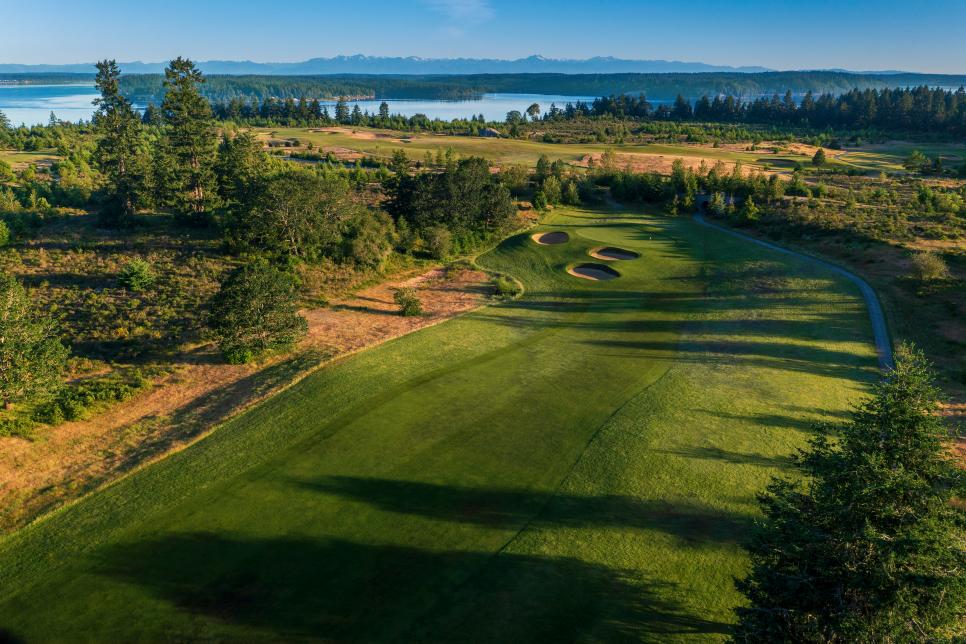
Kirk H. Owens
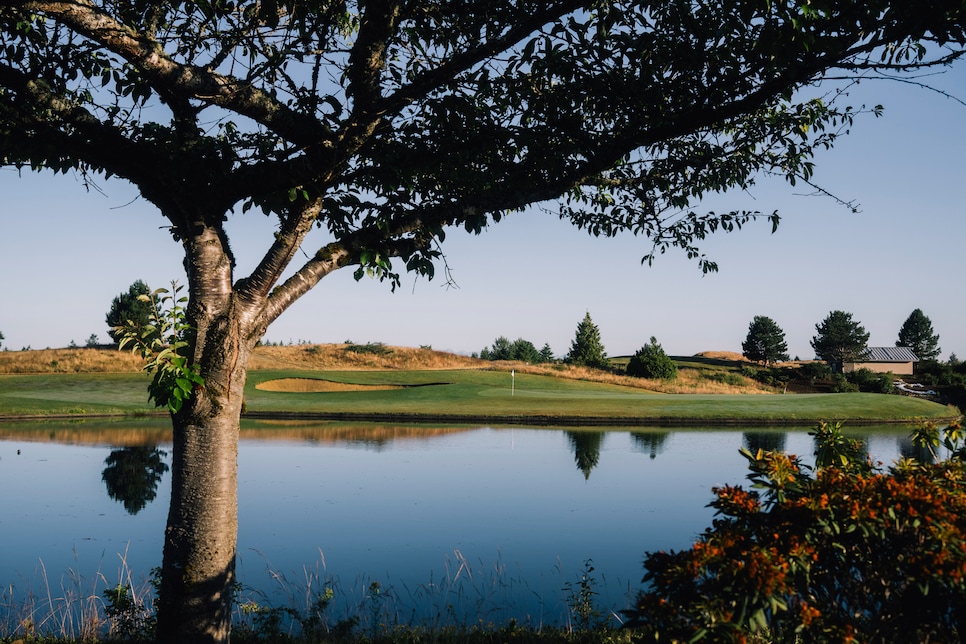
Previous Next Pause Play Save for later Public The Home Course Dupont, WA 3.5 10 Panelists The Home Course, located just south of Tacoma, opened in 2007 and hosted the final U.S. Women’s Amateur Public Links in 2014. Though the course can stretch to over 7,400 yards from the tips, the landing areas are generally forgiving. The greens are large and undulating but are often guarded by deep sod-faced pot bunkers. View Course
There was nothing exceptional about golf in DuPont either. The Army built its own course in the 1920s and the Air Force followed with another in the 1960s. The Joint Base Lewis-McChord is now one of the larger military installations in America.
Not much figured to change, but in 2007, the Pacific Northwest Golf Association and Washington Golf saw an opportunity to fulfill a wish to eventually share headquarters. They purchased from lumber giant Weyerhaeuser a golf course newly built on the property of the old DuPont chemical company’s explosives plant that operated from 1909 to 1975. Tabbing the late Mike Asmundson as the architect, Weyerhaeuser fashioned the course mostly to go with a new housing development, but the two golf organizations saw more than neighborhood green-space and gave it a name that fit their mission: The Home Course.
MORE: The best golf courses in Washington
Today, DuPont has grown to 10,000 residents, with another 2,000 proposed homes near The Home Course, which has become a bucket-list track for players across the Northwest. Golfers vie for precious tee times three weeks ahead of play and fill the course to the tune of 50,000 rounds a year, much of it during the blissful 16 hours of daylight at summer’s peak. Tourists on tee sheets mean heads on pillows at the five major chain hotels in town and hungry post-round diners at local haunts across the street from each other, Farrelli’s Pizza and McNamara’s Pub.
“Golf was a complete game-changer for the town,” says Amy Walker, DuPont’s Parks and Recreation events manager, as well as a former NCAA Division I golfer at the University of Oregon. “It took a long time to get residents to buy into what this would mean to the city—that it wasn’t just another golf course. There are always some residents who are opposed to any growth. Now that it’s booming, everyone knows it’s been such a great addition.”
Credit the vision of Washington’s golf leadership, which was led at the time of The Home Club’s purchase by PNGA and WG executive director John Bodenhamer, whose name adorns an events pavilion at the facility. In 2011, Bodenhamer moved to New Jersey to become the USGA’s chief championships officer and set-up man for majors, but not before The Home Course got its first USGA exposure, co-hosting with nearby Chambers Bay the stroke-play portion of the 2010 U.S. Amateur. Since then, the venue has solely staged or shared three other USGA championships, and three more are on the docket over the next eight years.

BOOMTOWN: The Home Course tee markers reference the town having produced over a billion pounds of dynamite. Two military courses give active service men and women and veterans an outlet for release. Photographs by Jake Macgraw
Jake Magraw

Jake Magraw

Jake Magraw
Jake Magraw
From the time The Home Course opened, the emphasis has been not only on serving the state association’s 97,000 members and thousands of golfing tourists, but also being a go-to place for nearly every worthwhile title event in the region. It has hosted 68 “elite” championships since 2008. The driveway to the course ends at the Circle of Champions, where every winner of the past year’s PNGA and WG championships is honored with his or her picture.
“Our objective is to grow the game, and we believe part of growing the game is hosting championships. It’s at the core of what we do,” says Justin Gravatt, The Home Course GM for the past decade.
MORE: 10 sneaky influential golf courses that revolutionized modern design
As a cap tip to its quirky history, The Home Course started with faux dynamite sticks as its tee markers, but those started disappearing and even showing up on sidewalks around town, prompting concerned citizens to report them to the police, lest they be live ammo. Otherwise, the neighborhoods are tidy and tree-lined, with an abundant number of American flags hanging from porches. “It’s very Americana,” Walker says, noting that about 60 percent of DuPont’s residents have military ties. From the modest white clubhouse of The Home Course, it’s just four miles across town to Eagles Pride, the Army course.
Both military layouts (the other being the on-base, Air Force-built Whispering Firs) are tight, Douglas fir-lined tracks that are heavily played by active service people, retirees and the public.

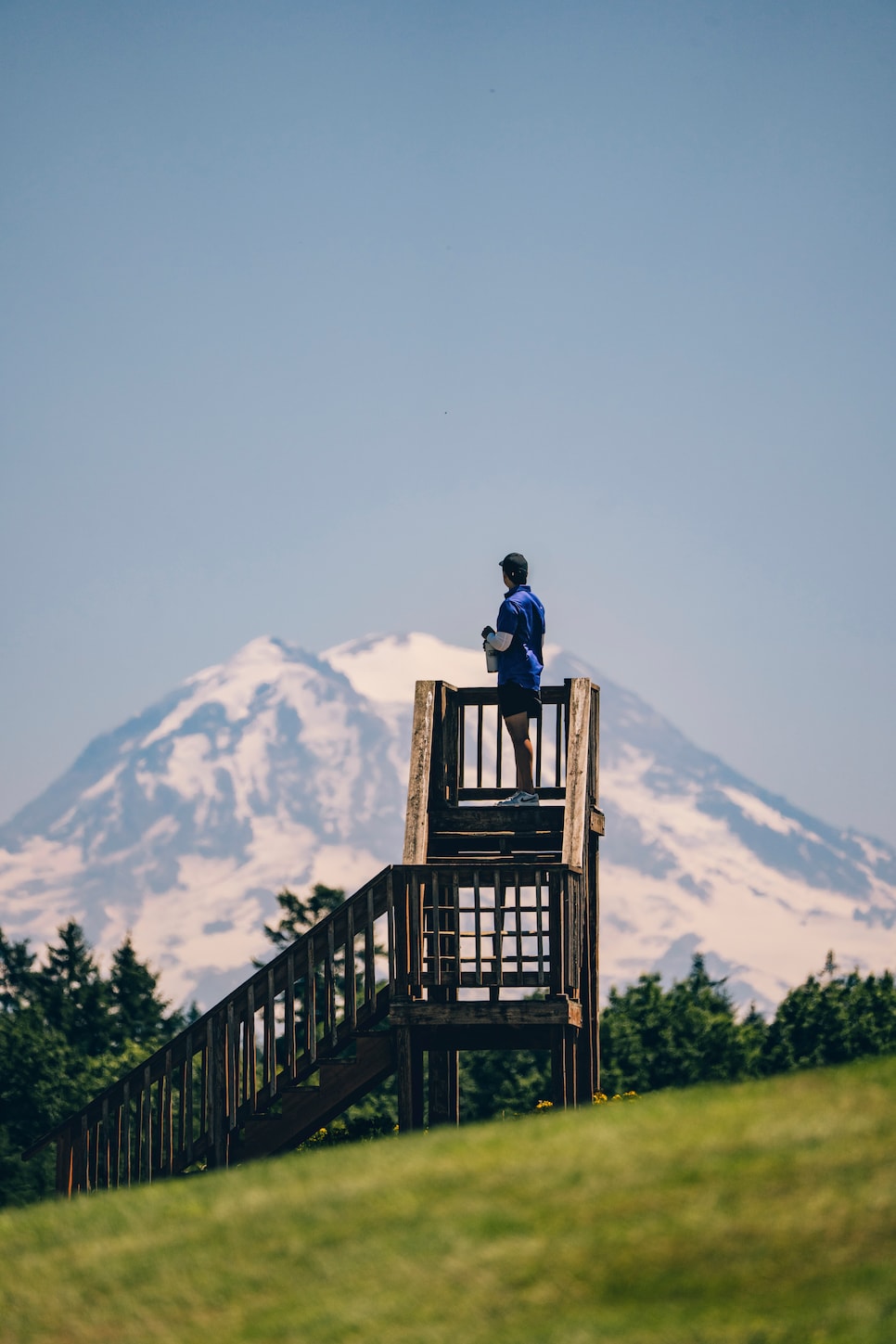
AMERICANA: Mount Rainier dominates a skyline originally inhabited by the Nisqually Indian Tribe. DuPont Chemical purchased the land in 1906, and its Village District was placed on the National Register of Historic Places in 1987.
Jake Magraw
Jake Magraw
Jake Magraw
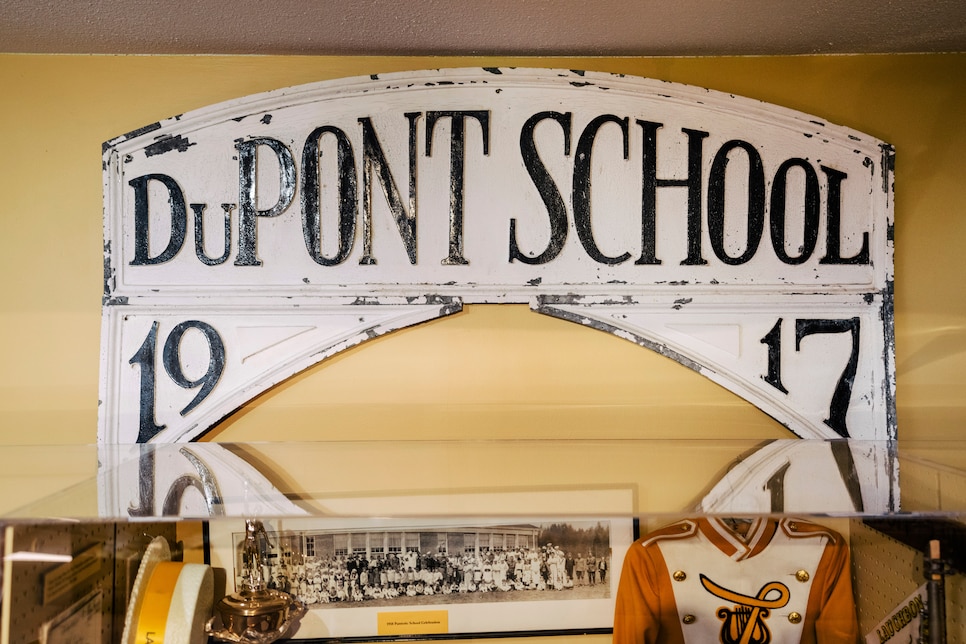
Jake Magraw
Jeff Clark, the general manager overseeing both military facilities, says the emphasis is on inclusivity, with programs like PGA Hope for wounded veterans and First Tee and Youth on Course for kids. Veterans of every war over the last century have served here, and Clark, a former Marine, says the joint base was hit hard with casualties in more recent conflicts overseas. Ninety-one of the base’s soldiers were killed in the war in Afghanistan. He promotes golf to anyone who will listen and offers such perks as free afternoon nine-hole outings to enlisted men.
“Their jobs are really stressful, and it’s extremely important that they have a place to go to not only learn the game but blow off some steam,” Clark says.
Any tension around The Home Course tee markers—the DIY-crafted wooden dowels painted red and taped together with black electrical tape—has also been discharged. They now only designate the farthest back “dynamite tees,” and the thefts have mostly dissipated. A while back it was discovered that the local coyotes were the culprits. Course workers found a den with stacks of faux explosives.
We cannot confirm said home was that of Wile E. Coyote.
WANT TO NOMINATE YOUR TOWN FOR COVERAGE? SEND A SUPPORTING EMAIL TO [email protected] WITH “BEST LITTLE GOLF TOWNS” AS THE SUBJECT LINE.
This article was originally published on golfdigest.com