
It took just over a year, but what began as a definition of terms and followed with further input from the PGA of America, readers like you and lots of shoe-leather reporting from our editors, we’ve now picked four communities that we think represent the ideal of what golf should be.
We dispatched Golf Digest writers Mike Stachura, Joel Beall, Drew Powell and Tod Leonard to spend meaningful time in these towns to get to know the local leaders, the courses, the shops, the schools and driving ranges, and try to understand how they all fit together.
May these four towns serve as models for others. Because golf is best when it embraces its egalitarian side.
BEST LITTLE GOLF TOWNS: Aiken, S.C. / Sioux Center, Iowa / Dupont, Wash. / Cortland, N.Y.
An unmistakable frequency hums in Aiken, S.C., audible only to those smart enough to listen.
You hear it in post-round dissections at a restaurant called the Feed Sack, where golfers resurrect impossible shots and mourn three-putts. It’s in the debates over course architecture that echo across Old Barnwell’s expansive fairways, and the stories that ricochet off ancient pines at the Tree Farm. At Aiken G.C., you’ll see players using calculators to tabulate the financial carnage they suffered or inflicted. This town’s vernacular is spoken fluently by anyone who understands that intelligence isn’t measured by school degrees or test scores but in devotion to the game. “You don’t get many sightseers down here,” says Jim McNair, the proprietor of Aiken G.C. “People are trying to have fun, relax, but they are serious about their golf.”

Chris Henson crosses the road to the sixth tee at Aiken G.C.
Andrew Hetherington

Aiken G.C. is operated by Jim McNair.
Andrew Hetherington

The club is a short walk from downtown and shops such as Lionel Smith LTD, which sells golf clothes.
Andrew Hetherington

Andrew Hetherington
In the late 19th and early 20th centuries, wealthy northeastern families discovered Aiken’s mild winter climate and embraced it as their sporting playground. They came down for hunting, polo and thoroughbred racing, transforming the town into the “Sporting Capital of the South.” From this gilded age also emerged Palmetto Golf Club. Herbert Leeds, architect of Myopia Hunt Club, crafted the original design. Alister MacKenzie’s subsequent touches were so compelling that Bobby Jones wrote to him, “That layout you designed at Aiken is liked so well that the Aiken colony does not seem to be the least bit interested in coming over to the Augusta National.” Ben Hogan claimed Palmetto had some of the finest back-to-back holes in all of golf. Recent restoration work by Gil Hanse has further burnished its status as one of South Carolina’s crown jewels.
While Palmetto anchors the region’s golf legacy, Old Barnwell and the Tree Farm represent its future. At Old Barnwell, founder Nick Schreiber is choosy about picking members who, like him, want to make golf a force for good. The Kids Course opened this year, and on the main course, architects Brian Schneider and Blake Conant exploited the property’s natural bowl, using the rim to stage broad, dramatic holes defended by steep bunkers and wild green surfaces. Lines of shaggy grass, trenches and waste areas create a raw aesthetic that challenges players from the moment they arrive. On the other side of town is The Tree Farm, which has drawn comparisons to Pinehurst in sight, style and substance. This former pine nursery became a “sickos-only joint” through the collaboration of Tom Doak, Kye Goalby and PGA Tour player Zac Blair. Secluded and primal, the course rewards precision and audacity.
Both are private sanctuaries, but money isn’t the main currency. Both clubs have built their communities around a deep, almost scholarly appreciation for golf’s nuances. At Tree Farm, this intelligence manifests in their refreshingly direct motto: “NO ONE SHOULD EVER ADVERSELY AFFECT ANYONE ELSE’S EXPERIENCE”—a philosophy that requires tactical awareness and emotional intelligence. These aren’t weekend hackers who confuse equipment with improvement; they’re students of the game who recognize that golf IQ encompasses everything from reading greens to reading a room. Old Barnwell has channeled their collective wisdom into meaningful action, partnering with local Historically Black Colleges and Universities to host tournaments and create networking opportunities that bridge the gap between established members and aspiring golfers. Here, golf isn’t hoarded—it’s shared and passed down, ensuring that knowledge of the game continues to expand beyond traditional boundaries.

Highland Park Avenue runs between the fifth and sixth holes of Aiken G.C.
Andrew Hetherington
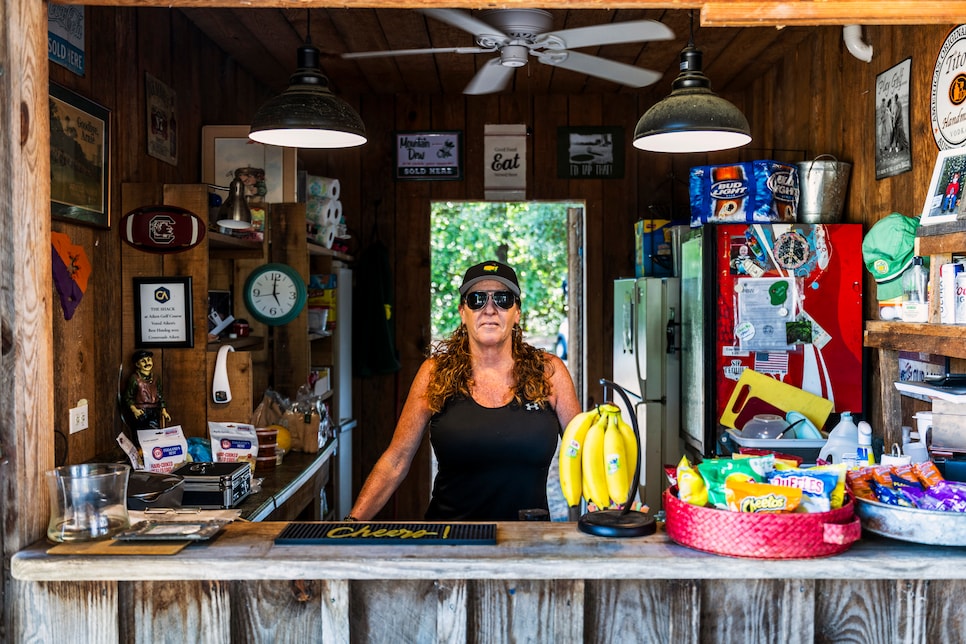
Bonnie Hudson serves up cocktails and banter midway through rounds at Aiken G.C.
Andrew Hetherington

Andrew Hetherington
That both memberships gravitated toward Aiken reveals their sophisticated understanding of golf’s geography. The region presents a rare convergence of practical advantages. The vast tracts of undeveloped land are spacious enough to accommodate championship layouts without compromise. Many of these properties are established pine plantations on naturally dramatic terrain, offering mature canopies and rolling topography that would take decades to cultivate elsewhere. But Aiken’s true blessing lies in its position along the western boundary of the ancient coastal plain that provides a sweep of sandy soil. This foundation makes course construction remarkably economical while delivering the kind of firm, fast playing conditions that serious golfers crave. Its location is close enough to Columbia, Charleston and Augusta to attract discerning players but far enough removed to maintain its unhurried character.
Of course, even golf’s most enlightened communities occasionally like to retreat into more rarefied air. Enter Sage Valley, the sport’s ultimate inner sanctum. This quarter-century-old enclave—featuring a championship course that rivals any major venue, an illuminated par-3 course for after-hours sessions and luxury cottages that serve as temporary command centers—transforms into golf’s most exclusive boardroom during Masters week. The real Masters tournament might unfold down the road, but Sage Valley hosts the tournament that determines who controls the game itself—where the only thing more cherished than a good score is the ability to close deals before the 19th hole.
While these places play important roles in Aiken’s identity, its heart is conveniently just steps away from town square. Aiken Golf Club is proof that exceptional golf can be accessible golf, that the communal spirit thriving on Scottish and Irish links can also flourish on American soil. Originally a resort course before collapsing during the Great Depression, the town rescued the course before Jim McNair assumed control in the 1950s, operating it as a semi-private facility. When Jim McNair Jr. inherited the property, he placed a different kind of bet—on himself and his community.
“I found myself in the rare position where I can help give this game to people who otherwise felt shut out,” McNair says. “Golf is a communal game. Let’s do our best to bring the community in.”
Through the 1980s and 1990s, that philosophy meant golf for less than $20, but accessibility came at a cost. The course had deteriorated badly, battered by inadequate maintenance, age and Mother Nature’s relentless assault. It desperately needed renovation, but McNair lacked the budget for professional help. Enter Bill Coore, who walked the property and saw its hidden potential. Recognizing McNair’s financial constraints, Coore offered unconventional advice: tackle the restoration yourself. Despite having zero formal experience in construction or design, and armed with only three full-time maintenance workers, McNair acquired a bulldozer and began digging. Four years of dirt, sweat and unwavering self-belief later, the Golden Age bones emerged from their burial.
McNair reshaped the greens, preserving their intimate scale while amplifying their contours and character. He introduced more sandy waste areas, creating dramatic visual contrast. The result: Some of the most engaging green complexes you’ll encounter anywhere—challenging yet welcoming. It’s golf architecture by conviction, not committee, all while maintaining greens fees between $25 and $49.
1 / 4 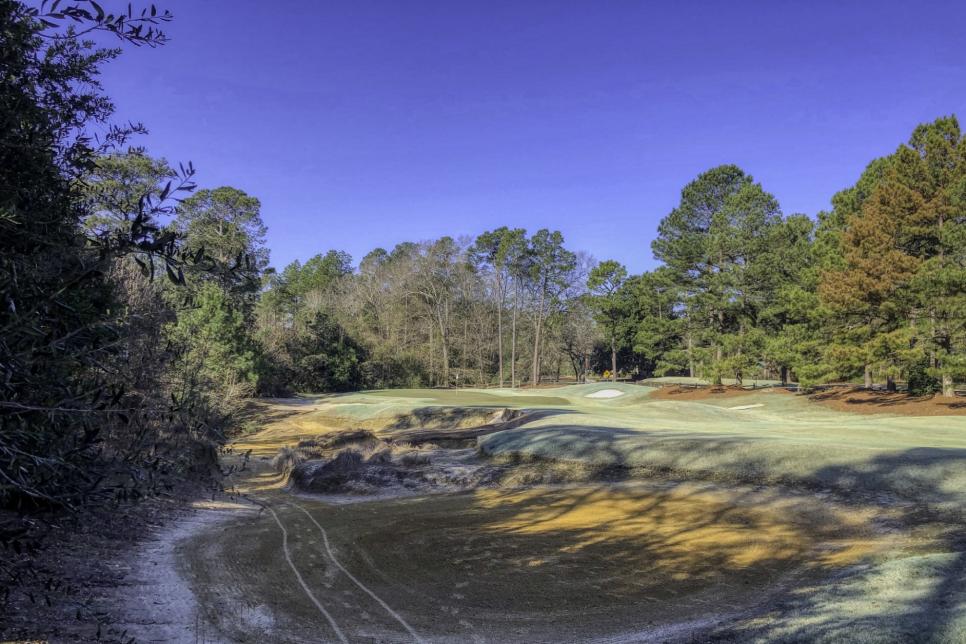
Derek Duncan
2 / 4 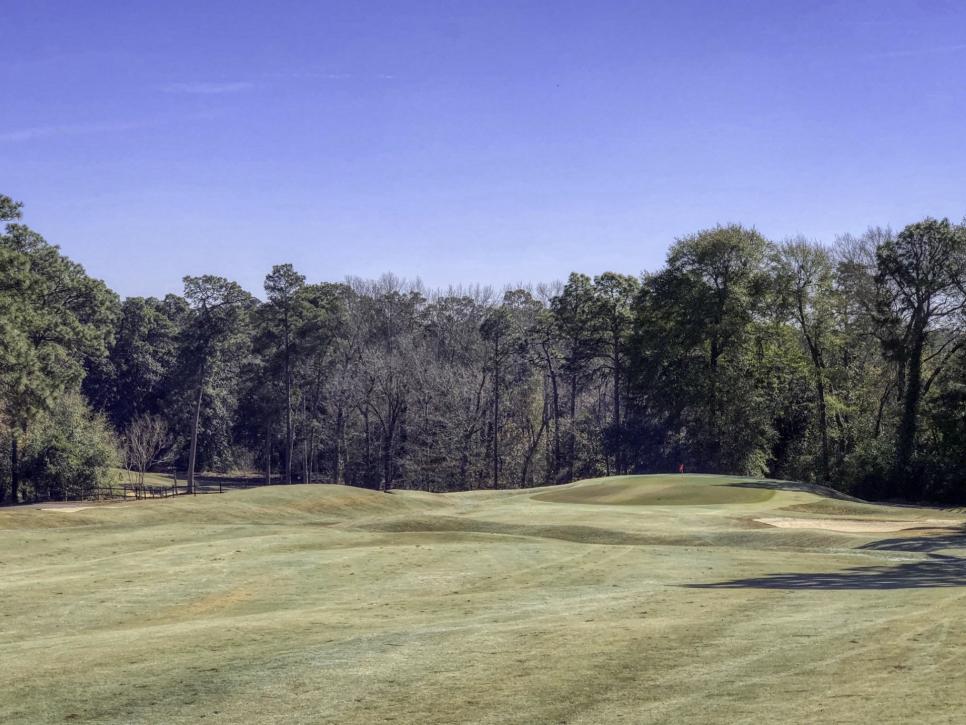
Derek Duncan
3 / 4 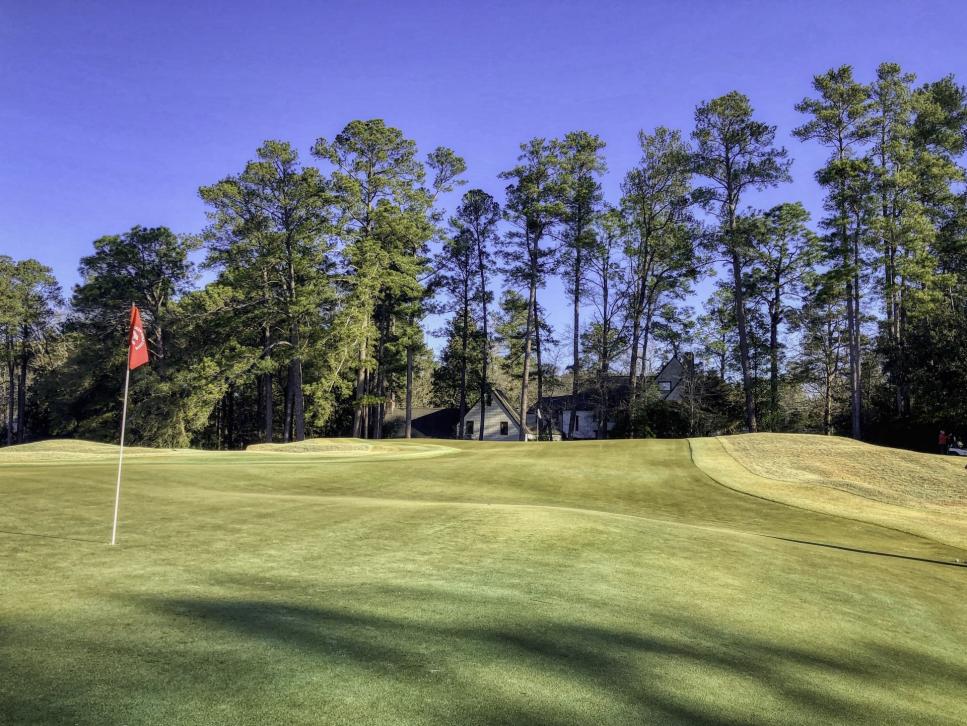 4 / 4
4 / 4 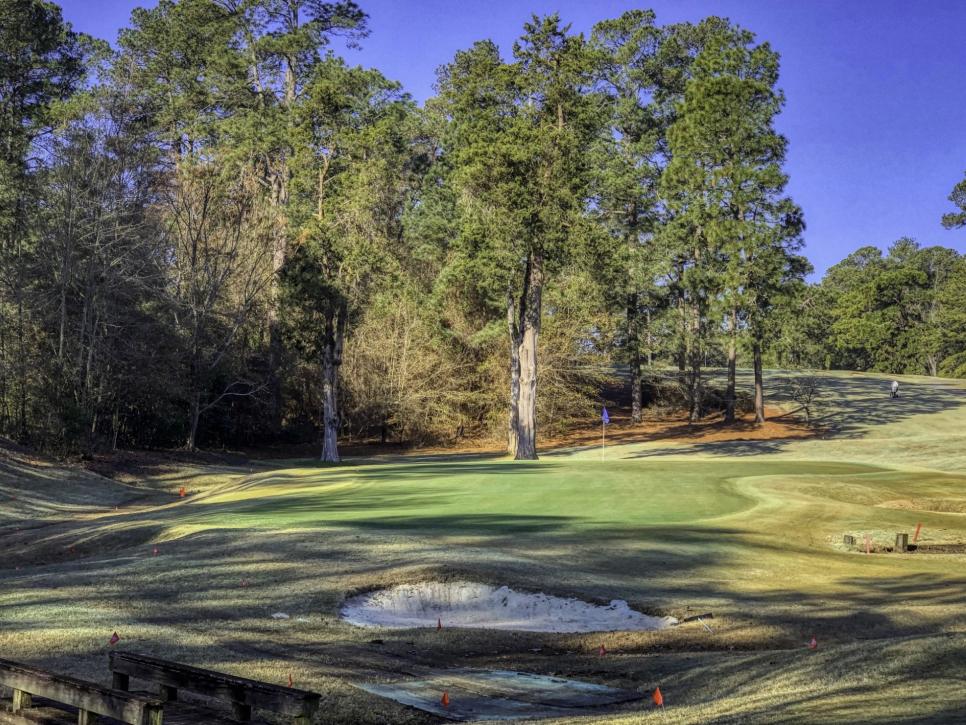 Previous Next Pause Play Save for later Public The Aiken Golf Club Aiken, SC 3.9 12 Panelists Just outside Augusta, Ga., and about an hour from Columbia, S.C., Aiken Golf Club is a short, old-school public layout that dates to 1912 when the first 11 holes were laid out as an amenity to the Highland Park Hotel (closed during the Depression), with several running parallel to the rail line that transported guests in and out of town. Owned by the McNair family since 1959 and just steps from the historic downtown, it possesses the many of the same assets as nearby Palmetto though in less refined form with ocean-surge greens, sporty length, eccentric bygone shaping, tantalizing short par 4s and significant fairway movements across the hilly terrain. Very few places have more eclectic or expressive golf packed into a $26-48 green fee. Jim McNair, who operates Aiken Golf Club, is also responsible for locating and building The Chalkmine, a nine-hole short course and practice area for The First Tee of Aiken on a defunct sand and chalk mining site that might have some of the most exciting holes in the county. View Course
“If you’re trying to make a fortune, this isn’t the business,” McNair says. “I once had an employee tell me this wasn’t a job but a lifestyle. He’s right. It’s been seven days a week for 40 years. I’m superintendent, GM, owner, do my own taxes. It’s a difficult thing to run a golf operation, but when it works, there’s nothing better.”
The renovation transformed the golf course and the clientele. Where retirees once comprised 70 percent of the tee sheet, nowadays players 25 to 45 (blue and white collar) dominate. This younger crowd brings energy, a few drinks and action. Don’t mistake this 5,800-yard layout for casual golf. Come here without being willing to make a wager—whether $5 or with a few more zeroes—and you’ll find yourself on the outside looking in. The Bryan Brothers have amplified Aiken’s reach beyond anything McNair could have imagined. These professional players, trick-shot artists and YouTube influencers call the area home and regularly haunt the course, helping McNair navigate the foreign world of social media. Success has bred expansion. McNair constructed the Chalk-mine, a nine-hole short course and practice facility for the First Tee of Aiken, on a defunct sand and chalk mining site.
Aiken’s renaissance continues with the 21 Club. King Collins Dormer Design—arguably the trendiest firm in golf architecture after its breakthrough work at Sweetens Cove near Chattanooga and Landmand in northeast Nebraska—will lead the first 18-hole layout. A second planned course promises even greater historical intrigue: a faithful recreation of MacKenzie’s lost El Boquerón design, originally drafted in 1930 for Argentina’s coastal city of Mar del Plata but never built.
What ties it all together is how golfers bounce around. The courses of Aiken are not necessarily in competition with each other, rather they acknowledge their shared pursuit. “No one plays just one place,” McNair says.
Aiken’s golf intelligence isn’t about who you know—it’s about understanding that there’s always more to learn, and finding joy in that endless pursuit.
WANT TO NOMINATE YOUR TOWN FOR COVERAGE? SEND A SUPPORTING EMAIL TO [email protected] WITH “BEST LITTLE GOLF TOWNS” AS THE SUBJECT LINE.
This article was originally published on golfdigest.com